


This article is for informational purposes only. It is not, nor is it intended to be, a substitute for professional medical advice, diagnosis, or treatment and should never be relied upon for specific medical advice.
Best overall: a peri bottle for gentle external rinsing. Best for postpartum bleeding: unscented maternity pads. Best for short-term perineal discomfort: a wrapped cold pack. The best feminine care products for postpartum recovery in 2026 support cleaning, comfort, and healing without adding unnecessary products to sensitive tissue.
TL;DR
- The best feminine care products for postpartum recovery start with a peri bottle, unscented pads, and clinician-directed care.
- Kushae external care products are optional skincare, not treatments for postpartum wounds, BV, or uterine infection.
- Keep cleansers, balms, deodorants, and boric acid away from healing tissue unless your obstetric clinician directs otherwise.
- Fever, foul-smelling discharge, heavy bleeding, or worsening pain require medical attention, not another intimate product.
Why this matters
Postpartum care is not an odor-control project. You are managing bleeding, tender skin, and sometimes stitches or a surgical incision. Your discharge instructions come before any shopping list.
Kushae offers OB/GYN-developed vulvovaginal care, but that does not establish that every formula belongs in immediate postpartum recovery. Basic recovery supplies come first; optional external skincare comes later, when appropriate.
The vulva is the external genital area. The vagina is the internal canal. A product intended for external skin should never become an internal rinse, and a wash cannot treat bacterial vaginosis or a postpartum infection.
For your 2026 recovery kit, separate products that meet an immediate need from products you might consider after healing. That distinction prevents a bathroom full of products from becoming a complicated care routine.
What makes the best postpartum feminine care products?
Choose by function, not by how strongly a label promises freshness.
- Clear purpose: Each item should address rinsing, bleeding, comfort, or a specific external skin concern.
- Correct placement: External products stay external. Nothing should enter the vagina without postpartum guidance.
- Low-friction use: Cleaning should not require scrubbing or repeated wiping over tender tissue.
- Ingredient transparency: Check the complete label rather than relying on “natural,” “gentle,” or “pH-balanced.”
- Compatibility with your recovery: Stitches, an incision, irritated skin, and breastfeeding-related symptoms require individual advice.
- Clear limits: A useful product explains its role without claiming to diagnose symptoms or replace medical care.
Postpartum recovery products at a glance
| Item | Best for | Standout function | Key limitation |
|---|---|---|---|
| Peri bottle | Gentle external rinsing | Directs water without scrubbing | Does not treat infection or replace wound instructions |
| Unscented maternity pads | Managing postpartum bleeding | External absorption and visible bleeding monitoring | Dampness and rubbing can irritate skin |
| Wrapped cold pack | Short-term perineal comfort | Cooling without adding a topical formula | Needs a protective layer and clinician-directed use |
| Breathable, comfortable underwear | Holding pads without excess pressure | Supports a practical pad-changing routine | Fit must account for tenderness or an incision |
| Gentle 2-N-1 Foaming Wash | Optional external cleansing after clearance | A dedicated external wash option | Not a postpartum wound cleanser or BV treatment |
| Protective Feminine Skin Balm | Intact external skin affected by friction | A skincare option aimed at chafing | Not for stitches, open wounds, or an incision without instructions |
The order reflects immediate usefulness, not a claim that every person needs every item. If your care team recommends water alone, an optional cleanser or balm does not improve that plan simply by being added to it.
1. Peri bottle: best for gentle external rinsing
A peri bottle lets you direct water over the external perineal area without scrubbing. ACOG's guidance on postpartum pain management includes using warm water from a squeeze bottle for perineal comfort.
Follow your discharge instructions for technique. Use the bottle externally, and do not insert the nozzle or direct water into the vagina.
Peri bottle pros:
- Supports gentle rinsing around tender external tissue.
- Avoids the need to scrub with a washcloth.
- Works without adding a cleansing formula.
Peri bottle cons:
- Needs cleaning and storage according to its instructions.
- Cannot evaluate or treat increasing pain, discharge, or infection.
Best for: External rinsing after a vaginal birth, particularly when wiping feels uncomfortable.
Verdict: Buy if your hospital has not supplied one and your care team recommends it.
2. Unscented maternity pads: best for postpartum bleeding
Postpartum discharge, called lochia, includes blood and tissue after delivery. External pads help you manage that discharge while seeing changes in bleeding.
Choose pads without added scent. Follow your clinician's instructions on changing them, and avoid substituting tampons or menstrual cups before you have clearance to insert products.
Unscented maternity pad pros:
- Provides external absorption without vaginal insertion.
- Makes changes in bleeding easier to observe.
- Avoids added scent intended to cover discharge odor.
Unscented maternity pad cons:
- Requires regular changes.
- Can rub or hold moisture against sensitive external skin.
Best for: Bleeding management after either vaginal or cesarean birth.
Do not dismiss bleeding as something a more absorbent pad should solve. Rapidly soaking pads is a warning sign, not a product-selection problem.
Verdict: Buy as a core recovery supply.
3. Wrapped cold pack: best for short-term perineal comfort
A cold pack is a non-cleansing option for perineal discomfort. ACOG's postpartum pain guidance includes cold packs as a comfort measure after vaginal birth.
Keep a protective layer between the cold source and your skin. Ask your care team how long and how often to use it, especially if you have reduced sensation or significant swelling.
Wrapped cold pack pros:
- Provides cooling without a cream or fragrance.
- Adds a comfort option separate from washing.
- Can fit into a clinician-directed pain-management plan.
Wrapped cold pack cons:
- Direct or prolonged cold exposure can injure skin.
- Does not replace assessment of worsening pain or swelling.
Best for: Temporary perineal comfort when recommended after delivery.
Verdict: Buy or use the hospital-supplied option according to instructions.
4. Comfortable underwear: best for holding pads without pressure
The best recovery underwear is the pair that holds your pad securely without digging into tender areas. After a cesarean birth, waistband placement also matters because pressure near the incision can be uncomfortable.
Prioritize fit over appearance. Choose a style you can change easily, and follow your surgical team's instructions about clothing around an incision.
Comfortable underwear pros:
- Helps keep an external pad positioned.
- Offers a way to reduce rubbing from tight elastic or seams.
- Can be selected around your specific recovery needs.
Comfortable underwear cons:
- Needs changing when damp or soiled.
- The wrong fit can create pressure despite a soft fabric.
Best for: Everyday pad support during recovery.
Underwear does not need an intimate-care claim to be useful. Fit, cleanliness, and comfort are the relevant criteria.
Verdict: Buy a comfortable fit; skip styles that press on sore tissue.
5. Gentle 2-N-1 Foaming Wash: best for optional later cleansing
Kushae Gentle 2-N-1 Foaming Feminine Wash is an optional external cleansing product, not a postpartum necessity. Consider it only when your clinician says a cleanser is appropriate for the area you intend to wash.
Do not infer wound safety from the word “gentle.” Check the current ingredient list and directions, and do not apply a cleanser to stitches, open tissue, or a surgical incision without explicit instructions.
Gentle 2-N-1 Foaming Wash pros:
- Offers a dedicated external cleansing option.
- Comes from an OB/GYN-developed care line.
- Can be considered separately from intravaginal products.
Gentle 2-N-1 Foaming Wash cons:
- Does not treat BV, yeast infection, or postpartum infection.
- Has no product-specific postpartum healing evidence supplied for this guide.
- Is unnecessary when your care plan calls for water alone.
Best for: People seeking an optional external wash after clearance, not immediate wound care.
Verdict: Wait until your clinician confirms where and when to use it.
6. Protective Feminine Skin Balm: best for later friction concerns
Kushae Protective Feminine Skin Balm is positioned for external skin affected by chafing. That is a different problem from a healing tear, infected tissue, or an incision.
Ask your clinician whether a barrier product suits the exact location of your symptoms. Burning near stitches should not automatically be treated as ordinary friction.
Protective Feminine Skin Balm pros:
- Addresses an external skincare concern rather than internal cleansing.
- Offers an option to discuss when friction affects intact skin.
- Has a purpose distinct from a feminine wash.
Protective Feminine Skin Balm cons:
- Is not established here as a postpartum wound treatment.
- Requires ingredient review for your sensitivities.
- Should not be used to cover unexplained pain or irritation.
Best for: Intact external skin with a clinician-confirmed friction concern after appropriate healing.
Verdict: Wait for guidance; skip application to wounds or stitches without instructions.
These optional products belong at a later purchasing decision, not at the center of your immediate recovery kit. Review their current labels with your care team before adding either one.
Optional external care to discuss after clearance
Keep the daily routine simple
For your 2026 recovery routine, use your discharge plan as the starting point. Add products only when they solve a defined problem and are appropriate for healing tissue.
- Rinse gently. Use external water rinsing as instructed. Avoid scrubbing, internal rinsing, and repeated washing to chase a smell.
- Change pads. Replace damp or soiled pads and underwear. Check whether bleeding is changing rather than focusing only on absorption.
- Check symptoms. Notice worsening pain, fever, discharge odor, and incision changes. Contact your care team rather than adding deodorant or treatment products.
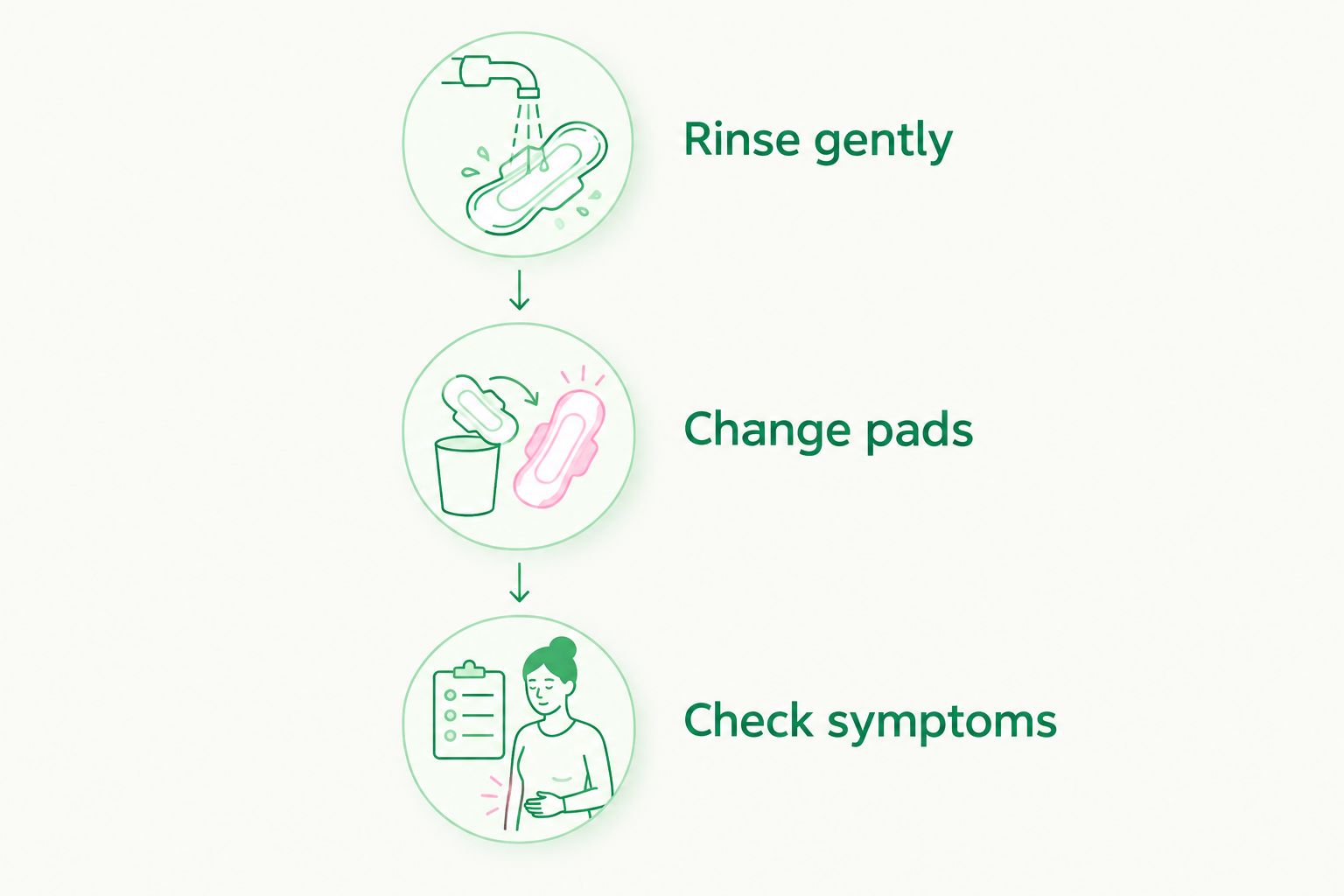
You do not need to wash inside the vagina to support recovery. External cleanliness and internal vaginal treatment are different tasks, and neither a cleanser nor a deodorant diagnoses the cause of odor.
What to leave out of an automatic postpartum kit
Do not make boric acid suppositories a routine postpartum purchase. CDC bacterial vaginosis treatment guidance discusses boric acid within a specific clinician-directed approach for some recurrent BV cases. That is not evidence for routine postpartum use or for any particular commercial formula.
Do not start intravaginal products during postpartum healing without your obstetric clinician's direction. Breastfeeding also warrants a medication-safety discussion rather than an assumption that a nonprescription product is suitable.
Deodorant sprays, fragranced wipes, and products marketed for itching are not substitutes for assessing new symptoms. An external wash cannot treat BV, and persistent odor cannot be diagnosed from an article.
Warning signs that outrank every product recommendation
Your 2026 safety checklist should follow the CDC's Hear Her urgent maternal warning signs. Seek immediate medical care for:
- Fever of 100.4°F (38°C) or higher.
- Heavy bleeding that soaks through 1 or more pads in an hour.
- Foul-smelling vaginal discharge.
- Severe abdominal pain, trouble breathing, chest pain, or other urgent symptoms.
The CDC states that urgent maternal warning signs can occur during pregnancy and up to 1 year after delivery. Tell the treating clinician that you recently gave birth.
For medical context, this guide uses ACOG's Postpartum Pain Management guidance and the CDC's Urgent Maternal Warning Signs and bacterial vaginosis treatment guidance. These sources support general care and escalation advice, not claims that the featured formulas improve postpartum healing.
How the products are ranked
This 2026 ranking prioritizes immediate recovery functions: gentle rinsing, bleeding management, comfort, and practical clothing. Optional skincare ranks below those essentials because its suitability depends on skin condition, ingredients, and clinician instructions.
The ranking is not a clinical trial or a claim that branded products outperform basic supplies. An OB/GYN-developed product line and evidence for a specific postpartum use are not interchangeable.
Which postpartum products should you choose?
Start with a peri bottle, unscented pads, comfortable underwear, and your care team's recommended comfort measures. That is the default kit for the undecided reader.
Add an external wash or friction balm only for a clear, appropriate purpose. If symptoms are persistent, worsening, or unfamiliar, the next move is medical assessment—not a larger product bundle.
FAQ
What's the best feminine care product right after giving birth?
A peri bottle is a practical first choice for gentle external rinsing when recommended by your care team. Unscented pads and comfortable underwear address other immediate needs without adding products to healing tissue.
Can I use feminine wash on postpartum stitches?
Do not apply feminine wash to postpartum stitches unless your obstetric clinician specifically instructs you to. Follow your discharge directions for rinsing and wound care instead.
Is postpartum vaginal odor always BV?
No, odor alone cannot establish that you have BV. Foul-smelling postpartum discharge requires prompt medical assessment, particularly with fever, pain, or feeling unwell.
Can I use boric acid suppositories after delivery?
Do not start boric acid suppositories during postpartum recovery without your obstetric clinician's direction. General evidence for selected recurrent BV treatment does not establish suitability during healing or breastfeeding.
Do I need a pH-balanced feminine wash after birth?
No, a pH-balanced wash is not a postpartum recovery requirement. The label does not establish wound safety or show that a cleanser treats BV or postpartum infection.
Can I use a skin balm on a postpartum tear?
Do not apply a skincare balm to a postpartum tear, open wound, or stitches without explicit clinical instructions. Products intended for friction on intact skin serve a different purpose from wound care.
What postpartum symptoms need immediate medical care?
Seek immediate medical care for fever of 100.4°F or higher, bleeding that soaks at least one pad in an hour, or foul-smelling discharge. Severe abdominal pain, chest pain, and trouble breathing also require urgent assessment.
One last thing
The most useful addition to your 2026 recovery kit is not another formula. Keep your discharge instructions and care team's phone number where you change pads, so you can act on symptoms without searching for guidance.
Before buying any optional product, ask: “Is this for intact external skin, or am I trying to treat a symptom that needs assessment?” That question separates useful skincare from delayed medical care.


