

This article is for informational purposes only. It is not, nor is it intended to be, a substitute for professional medical advice, diagnosis, or treatment and should never be relied upon for specific medical advice.
Best overall: warm water for external washing. Best for a first period: unscented pads. Best reusable option: period underwear. This 2026 guide to the best feminine hygiene products for teens separates everyday care, period protection, and symptoms that need medical attention.
TL;DR
- The best feminine hygiene products for teens support comfort and period care, not a scent-free body.
- Warm water is the default for external vulvar washing; never wash inside the vagina.
- Unscented pads suit beginners; period underwear provides a reusable external option.
- Kushae's wash needs an age-label check before teen use; external cleansers do not treat BV.
Why this matters
A teen does not need a shelf of intimate products to stay clean. The vulva is the external genital area; the vagina is the internal canal. Those areas need different care, and confusing them makes product shopping harder.
ACOG's Vulvovaginal Health guidance explains that the vagina cleans itself and discourages douching. Normal discharge and a mild natural scent are not evidence of poor hygiene. Persistent odor, itching, burning, or unusual discharge deserves medical assessment—not stronger cleansing.
Kushae develops OB/GYN-developed vulvovaginal care products. That background does not establish that every product suits adolescents, and it does not make an external cleanser a treatment for vaginal infection.
What makes the best feminine hygiene products for teens in 2026
Choose products by their job, not by how strongly they promise freshness.
- Correct location: External washing stays outside. Menstrual products intended for insertion require their own instructions.
- Low irritation potential: Avoid added fragrance around sensitive vulvar skin. Stop using anything that causes burning or a rash.
- A clear purpose: A pad absorbs menstrual blood. A cleanser washes external skin. Neither diagnoses vaginal odor.
- Practical use: Consider school bathroom access, changing opportunities, laundry, and comfort handling menstrual blood.
- Clear labeling: Read intended use, warnings, ingredients, and any age directions before choosing a product.
- Personal comfort: An external option is a valid choice. Using an inserted menstrual product is not a milestone anyone must reach.
The best choice is the simplest option that handles the actual need without causing irritation. A longer ingredient list or a “natural” label does not prove better tolerance.
Teen hygiene options at a glance
The order below starts with everyday external care, then covers menstrual protection, and finishes with an optional cleanser. These are different jobs—not competing treatments for vaginal symptoms.
| Rank and option | Best for | Standout feature | Key limitation |
|---|---|---|---|
| 1. Warm water | Routine external washing | No added cleansing ingredients | Does not absorb menstrual blood or treat infection |
| 2. Unscented pads | First periods and learning flow patterns | External protection with no insertion | Dampness, friction, or adhesive contact can irritate |
| 3. Period underwear | Reusable external period protection | Absorbency built into underwear | Requires washing, drying, and a change plan |
| 4. Tampons | Swimming during a period | Internal menstrual absorption | Requires insertion and strict wear-time habits |
| 5. Gentle 2-N-1 Foaming Wash | Discussing an optional external cleanser | A named wash from an OB/GYN-developed care line | Teen suitability and ingredients need checking; not BV treatment |
1. Warm water: best teen hygiene option for everyday washing
Warm water supports a straightforward external-care routine without adding fragrance or other cleanser ingredients. Gently rinse the vulva with your hand, then pat dry rather than scrubbing. Do not direct water or cleansing products inside the vagina.
ACOG's vulvovaginal-care guidance supports gentle care and avoiding irritants. You do not need to remove every trace of natural scent to be clean.
Warm water pros:
- Keeps routine washing simple.
- Adds no fragrance or cleanser ingredients.
- Avoids buying a specialized product for normal discharge or scent.
Warm water cons:
- Does not provide period protection.
- Does not treat itching, BV, yeast infection, or persistent odor.
Best for: Teens building an everyday external-washing routine, especially when products have caused irritation.
Use gentle contact, not a washcloth scrub. More friction is not more hygiene, and repeated washing is not the answer to a symptom that keeps returning.
Verdict: Skip a specialized cleanser as the default; start with gentle external washing.
2. Unscented pads: best period protection for beginners
Unscented pads absorb menstrual blood outside the body and attach to underwear. You can see the blood on the pad, which helps you learn when a change is needed and whether the shape fits your usual flow.
Choose by fit and absorbency rather than scented packaging. A pad that bunches or rubs is not a good fit just because it stays attached.
Unscented pads pros:
- Require no vaginal insertion.
- Make checking menstrual flow straightforward.
- Work as a starting option while you learn your preferences.
Unscented pads cons:
- Contact, moisture, and friction can irritate skin.
- Need changing throughout the day.
- Do not work as swimming protection.
Best for: First periods, teens who prefer external protection, and learning a school-day changing routine.
Change pads regularly and whenever they become wet, saturated, or uncomfortable. ACOG's Your First Period guidance discusses regular pad changes; your flow and the product instructions determine your practical routine.
Verdict: Buy unscented pads as a straightforward first-period option.
3. Period underwear: best reusable external period option
Period underwear has an absorbent section designed to hold menstrual blood. It avoids insertion and can serve as standalone protection or backup, depending on the garment's instructions and your flow.
Absorbency differs between products. Do not assume an ordinary pair of underwear, a leak-resistant garment, and absorbent period underwear do the same job.
Period underwear pros:
- Provides an external, reusable option.
- Avoids pad adhesive against underwear.
- Can provide backup alongside another menstrual product when its instructions allow.
Period underwear cons:
- Requires washing and complete drying.
- Changing at school needs privacy and somewhere to store the used pair.
- Fabric or detergent sensitivity can still cause irritation.
Best for: Teens who prefer underwear-style protection and have a workable laundry routine.
Try period underwear at home before relying on it for a full school day. Follow the garment's washing instructions and change it when it feels wet or reaches its intended use limit—not simply when school ends.
Verdict: Buy if changing and laundry fit your routine; hold if they do not.
4. Tampons: best period protection for swimming
Tampons absorb menstrual blood inside the vagina. They are an option for teens who want internal protection, including during swimming, but nobody needs to use them before feeling comfortable.
FDA guidance recommends the lowest absorbency needed for your flow. Tampons are for menstrual bleeding—not daily discharge, odor control, or keeping the vagina clean.
Tampon pros:
- Provide menstrual protection during swimming.
- Avoid an external absorbent pad.
- Offer another option when external products feel uncomfortable.
Tampon cons:
- Require comfortable insertion and removal.
- Need reliable tracking of wear time.
- Carry a rare but serious risk of toxic shock syndrome.
Best for: Teens who want internal period protection and can follow the instructions consistently.
The FDA advises changing a tampon every 4 to 8 hours and never wearing one for more than 8 hours. Wash your hands before and after handling it. If insertion hurts, stop rather than pushing through pain.
Verdict: Buy only when you want an inserted option and can follow wear-time instructions.
5. Optional external wash: best discussed before adding it
Kushae Gentle 2-N-1 Foaming Feminine Wash is a wash in the brand's OB/GYN-developed care line. For a teen, that makes it a product to evaluate—not an automatic recommendation based on the brand's medical background.
Kushae's wash is best considered by someone seeking an optional external cleanser, not treatment for vaginal odor or BV. Check the complete ingredient list, intended application area, warnings, and age directions before use. Ask a clinician about suitability if your teen has sensitive skin or recurring symptoms.
External wash pros:
- Has a separate role from intravaginal treatment.
- Provides an optional cleansing format for someone who wants one.
- Offers labeling and ingredients to assess before deciding.
External wash cons:
- Is not necessary for a basic water-first routine.
- Any cleanser can cause individual irritation.
- Does not diagnose or treat BV, yeast infection, or unexplained discharge.
Best for: A label-and-clinician discussion about optional external cleansing—not a blanket teen recommendation.
The supplied product information does not establish adolescent suitability or provide the complete formula. “pH-balanced” and “feminine” wording alone cannot answer those questions.
Verdict: Hold until intended use, ingredients, and teen suitability are clear.
Keep external care separate from symptom treatment
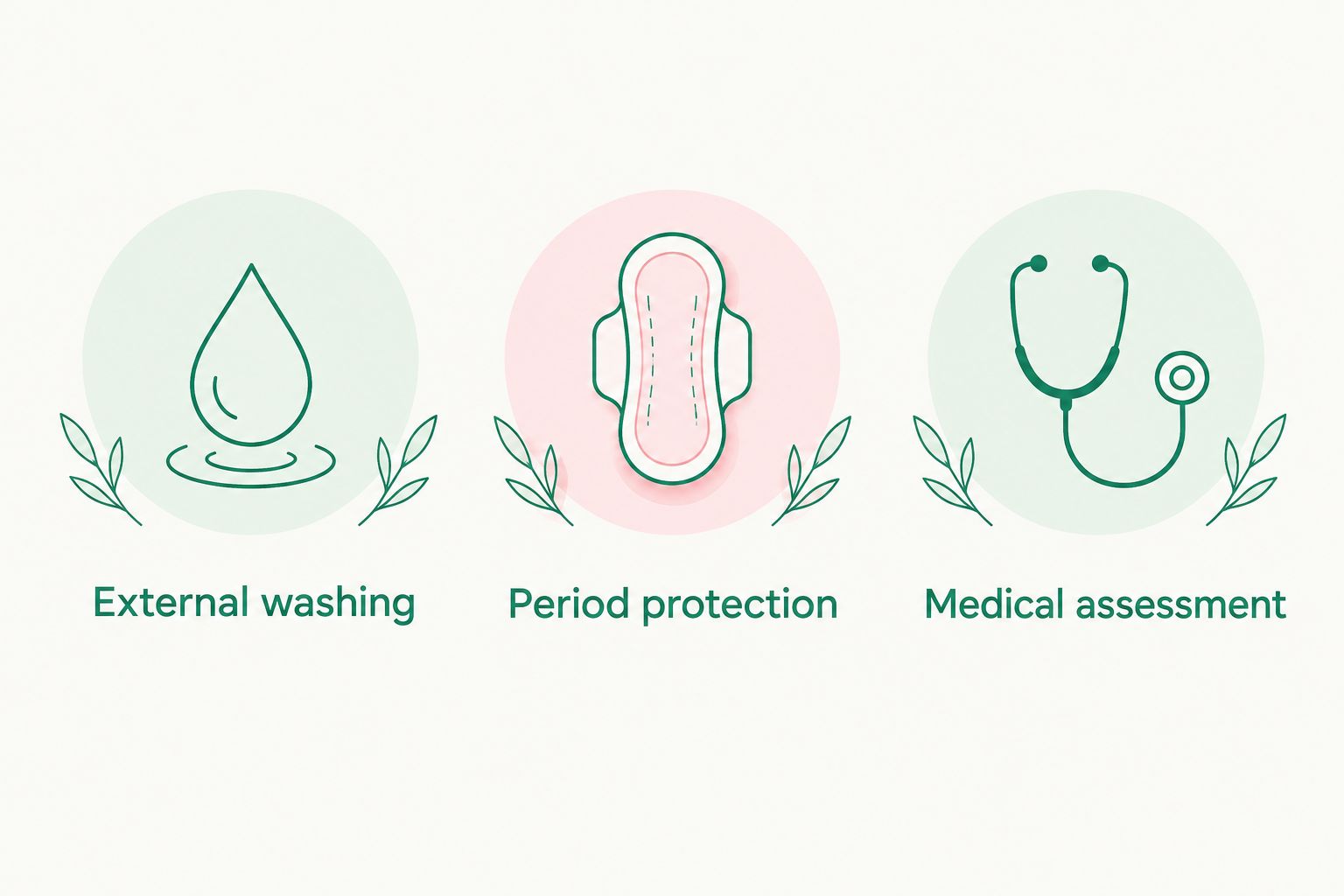
External washing, period protection, and medical assessment solve different problems. A cleaner-feeling vulva does not establish that the vaginal environment is healthy, and an odor change cannot identify its cause by itself.
- External washing: Gentle cleaning of the vulva.
- Period protection: Absorbing or containing menstrual blood.
- Medical assessment: Evaluating persistent odor, itching, burning, pain, or unusual discharge.
Do not build a teen starter kit around vaginal deodorants, douches, or boric acid suppositories. ACOG discourages douching and scented intimate products. Boric acid has specific clinical uses, but it is not routine hygiene or a self-directed answer to a teen's odor concerns.
CDC guidance for BV and vulvovaginal candidiasis describes treatment approaches for diagnosed conditions. That evidence does not prove that a particular retail formula treats a teen's symptoms.
A practical school-day kit for 2026
Start with 2 spare pads and 1 spare pair of underwear, then adjust the supplies to your flow and school day. These are packing suggestions, not a required amount or a guarantee against leaks.
Add a discreet pouch and a separate bag for used clothing. If you use tampons, keep track of insertion time and arrange a bathroom break before the wear-time limit.
There is no need to pack a scented spray to make a normal body smell different. If you repeatedly notice a strong or unfamiliar odor, ask for medical help rather than adding more products.
How this 2026 ranking was chosen
This ranking prioritizes gentle external care, a clear purpose, practical school use, and product instructions. It is a decision guide, not a product trial or evidence that one commercial formula performs better than another.
Medical references for this 2026 guide are ACOG's Vulvovaginal Health and Your First Period patient guidance; the FDA's The Facts on Tampons—and How to Use Them Safely; and CDC guidance on BV and vulvovaginal candidiasis. These sources support general care and safety information, not endorsement of a specific brand.
Which teen hygiene option should you choose?
Start with warm water for external washing and unscented pads for period protection. Choose period underwear if reusable external protection fits your routine. Choose tampons if you want internal protection and can follow the safety instructions.
Keep optional cleansers separate from symptom treatment. Persistent odor, itching, burning, unusual discharge, or pain needs assessment; severe pain, fever, or feeling acutely unwell needs prompt medical care. You do not need to diagnose yourself before asking for help.
FAQ
What's the best feminine hygiene product for a teen starting puberty?
Warm water for gentle external washing is the starting point; unscented pads are a straightforward option when periods begin. The vagina does not need internal washing.
Does a teen need a feminine wash every day?
No, a specialized feminine wash is not required for everyday hygiene. If you want an external cleanser, check its ingredients, warnings, intended application area, and age directions first.
Is Kushae wash suitable for teenagers?
Teen suitability is not established by the supplied product information. Check the current label and ask a clinician about use, especially for sensitive skin or recurring symptoms.
Are pads better than tampons for a first period?
Pads are a straightforward first option because they require no insertion. Tampons are another choice when you feel comfortable and can follow the product's safety instructions.
How long can a teen leave a tampon in?
The FDA advises changing a tampon every 4 to 8 hours and never leaving one in for more than 8 hours. Use the lowest absorbency needed for your menstrual flow.
Can feminine wash treat BV or vaginal odor?
An external feminine wash does not treat BV. Persistent or unfamiliar odor needs assessment because symptoms alone cannot establish the cause.
Should a teen use boric acid suppositories for odor?
A teen should not self-treat unexplained odor with boric acid suppositories. Get a medical assessment and follow an individualized treatment plan rather than treating odor as a hygiene failure.
One last thing
Before adding another product, change the question from “How do I stop smelling?” to “Is this normal scent, external sweat, or a new symptom?” You do not have to answer that alone. Tell a trusted adult or clinician what changed, what it feels like, and which products you have used.
A useful hygiene routine supports comfort. It does not require an odorless body.


