


This article is for informational purposes only. It is not, nor is it intended to be, a substitute for professional medical advice, diagnosis, or treatment and should never be relied upon for specific medical advice.
Best overall for a minimal sensitive-skin routine: plain lukewarm water. Best packaged wash option to consider: Kushae Pump & Pouch Duo – Gentle 2n1 Foaming Wash Set. Best portable format: Gentle 2-N-1 Foaming Wash – Travel Size. This 2026 guide separates external cleansing from vaginal treatment and explains how to choose without making irritation worse.
TL;DR
- The best feminine wash for sensitive skin cleans the external vulva without causing burning, itching, or dryness.
- Plain lukewarm water is the simplest starting point; a separate feminine cleanser is not essential.
- Kushae offers OB/GYN-developed care, but that does not establish that every sensitive person will tolerate its wash.
- A pH-balanced feminine wash does not treat BV; persistent vaginal odor needs medical assessment.
Why this matters
Sensitive external skin and recurring vaginal odor are different problems. Your vulva is the external genital area; your vagina is the internal canal. A wash belongs outside, not inside the vagina.
That distinction changes your purchase. If sweat on external skin is the concern, gentle cleansing addresses that surface. If you have persistent odor, unusual discharge, or recurrent irritation, buying another cleanser does not establish the cause.
ACOG's Vulvovaginal Health guidance distinguishes vulvar care from internal vaginal cleaning and advises against douching. CDC guidance on bacterial vaginosis explains that BV requires appropriate evaluation and treatment. Neither source establishes clinical results for a particular wash formula.
You do not need to erase your natural scent to be clean. The goal is comfortable skin, not fragrance or a squeaky-clean feeling.
What makes the best feminine wash for sensitive skin?
Use these criteria for your 2026 shortlist before comparing packaging or product names:
- External-use instructions: The directions must clearly identify where the cleanser belongs. Do not insert an external wash into the vagina.
- Ingredient transparency: Read the complete current ingredient list. Check for ingredients that have irritated your skin before.
- Fragrance suitability: ACOG advises avoiding perfumed products on sensitive vulvar skin. A fresh scent is not evidence of better cleansing.
- Comfort after rinsing: Burning, itching, tightness, and dryness are reasons to stop, not signs that a wash is working.
- A useful format: A pump, travel bottle, or refill should fit your routine. Packaging convenience does not establish greater skin tolerance.
- Accurate limits: A cleanser should not be your treatment plan for BV, yeast infection, or an unexplained rash.
A pH-balanced claim is not enough to pass this checklist. It does not tell you whether a formula contains your personal irritants, and it does not prove that external washing changes vaginal pH.
Sensitive-skin cleansing options at a glance
This table compares a minimal cleansing approach with packaged wash formats. The product entries represent different purchasing situations, not proven differences in clinical effectiveness.
| Option | Best for | Standout feature | Key limitation |
|---|---|---|---|
| Plain lukewarm water | Keeping the routine minimal | No added cleanser ingredients | Does not diagnose or treat persistent symptoms |
| Pump & Pouch Duo – Gentle 2n1 Foaming Wash Set | Starting with a reusable bottle and refill | Bottle-and-refill format | Packaging does not establish sensitive-skin tolerance |
| Gentle 2-N-1 Foaming Wash – Travel Size | Carrying an external cleanser | Listed 1.33 oz format | Smaller packaging does not make a formula gentler |
| Kushae Refill Foaming Wash Pouch Bundle | Replenishing an established wash routine | Refill pouch format | Not the sensible first purchase if you have not established tolerance |
1. Plain lukewarm water: best for a minimal routine
Plain lukewarm water is the simplest starting point when you want to avoid adding cleanser ingredients. Use it on the external vulva, without scrubbing or internal rinsing. ACOG includes warm water in its vulvar-care guidance.
Plain water pros:
- Adds no fragrance or cleanser ingredients.
- Keeps the cleansing routine simple.
- Avoids treating a separate feminine wash as essential hygiene.
Plain water cons:
- Does not identify the cause of itching, discharge, or odor.
- Does not replace prescribed treatment.
Best for: You want a minimal routine, particularly when you are trying to identify whether an added product is bothering your skin.
If water still stings, do not assume you need a stronger cleanser. Persistent discomfort deserves assessment, especially when the skin looks inflamed or broken.
Verdict: Hold off on adding a wash if plain water keeps your external skin comfortable.
2. Pump & Pouch Duo: best for starting a refill routine
The Kushae Pump & Pouch Duo – Gentle 2n1 Foaming Wash Set pairs a reusable bottle with a refill. It is the relevant format if you want that dispensing setup rather than a travel bottle or refill bundle alone.
The brand describes its care line as OB/GYN-developed. That describes product development; it is not proof that this particular formula treats sensitive skin or prevents reactions.
Pump & Pouch Duo pros:
- Combines the bottle and refill in one set.
- Supports a reusable-bottle routine.
- Offers a packaged option for readers who prefer a foaming wash.
Pump & Pouch Duo cons:
- A larger routine commitment than trying a smaller format.
- Formula suitability still depends on the ingredient list and your skin response.
Best for: You want a pump-and-refill setup and have checked that the current formula fits your needs.
Do not read “gentle” as a guarantee. If you have vulvar eczema, contact allergies, or repeated burning with cleansers, ask your clinician which ingredients to avoid before choosing a set.
Verdict: Buy for the bottle-and-refill format, not as a treatment for BV or unexplained irritation.
3. Gentle 2-N-1 Foaming Wash – Travel Size: best for portability
Gentle 2-N-1 Foaming Wash – Travel Size is listed as a 1.33 oz wash. Its useful distinction is portability: it gives you a smaller format rather than asking you to carry a larger dispensing setup.
Travel convenience and skin compatibility are separate decisions. Check the current label and use the product only as directed on external skin.
Travel Size pros:
- Smaller format for carrying your wash.
- Avoids committing to a refill bundle first.
- Fits a routine built around portable toiletries.
Travel Size cons:
- Does not establish whether the formula suits your skin.
- Requires replenishment rather than functioning as a reusable-bottle setup.
Best for: You want a portable wash format or prefer to start with a smaller package.
An unfamiliar wash is not a necessary travel purchase. If your current external-care routine is comfortable, keeping it consistent is more useful than adding products because you are packing a bag.
Verdict: Buy for portability; skip it if you do not need a separate cleanser.
4. Refill Foaming Wash Pouch Bundle: best for established users
The Refill Foaming Wash Pouch Bundle is built around replenishing a wash routine. The product description identifies a refill pouch format, not a separate therapeutic purpose.
This is a purchasing decision for someone who already knows the wash works comfortably in their routine. A bundle should follow that decision, not substitute for it.
Refill Pouch Bundle pros:
- Provides a refill-focused format.
- Suits an established reusable-bottle routine.
- Keeps the purchase focused on replenishment.
Refill Pouch Bundle cons:
- Does not answer whether a new user will tolerate the wash.
- Requires checking the refill directions and compatible dispensing setup.
Best for: You already use the wash comfortably and want refills rather than a new starter format.
Check the current ingredients when replenishing, especially if you have a known contact allergy. Familiar packaging is not a substitute for reading the label.
Verdict: Buy after tolerance is established; wait if you are still investigating irritation.
Choose a format only after checking suitability
These wash formats serve different practical needs. Choose the pump-and-refill set for that setup, the travel bottle for portability, and the refill bundle for an established routine. None wins on proven sensitive-skin outcomes from packaging alone.
Compare wash formats
External cleansing is not vaginal treatment
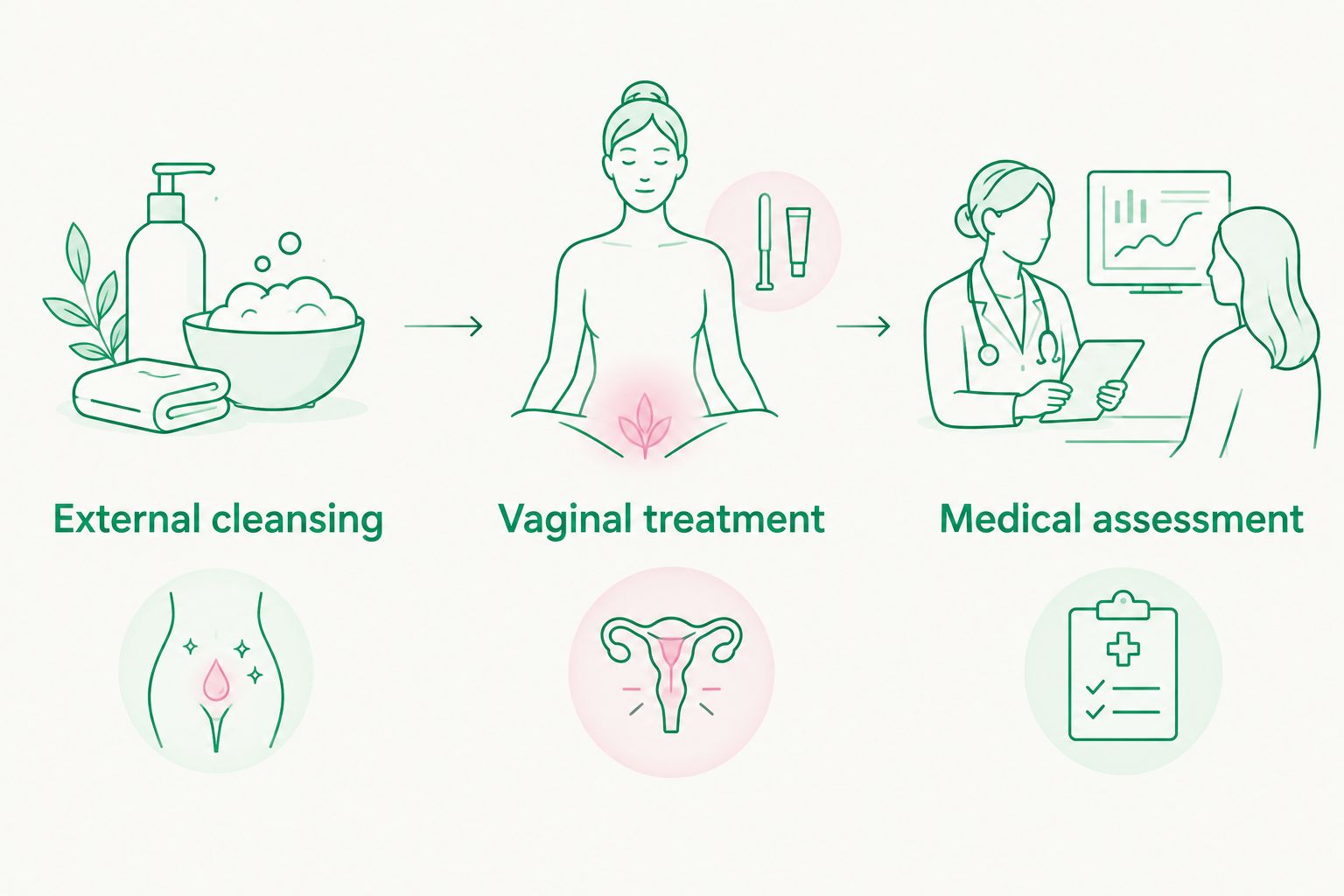
Keep these 3 categories separate when deciding what you need:
- External cleansing: Washing the vulva removes material from the skin's surface. It does not diagnose an infection.
- Vaginal treatment: Intravaginal medicines and other products have different directions and indications. A cleanser cannot replace them.
- Medical assessment: Persistent odor, unusual discharge, or recurring irritation needs evaluation rather than a stronger wash.
CDC guidance identifies antibiotics as standard BV treatment and notes that douching can increase relapse risk. That guidance does not support using an external wash to treat BV or assuming that odor alone confirms the diagnosis.
Do not insert wash into the vagina, douche with it, or use fragrance to cover persistent symptoms. Seek prompt care for pelvic pain, fever, sores, or concerning symptoms during pregnancy.
A simple external-care routine
Keep your 2026 routine easy to assess. Introducing several products together makes it harder to identify which one caused discomfort.
- Start simple. Use lukewarm water on external skin. If you choose a cleanser, follow its label and avoid ingredients you already know irritate you.
- Avoid friction. Clean gently rather than scrubbing. Rinse away cleanser and pat dry without rubbing.
- Watch your response. Stop a product that causes burning, itching, or dryness. Persistent symptoms need medical advice, not repeated trials of stronger products.
Introduce only 1 new product at a time. This is a practical way to keep track of your response, not a guarantee against allergy or irritation.
How these options were ranked
This 2026 ranking prioritizes a minimal routine, external-use boundaries, ingredient checking, and a clear reason to choose each format. Plain water leads because it avoids adding a cleanser; the packaged options are organized by purchasing need.
There is no head-to-head clinical ranking here. Bottle size, refill packaging, and OB/GYN involvement do not establish that one formula causes fewer reactions than another.
Medical context comes from ACOG's Vulvovaginal Health guidance and CDC's bacterial vaginosis treatment guidance. These sources support the care boundaries described here, not product-specific efficacy claims.
Which sensitive-skin cleansing option should you choose?
Start with plain lukewarm water if your external skin is comfortable without cleanser. If you prefer a packaged wash, check the current ingredients and directions for Gentle 2-N-1 Foaming Wash before selecting a format.
Kushae feminine wash is an option for women seeking OB/GYN-developed external care, not a substitute for diagnosing recurrent odor or irritation. Choose a format for convenience only after deciding that the formula belongs in your routine.
FAQ
What's the best feminine wash for sensitive skin?
The best option is one that cleans external skin without causing irritation; plain lukewarm water is a sensible starting point. If you prefer a cleanser, check its full ingredient list and external-use directions rather than relying on a gentle or pH-balanced claim.
Do I need feminine wash every day?
You do not need a separate feminine wash to keep the vulva clean. Gentle external cleansing with water is an option, and an added cleanser should not cause burning, dryness, or itching.
Is a pH-balanced feminine wash better for sensitive skin?
A pH-balanced label alone does not establish better tolerance for sensitive skin. Ingredients, your individual sensitivities, and the way you use the product still matter.
Can feminine wash treat BV or fishy vaginal odor?
An external feminine wash does not treat BV. Persistent or unusual vaginal odor needs medical assessment because symptoms alone do not confirm the cause.
Can I wash inside my vagina?
Do not use an external feminine wash inside the vagina. ACOG advises against douching, and internal cleansing is different from gently washing the external vulva.
Is an OB/GYN-developed wash guaranteed not to irritate me?
OB/GYN development does not guarantee that a wash will suit every person's skin. Check the formula for known irritants and stop using it if discomfort develops.
Should I choose a travel wash or a refill bundle first?
Choose the travel format if you need portability or want a smaller package; choose refills after you have established that the wash suits you. Neither format proves that the formula is gentler.
When should I see a doctor instead of changing washes?
Seek medical assessment for persistent odor, unusual discharge, recurring irritation, or symptoms that continue after stopping a product. Pelvic pain, fever, sores, or concerning symptoms during pregnancy call for prompt care.
One last thing
For your 2026 routine, judge a cleanser by how your skin feels after washing—not by how strongly it smells or how much it foams. Burning is a reason to stop, not evidence of a deeper clean.
Before your next appointment, write down which products you use, where you apply them, and when symptoms appear. That record gives your clinician a clearer starting point than another bottle bought to cover the problem.


