


This article is for informational purposes only. It is not, nor is it intended to be, a substitute for professional medical advice, diagnosis, or treatment and should never be relied upon for specific medical advice.
College students’ feminine hygiene is routine care of the vulva and menstrual needs with the aim of staying comfortable and recognizing symptoms that need medical attention. Shared bathrooms, long class days, and limited storage call for a simple routine—not more products or washing inside the vagina.
TL;DR
- Feminine hygiene for college students starts with gentle external vulvar care; never wash inside the vagina.
- Kushae offers OB/GYN-developed feminine care; external washes do not treat BV or yeast infections.
- Choose sensitive-skin care by ingredients and personal tolerance, not a promise to eliminate all vaginal odor.
- Recurring odor, itching, or unusual discharge needs medical assessment, not repeated deodorizing or self-treatment.
Why feminine hygiene matters for college students
Your routine should make campus life easier without turning normal anatomy into a problem. The vulva is the external genital area. The vagina is the internal canal, and it does not need cleansing products inside it.
For your 2026 campus routine, separate three needs: external cleansing, menstrual care, and evaluation of symptoms. A wash addresses the first—not the other two. If products sting or leave skin feeling tight, the answer is not stronger cleansing; simplify your routine and seek advice if irritation persists.
Start with the criteria in this guide to feminine wash for sensitive skin. A sensitive-skin label alone does not establish that a product suits you.
The American College of Obstetricians and Gynecologists’ guidance on vulvovaginal health distinguishes normal discharge from symptoms requiring assessment and advises against douching. Normal scent and discharge do not mean you are dirty. New or persistent changes deserve attention without shame.
Build a campus routine you can actually maintain
1. Separate external cleansing from vaginal treatment
Start with lukewarm water and clean hands for gentle external cleansing. Do not scrub, douche, or direct cleanser into the vaginal opening. Pat dry rather than rubbing sensitive skin.
You do not need a special cleanser to make the vagina clean. If you choose an external wash, follow its directions and stop if it causes irritation. Avoid using a wash to investigate whether itching or odor is an infection; symptom improvement after washing does not establish a diagnosis.
The distinction also helps when shopping. An external wash, a skin balm, and a vaginal suppository have different purposes and routes of use. They are not interchangeable, even when they appear in the same care collection.
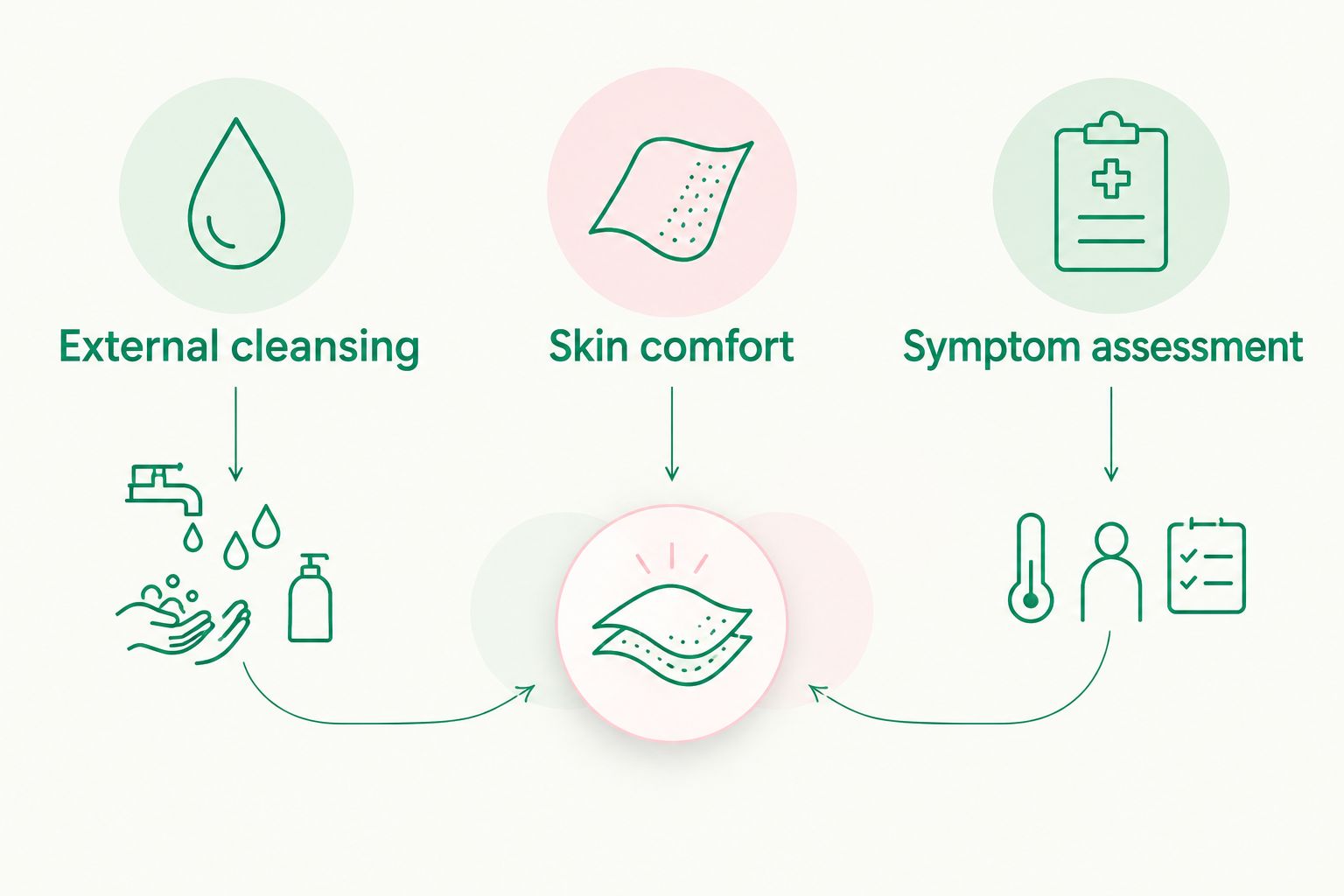
- External cleansing: Gently clean the vulva without scrubbing.
- Skin comfort: Address friction separately from vaginal symptoms.
- Symptom assessment: Get new or recurring changes evaluated.
- Keep external products outside the vagina.
2. Pack a small, dry bathroom kit
Use supplies you already have before buying a coordinated kit. A clean towel, your menstrual products, and spare underwear address practical needs without requiring a shelf of intimate products.
In a shared bathroom, focus on keeping your own supplies clean and letting wet items dry. Store products according to their labels, and keep caps closed. Do not leave medications loose in a shower caddy where someone else could mistake them for something else.
Your 2026 dorm checklist should prioritize items you actually use. A backup pair of underwear is more useful during an unexpected period than several overlapping deodorizing products.
- Pack your usual pads, tampons, or menstrual cup supplies.
- Carry spare underwear in a separate clean pouch.
- Keep wet towels separate from unused supplies.
- Leave products in their original, labeled packaging.
3. Choose an external wash only if you want one
Water-only cleansing is the simplest starting point. If you prefer a cleanser, check the full ingredient list, intended application area, and directions. Fragrance-free products avoid added fragrance, but no label guarantees that sensitive skin will tolerate every ingredient.
Kushae feminine care is best for students seeking OB/GYN-developed product options, not a substitute for diagnosis. The brand offers external washes and intravaginal products; choose by purpose rather than treating the whole range as one routine.
A pH-balanced feminine wash remains an external cleanser. It does not establish your vaginal pH, diagnose BV, or treat an infection. Likewise, evidence about an ingredient does not automatically establish a clinical benefit for a finished formula.
- Read the full ingredient list before purchasing.
- Confirm that the directions specify external use.
- Introduce one new product at a time.
- Stop use if burning, itching, or a rash develops.
4. Plan menstrual care around your class schedule
Set reminders instead of relying on the break between lectures. The FDA’s tampon safety guidance recommends changing tampons every 4 to 8 hours and never wearing a single tampon for more than 8 hours. Use the lowest absorbency needed for your flow.
Pads and menstrual cups have different directions; follow the specific product’s instructions. If a long lab, shift, or overnight plan makes timely changes difficult, select a method you can manage safely rather than extending wear beyond its instructions.
A period tracker can help you prepare supplies, but it cannot explain every change in discharge or bleeding. Record symptoms separately so you can describe them clearly at a visit.
- Keep a backup menstrual product in your everyday bag.
- Set a change reminder when inserting a tampon.
- Wash your hands before and after changing products.
- Follow cleaning and storage directions for reusable products.
5. Change after workouts and reduce friction
Start with a dry change of clothes rather than an odor product. After exercise, change out of wet underwear or leggings when practical, rinse external skin as needed, and dry gently.
Sweat-related odor on external skin is not the same as vaginal odor accompanied by discharge or irritation. A deodorant does not tell you which is present. Avoid covering up a new symptom before you have considered whether it needs assessment.
Friction care belongs on the skin area described by the product label—not inside the vagina. If rubbing causes broken skin, significant pain, or persistent inflammation, stop the aggravating activity or product and seek medical advice.
- Pack dry underwear for gym days.
- Change wet workout clothes before settling into study time.
- Avoid scrubbing areas that already feel irritated.
- Treat persistent skin pain as a separate concern from odor.
6. Recognize when campus health is the next step
Do not diagnose BV, yeast, or an STI from odor alone. The CDC’s 2021 Sexually Transmitted Infections Treatment Guidelines explain that history alone is insufficient for accurate diagnosis of vaginitis; examination and testing help identify the cause.
Book an appointment for new or recurring odor, itching, burning, unusual discharge, pain with urination, or symptoms that persist after treatment. Seek urgent care for severe pelvic pain, fever with pelvic symptoms, or significant symptoms when pregnancy is possible.
For a 2026 campus-health visit, bring a short symptom record and the names of products or treatments you have used. Ask about confidentiality and billing before the appointment if privacy is a concern; campus policies differ.
- Record when symptoms began and whether they recur.
- Note changes in discharge, bleeding, pain, and odor.
- List recent medications and intravaginal products.
- Ask what testing and follow-up your symptoms require.
7. Keep boric acid separate from everyday hygiene
Boric acid is not a daily cleansing step or a replacement for testing. The CDC’s 2021 guidance discusses vaginal boric acid in selected recurrent BV and non-albicans yeast treatment situations—not as a universal response to odor.
Never swallow boric acid, and do not use vaginal boric acid during pregnancy. If pregnancy is possible or you are trying to conceive, ask a clinician before use. Keep suppositories in their original packaging, separate from oral medicines and away from children and pets.
A clinician-guided treatment plan should identify the condition, product, duration, and follow-up. Adding probiotics or aloe to a product name does not establish that a particular formula prevents recurrence or improves outcomes.
- Get recurring symptoms assessed before repeating treatment.
- Tell your clinician about possible pregnancy.
- Follow the specific treatment plan and product directions.
- Contact Poison Control immediately after accidental swallowing.
Compare care options by purpose, not promises
For your 2026 shopping list, choose the smallest routine that meets your needs. The best option for everyday cleansing is not necessarily the right option for symptoms. Neither a full-size bottle nor a portable format changes that distinction.
| Option | Best for | Practical advantage | Key limitation |
|---|---|---|---|
| Lukewarm water and clean hands | Students wanting a minimal external routine | Requires no dedicated cleanser | Does not diagnose or treat vaginal symptoms |
| Kushae Gentle 2-N-1 Foaming Feminine Wash | Students who prefer an external foaming cleanser | Offers a dedicated cleansing format | Individual tolerance varies; not a BV or yeast treatment |
| Gentle 2-N-1 Foaming Wash - Travel Size | Students carrying supplies between dorms, gyms, and trips | The listed bottle contains 1.33 oz | Smaller format does not establish sensitive-skin tolerance |
| Clinician-guided treatment | Students with diagnosed BV, yeast, or another condition | Targets the identified condition | Requires assessment; treatment depends on the diagnosis |
| Vaginal boric acid | Selected patients whose clinicians recommend it | Has a role in specific treatment situations | Not routine hygiene; never swallow or use during pregnancy |
If you prefer a foaming wash, choose between an everyday bottle and a portable bottle based on where you will use it. You do not need both. Check the current ingredient list before purchasing, especially if you already know which ingredients irritate your skin.
External wash formats to consider
Common mistakes college students make
Treating every scent as a hygiene failure
A vagina does not need to smell like fragrance or nothing at all. Focus on changes from your usual pattern, especially when odor appears with itching, pain, or unusual discharge. Repeated washing can add irritation without explaining the original symptom.
Buying several products before checking the cause
A wash, deodorant, cream, and suppository do not become more appropriate because they are used together. Starting several at once also makes it harder to identify what caused burning or a rash. Simplify first; get persistent symptoms evaluated.
Repeating a roommate’s treatment
Similar symptoms do not establish the same diagnosis. Do not share prescriptions or copy someone else’s boric acid schedule. A useful recommendation from a friend is where to seek care—not which infection you have.
Skipping care because of embarrassment or privacy concerns
You do not need to apologize for odor, discharge, or questions about sex. Before booking, ask the clinic about confidential communication, insurance billing, and appointment access. Write down your questions if discussing them aloud feels difficult.
Medical guidance behind this routine
This 2026 guide separates general medical guidance from product information. The CDC’s 2021 Sexually Transmitted Infections Treatment Guidelines, specifically its BV, vulvovaginal candidiasis, and vaginal-symptom sections, support diagnosis and treatment distinctions. They do not establish effectiveness for a particular brand formula.
The FDA’s The Facts on Tampons—and How to Use Them Safely supports the tampon timing recommendations. ACOG’s Vulvovaginal Health patient guidance supports the distinction between normal vaginal function, external care, and symptoms requiring attention. This article provides education, not a diagnosis or individualized treatment plan.
FAQ
What's the best feminine hygiene routine for college students?
The best starting routine is gentle external cleansing, timely menstrual-product changes, and medical assessment for new or persistent symptoms. Keep supplies simple and never wash inside the vagina.
Do I need a feminine wash if I live in a dorm?
No, living in a dorm does not make a feminine wash necessary. Lukewarm water is a simple starting point for external cleansing; if you prefer a wash, check its ingredients and stop if it irritates your skin.
Can a pH-balanced feminine wash treat BV?
No, an external pH-balanced feminine wash does not treat BV. BV requires appropriate assessment and treatment, and a cleanser's pH claim does not establish what is happening inside the vagina.
Should I use boric acid when I notice vaginal odor?
Do not start boric acid solely because you notice odor. Odor does not identify the cause, and boric acid has specific clinical uses rather than a role as routine hygiene. Never swallow it or use it during pregnancy.
How often should I change a tampon during classes?
The FDA recommends changing tampons every 4 to 8 hours and never wearing one tampon for more than 8 hours. Use the lowest absorbency needed and plan changes around classes rather than extending wear.
Is vaginal odor after the gym always an infection?
No, odor after exercise does not by itself establish an infection. Change out of wet clothes and gently clean external skin; seek assessment if odor persists or accompanies unusual discharge, itching, burning, or pain.
When should I visit campus health for vaginal symptoms?
Visit campus health for new, persistent, or recurring odor, itching, burning, unusual discharge, or urinary discomfort. Severe pelvic pain, fever with pelvic symptoms, or significant symptoms when pregnancy is possible require urgent medical attention.
One last thing
Before buying another product, write down what changed. Note whether the problem is external rubbing, a new skin reaction, or vaginal symptoms. That distinction gives you a more useful next step than a longer shower—and helps a clinician ask better questions.


