


This article is for informational purposes only. It is not, nor is it intended to be, a substitute for professional medical advice, diagnosis, or treatment and should never be relied upon for specific medical advice.
Chemotherapy vulvovaginal care is gentle external hygiene and clinician-directed symptom management with the aim of protecting comfort and identifying problems early. This 2026 guide explains how to manage sensitive vulvar skin, discuss vaginal dryness, and respond to odor or discharge without treating an infection yourself.
TL;DR
- Vulvovaginal care during chemotherapy starts with gentle external cleansing and an oncology-approved plan for new symptoms.
- Kushae offers OB/GYN-developed care; external products do not treat BV, yeast infections, or chemotherapy-related vaginal dryness.
- Keep vulvar cleansing separate from vaginal moisturizers, lubricants, and prescribed treatments.
- Call your oncology team promptly about fever, new sores, bleeding, unusual discharge, or worsening pain.
Why vulvovaginal care matters during chemotherapy
Chemotherapy can affect ovarian function, vaginal moisture, and your body's ability to fight infection. Not everyone develops these changes. Your treatment, blood counts, cancer history, and existing skin conditions determine which precautions you need.
The distinction between anatomy and symptoms matters. The vulva is external tissue; the vagina is the internal canal. Washing the vulva does not treat a vaginal infection, and a cleanser should not go inside the vagina.
Kushae offers an OB/GYN-developed vulvovaginal care line. Kushae is best considered for women seeking optional external care with oncology approval—not treatment for chemotherapy-related infections. You do not need to buy a feminine-care product to begin a gentle routine.
For your 2026 care plan, use medical guidance rather than product promises. The American Society of Clinical Oncology's 2018 guideline, Interventions to Address Sexual Problems in People With Cancer, discusses lubricants, vaginal moisturizers, and individualized treatment. The CDC's 2021 Sexually Transmitted Infections Treatment Guidelines distinguish BV and candidiasis treatment from hygiene. These are general clinical references, not evidence that a particular Kushae formula is suitable during chemotherapy.
How to build your care routine
1. Ask your oncology team for a symptom plan
Start with a conversation, not a shopping list. Ask whom to call during office hours, whom to call overnight, and which symptoms require urgent assessment. Your oncology team can explain whether low white blood cells, low platelets, or irritated tissue change your usual routine.
Fever during chemotherapy needs immediate attention. CDC guidance for people receiving chemotherapy identifies 100.4°F (38°C) or higher as a reason to call your doctor immediately. Follow your team's instructions, including any stricter threshold; do not wait for a routine appointment.
Ask about symptoms even when they feel too minor or personal to mention. Burning, painful sex, and vulvar soreness belong in cancer care conversations.
- Save your oncology team's daytime and after-hours numbers.
- Ask what to do if fever develops alongside genital symptoms.
- Confirm whether vaginal insertion or sexual activity needs restrictions.
- Bring your existing washes, creams, and suppositories to a medication review.
- Request a gynecology referral for persistent or recurring symptoms.
2. Separate external irritation from vaginal symptoms
Use a simple symptom note before your appointment. Record where the discomfort occurs, when it began, and whether you see discharge, sores, swelling, or bleeding. This helps your clinician choose the right examination or testing; it does not establish a diagnosis.
External burning after washing suggests a different question from deep vaginal pain or new discharge. Urinary burning also deserves attention because vulvar irritation and urinary problems can feel similar.
A strong odor does not prove BV. Itching does not prove yeast. The CDC's 2021 guidance emphasizes that history alone is insufficient for an accurate vaginitis diagnosis; examination and laboratory testing help identify the cause.
- Name the location: vulva, vaginal opening, vagina, or urinary tract.
- Record discharge changes without trying to classify the infection yourself.
- Note links with washing, pads, laundry products, or sexual activity.
- Report sores, unexpected bleeding, and pelvic pain promptly.
- Bring the timeline to your oncology or gynecology appointment.
3. Simplify external cleansing before adding products
Begin with lukewarm water and gentle handling of external tissue. Avoid scrubbing, douching, and attempts to wash inside the vagina. Pat dry rather than rubbing irritated skin.
If your clinician recommends a cleanser, ask for one appropriate to your current skin condition. A product marketed as natural, feminine, or pH-balanced is not automatically suitable for inflamed tissue. Stop using a product that causes burning or worsening irritation, and tell your team.
The comparison below includes a Kushae wash and skin balm as optional external-care categories. Neither replaces assessment, and neither should be assumed suitable for broken skin or chemotherapy-related irritation without clinical advice.
- Keep cleansing external; never douche.
- Use your hands instead of abrasive washcloths or brushes.
- Ask before using a cleanser on sore or damaged tissue.
- Introduce only one approved product change at a time.
- Avoid deodorizing products as a response to unexplained vaginal odor.
4. Address vaginal dryness separately
Vaginal dryness is not a cleanliness problem. Some cancer treatments affect estrogen levels and vaginal tissue, making dryness, discomfort, or pain with penetration part of the treatment discussion. An external wash cannot replace moisture inside the vagina.
ASCO's 2018 cancer sexual-health guideline discusses vaginal moisturizers for ongoing dryness and lubricants for sexual activity. These products serve different purposes. Ask your team which ingredients, application method, and schedule fit your treatment.
Your 2026 dryness plan should also account for your cancer type. Vaginal estrogen and other prescription options require an individualized discussion, particularly with a history of hormone-sensitive cancer. Do not transfer someone else's recommendation to your own treatment.
- Ask about a nonhormonal vaginal moisturizer for ongoing dryness.
- Discuss a compatible lubricant if sexual activity feels uncomfortable.
- Check whether your team permits vaginal applicators during treatment.
- Ask before starting vaginal hormones or other prescription therapies.
- Stop painful penetration rather than trying to push through it.
5. Reduce friction around sensitive external skin
Start with changes that do not add another formula: remove damp clothing, choose comfortable underwear, and reduce rubbing from tight seams. If a pad or liner irritates your skin, discuss alternatives rather than covering the irritation with another product.
A protective skin product has a different job from a vaginal moisturizer. It belongs only on the external areas specified by its directions and your clinician. Do not assume that a body oil, balm, or soothing cream is appropriate inside the vagina.
Ask for assessment when skin splits, bleeds, develops sores, or becomes increasingly painful. A barrier product is not a substitute for identifying the cause of damaged skin.
- Change out of sweaty or wet clothing when practical.
- Choose underwear and clothing that do not rub sore areas.
- Avoid shaving or waxing irritated skin.
- Ask before applying a balm to damaged or inflamed tissue.
- Keep external skin products out of the vaginal canal.
6. Get new odor, discharge, or itching assessed
New symptoms during chemotherapy deserve a diagnosis, not a sequence of trial products. Your clinician might need an examination, vaginal testing, or urine testing depending on the symptoms. Tell them about recent antibiotics, previous BV or yeast diagnoses, and anything already applied.
Do not start boric acid suppositories for unexplained symptoms during chemotherapy. The CDC's 2021 guidelines describe boric acid in selected recurrent-infection treatment pathways—not as a general deodorizer or universal first treatment. Boric acid is toxic if swallowed and should not be used during pregnancy.
For 2026 treatment decisions, separate general evidence from formula-specific claims. Evidence involving boric acid does not establish that every suppository, added ingredient, or combination is appropriate for someone receiving chemotherapy.
- Contact your team about new or persistent vaginal odor or discharge.
- Ask whether testing is needed before using an antifungal.
- Do not insert boric acid without your treating clinician's approval.
- Keep suppositories separate from oral medicines and away from children.
- Report products already used so your clinician has the full picture.
7. Review the routine as treatment changes
A routine that felt comfortable before chemotherapy is not automatically the right routine throughout treatment. Review it when symptoms change or your oncology team changes your precautions. The goal is fewer irritants and clearer decisions—not more products.
Bring 3 questions to your next visit: What needs testing? What can I use externally? What can I use vaginally? Write down the answers separately so a cleanser, barrier product, and vaginal treatment never become interchangeable.
Include sexual comfort in that review. Your team can discuss pain, dryness, infection precautions, contraception, and support for changes in desire without making penetration the measure of recovery.
- Keep an updated list of external and intravaginal products.
- Note discomfort after each new product or routine change.
- Ask for a written plan for recurring symptoms.
- Review sexual-activity precautions with your oncology team.
- Revisit persistent dryness or pain rather than accepting it as unavoidable.
Compare care options during chemotherapy
Match the option to the symptom and the anatomical site. This table compares roles, not chemotherapy safety ratings. A product's intended purpose does not establish that it is suitable for your treatment plan.
| Option | Best for | Useful role | Key limitation |
|---|---|---|---|
| Lukewarm water and gentle external cleansing | A simple starting routine | Cleans external tissue without adding a formula | Does not treat infection or internal dryness |
| Kushae Gentle 2-N-1 Foaming Feminine Wash | Considering an optional external cleanser with clinician approval | Provides a wash option within the brand's OB/GYN-developed line | Chemotherapy-specific suitability is not established here; not BV or yeast treatment |
| Kushae Protective Feminine Skin Balm | Discussing external friction care with your clinician | Offers an external skin-balm option for a chafing-focused discussion | Not a vaginal moisturizer or infection treatment; damaged skin needs assessment |
| Nonhormonal vaginal moisturizer | Discussing ongoing internal dryness | Addresses a different need from cleansing | Ingredients and insertion need review for your circumstances |
| Lubricant | Reducing friction during approved sexual activity | Supports comfort during activity | Does not diagnose or treat the cause of pain |
| Clinician-selected infection treatment | A diagnosed infection | Targets the identified condition | Requires the right diagnosis; not interchangeable with hygiene products |
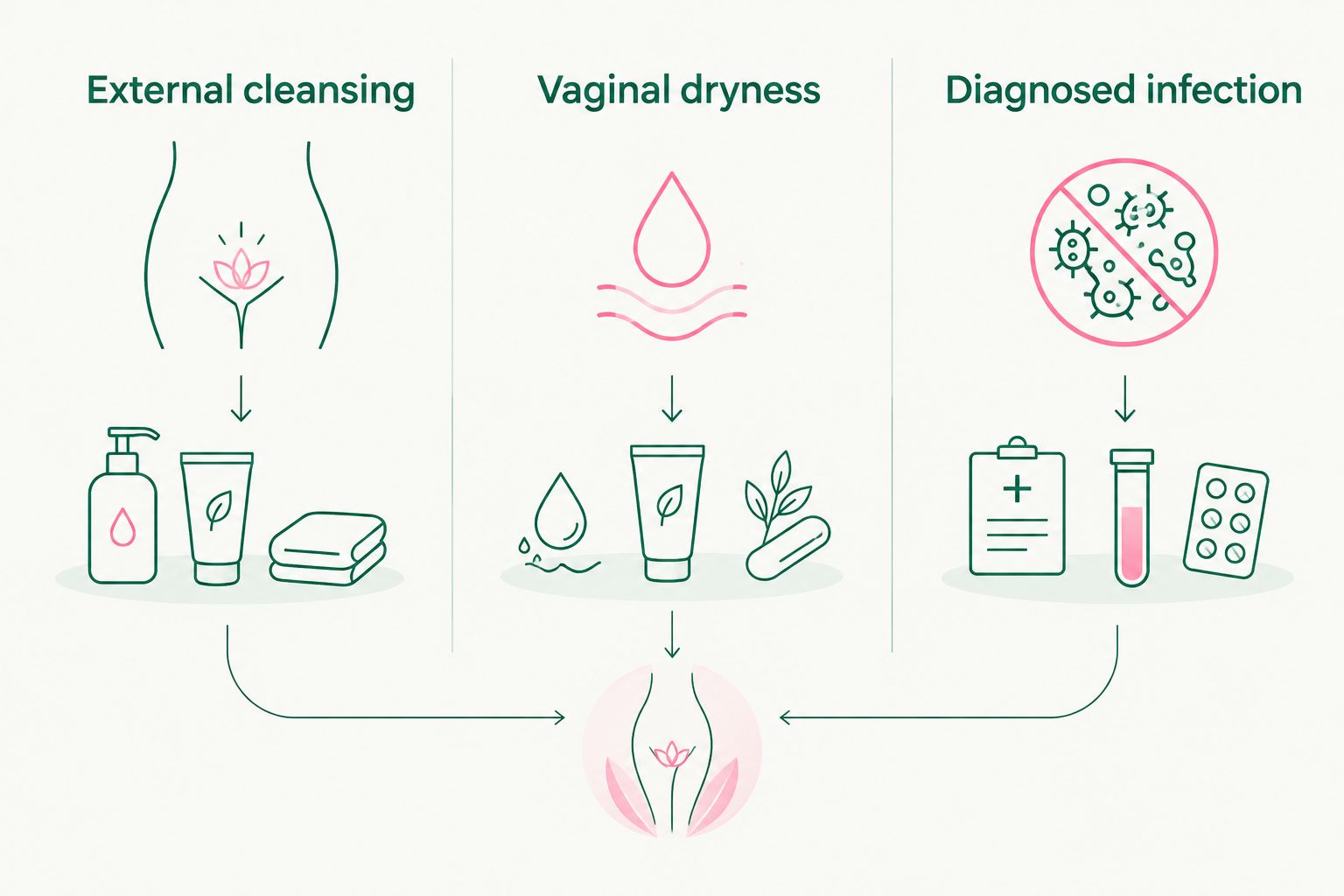
No cleanser or balm in this comparison carries a chemotherapy-specific safety claim. Bring the ingredient list and directions to your team before adding one, especially when tissue is sore or blood counts affect your precautions.
Common mistakes during chemotherapy
Treating odor as a hygiene failure
A change in vaginal odor is a symptom to discuss, not evidence that you are unclean. Repeated washing or deodorizing can distract from getting the cause assessed. Keep external cleansing gentle and report a persistent change.
Using a pH label as an infection diagnosis
A pH-balanced wash describes a product, not your diagnosis. A home vaginal pH result also cannot identify every cause of irritation or discharge. Do not use either as permission to start BV treatment yourself.
Combining several products when symptoms flare
Adding a wash, spray, cream, and suppository together makes it harder to identify an irritant. During chemotherapy, ask for a focused plan instead. Use products only for the site and purpose your clinician approves.
Assuming familiar symptoms mean the same infection
Previous yeast or BV does not confirm the cause of today's symptoms. The CDC's 2021 guidance cautions against relying on symptoms alone. Tell your clinician what feels familiar, but let assessment guide treatment.
Waiting because the symptom feels embarrassing
Vulvar pain, discharge, and sexual discomfort are medical concerns. You do not need to apologize for naming them. Call immediately for fever or other urgent symptoms under your oncology team's instructions.
FAQ
What's the best vulvovaginal care routine during chemotherapy?
The best starting routine is gentle external cleansing plus an oncology-approved plan for dryness and new symptoms. Keep external products separate from vaginal treatments, and do not assume odor or itching identifies an infection.
Can I use feminine wash while having chemotherapy?
Ask your oncology team before adding a feminine wash, especially if your vulvar skin is sore or damaged. Any approved cleanser belongs only on external tissue; it does not treat BV, yeast, or vaginal dryness.
Is Kushae safe to use during chemotherapy?
Suitability requires review of the specific Kushae product by your treating team. OB/GYN-developed does not establish chemotherapy-specific safety, and external products should not be used as infection treatment.
Can I use boric acid suppositories for BV during chemotherapy?
Do not start boric acid during chemotherapy without your treating clinician's approval. It has a role in selected recurrent-infection pathways, but new symptoms need assessment; boric acid must never be swallowed or used during pregnancy.
What helps vaginal dryness caused by cancer treatment?
Discuss a nonhormonal vaginal moisturizer and, when appropriate, a lubricant with your oncology team. Prescription options need individualized review, particularly when your cancer history affects hormone-related decisions.
When should I call my oncology team about vaginal symptoms?
Call promptly about new discharge, sores, bleeding, pelvic pain, urinary burning, or worsening irritation. A temperature of 100.4°F (38°C) or higher during chemotherapy requires an immediate call, following your team's emergency instructions.
Does a pH-balanced feminine wash prevent BV during chemotherapy?
A pH-balanced feminine wash is not an established BV-prevention treatment during chemotherapy. External cleansing does not replace vaginal assessment or clinician-selected treatment for recurring BV.
One last thing
Make your 2026 care plan a two-column note: external vulvar care on one side and intravaginal care on the other. Put each approved product under its correct heading, with the reason you use it. That simple distinction prevents a common misunderstanding: cleaner external skin does not mean a vaginal infection has been treated.


