

This article is for informational purposes only. It is not, nor is it intended to be, a substitute for professional medical advice, diagnosis, or treatment and should never be relied upon for specific medical advice.
Best overall for confirmed recurrent Candida albicans infections: clinician-directed fluconazole maintenance. Best alternative when oral treatment is unsuitable: a vaginal azole. Best reserved option for selected non-albicans infections: clinician-directed boric acid. This 2026 guide separates treatments for vaginal yeast from Kushae products for external intimate care, so you can choose without confusing comfort with infection treatment.
TL;DR
- The best products for recurring yeast infections depend on confirmed diagnosis, Candida species, and pregnancy status.
- Fluconazole maintenance treats selected recurrent infections; vaginal azoles offer a different treatment route.
- Boric acid belongs in selected clinician-directed plans, not automatic treatment for every recurrence.
- Kushae offers OB/GYN-developed intimate care; external washes and balms do not treat vaginal yeast infections.
Why this matters
Recurring itching does not automatically mean recurring yeast. The CDC's Vulvovaginal Candidiasis guidance explains that itching, soreness, burning, and discharge are not specific to candidiasis. BV, irritation, and other conditions need different care.
The CDC defines recurrent vulvovaginal candidiasis as 3 or more symptomatic episodes in less than 1 year. That pattern deserves evaluation rather than another round of guesswork. Testing helps establish whether Candida is present and whether the species changes your treatment options.
You do not need a larger intimate-care routine to prove you are taking symptoms seriously. You need the right diagnosis, a treatment that matches it, and external care that does not add irritation.
What makes the best products for recurring yeast infections?
For this 2026 buying guide, clinical fit comes before product format or brand recognition. Use these criteria before comparing options:
- Diagnosis match: Does the treatment address confirmed vaginal candidiasis rather than odor or itching alone?
- Species match: Recurrent or complicated infections can require culture or other testing to identify Candida species.
- Treatment role: Is the option intended to treat infection, suppress recurrence, or support external skin care?
- Safety fit: Pregnancy, medication interactions, and previous reactions affect the choice.
- Clear instructions: The route, duration, and follow-up plan should be explicit.
- Product evidence: General evidence for an ingredient does not establish effectiveness for every finished formula.
Do not rank an external cleanser against an antifungal as though they do the same job. One cleans the vulva; the other treats a diagnosed fungal infection.
Recurring yeast infection options at a glance
The order below follows treatment decisions, not a claim that every reader should start with the first option. External-care products appear last because they are not infection treatments.
| Option | Best for | Standout role | Key limitation |
|---|---|---|---|
| Clinician-directed fluconazole | Confirmed recurrent C. albicans infections | Oral treatment followed by prescribed suppression | Not appropriate during pregnancy; interactions require review |
| Vaginal azoles, such as clotrimazole or miconazole | A local antifungal treatment route | Treat vaginal candidiasis without an oral regimen | Local irritation and formulation-specific precautions |
| Boric acid | Selected recurrent non-albicans infections | A conditional intravaginal option in clinical guidance | Not a universal first choice; never swallow |
| Gentle 2 N 1 Foaming Wash | Evaluating an external cleansing option | External vulvar care, separate from treatment | Does not treat vaginal candidiasis |
| Protective Feminine Skin Balm | Evaluating an external skin-care option | A separate category from intravaginal medication | Does not eliminate vaginal Candida |
1. Fluconazole: best for confirmed recurrent C. albicans infections
Fluconazole is an oral antifungal. For recurrent C. albicans vulvovaginal candidiasis, CDC guidance describes an initial treatment phase followed by a maintenance regimen, commonly weekly fluconazole for 6 months under a clinician's direction.
That is different from repeatedly taking an isolated dose whenever itching returns. Maintenance aims to control recurrence; the CDC notes that suppressive treatment is rarely curative long term.
Fluconazole pros:
- Addresses vaginal Candida rather than external symptoms alone.
- Has a defined maintenance role in recurrent C. albicans infection.
- Avoids inserting a vaginal medication.
Fluconazole cons:
- Requires review of medication interactions and individual risks.
- Is not recommended for vulvovaginal candidiasis during pregnancy.
- Does not replace testing when symptoms persist despite treatment.
Best for: Someone with confirmed recurrent C. albicans infection and a clinician-approved oral treatment plan.
Bring a medication list and your previous treatment history to the appointment. Ask what to do if symptoms return during suppression instead of adding an extra dose yourself.
Verdict: Hold until diagnosis and prescription review; choose fluconazole when the clinician confirms this treatment fits.
2. Vaginal azoles: best for a local antifungal treatment route
Vaginal azoles include clotrimazole and miconazole. These antifungal medicines treat vulvovaginal candidiasis, but recurring symptoms need a diagnosis and an appropriate treatment duration rather than repeated short-course self-treatment.
For pregnancy, CDC guidance recommends topical azole therapy for 7 days. Pregnancy changes the decision: do not substitute oral fluconazole or boric acid without discussing care with your pregnancy clinician.
Vaginal azole pros:
- Deliver antifungal treatment locally.
- Provide an option when an oral regimen is unsuitable.
- Have a specific place in pregnancy treatment guidance.
Vaginal azole cons:
- Can cause local burning or irritation.
- Some cream and suppository formulations can weaken latex condoms or diaphragms; check the label.
- A familiar symptom pattern still does not confirm yeast.
Best for: Someone whose clinician recommends local treatment, including pregnant patients receiving an appropriate topical azole regimen.
Read the entire package instructions before starting. Vaginal formulations differ, and the right duration for a recurrent infection is not determined by which package looks simplest.
Verdict: Buy the recommended vaginal azole after confirming the diagnosis and treatment duration.
3. Boric acid: best reserved for selected non-albicans infections
Boric acid is an intravaginal option in selected treatment plans, not an all-purpose response to itching, odor, or discharge. CDC guidance includes vaginal boric acid for recurrence in its non-albicans candidiasis treatment pathway, after other treatment considerations.
Kushae sells boric acid suppositories within its OB/GYN-developed intimate-care line. General clinical guidance about boric acid does not establish effectiveness or safety for a specific Kushae formula. Check the current ingredient list, warnings, and directions with your clinician before choosing it.
Boric acid pros:
- Has a defined role in selected non-albicans recurrence guidance.
- Offers a different treatment approach when standard options are unsuitable.
- Can be discussed using a confirmed species result rather than symptoms alone.
Boric acid cons:
- Is not a default first treatment for suspected yeast.
- Can cause local irritation and is harmful if swallowed.
- Should not be used during pregnancy or when pregnancy is possible without medical guidance.
Best for: Someone whose clinician has identified a specific reason to use intravaginal boric acid.
Keep suppositories away from children and separate from oral medicines. Never swallow them, and never make your own capsules from household boric acid.
Verdict: Hold unless a clinician recommends boric acid for your diagnosed condition.
4. External wash: best for keeping cleansing separate from treatment
An external wash belongs on the vulva, not inside the vagina. It does not treat Candida in the vaginal canal, prevent recurrence by itself, or replace an antifungal.
Kushae's feminine wash is an external-care option within its OB/GYN-developed line. That development background is not proof that the wash treats yeast or that every person with sensitive skin will tolerate it.
External wash pros:
- Makes the cleansing step distinct from intravaginal treatment.
- Offers a separate product category for people who choose a cleanser.
- Lets you assess cleansing needs without adding another infection treatment.
External wash cons:
- Does not treat vaginal yeast infections or BV.
- Can irritate sensitive skin, depending on ingredients and individual tolerance.
- Is not necessary simply because you have recurring infections.
Best for: Someone who wants an external cleanser and can use it without irritation.
Review the full ingredients and external-use directions. If cleansing stings or leaves the skin more irritated, stop using the product rather than washing more often.
Verdict: Hold unless you need and tolerate an external cleanser; skip it as a yeast treatment.
5. External skin balm: best for a separate skin-care decision
A skin balm and a vaginal antifungal have different jobs. External discomfort can coexist with a vaginal infection, but reducing friction or caring for external skin does not establish that the infection has cleared.
Kushae's Protective Feminine Skin Balm belongs in the external-care comparison, not the antifungal ranking. Check its current ingredients and labeled application areas before deciding whether it fits your skin-care needs.
External skin balm pros:
- Keeps external skin care separate from vaginal medication.
- Gives you a distinct category to discuss when friction or skin discomfort is the concern.
- Does not require treating every external symptom as an internal infection.
External skin balm cons:
- Does not eliminate vaginal Candida.
- Can introduce ingredients that irritated skin does not tolerate.
- Cannot explain persistent itching, cracks, sores, or other skin changes.
Best for: Someone considering external skin care after the cause of ongoing discomfort has been assessed.
Do not insert an external balm into the vagina. If the skin remains painful or visibly changed, seek an examination rather than layering additional products over it.
Verdict: Hold until the external skin-care need is clear; skip it as an infection treatment.
Build the routine around the diagnosis
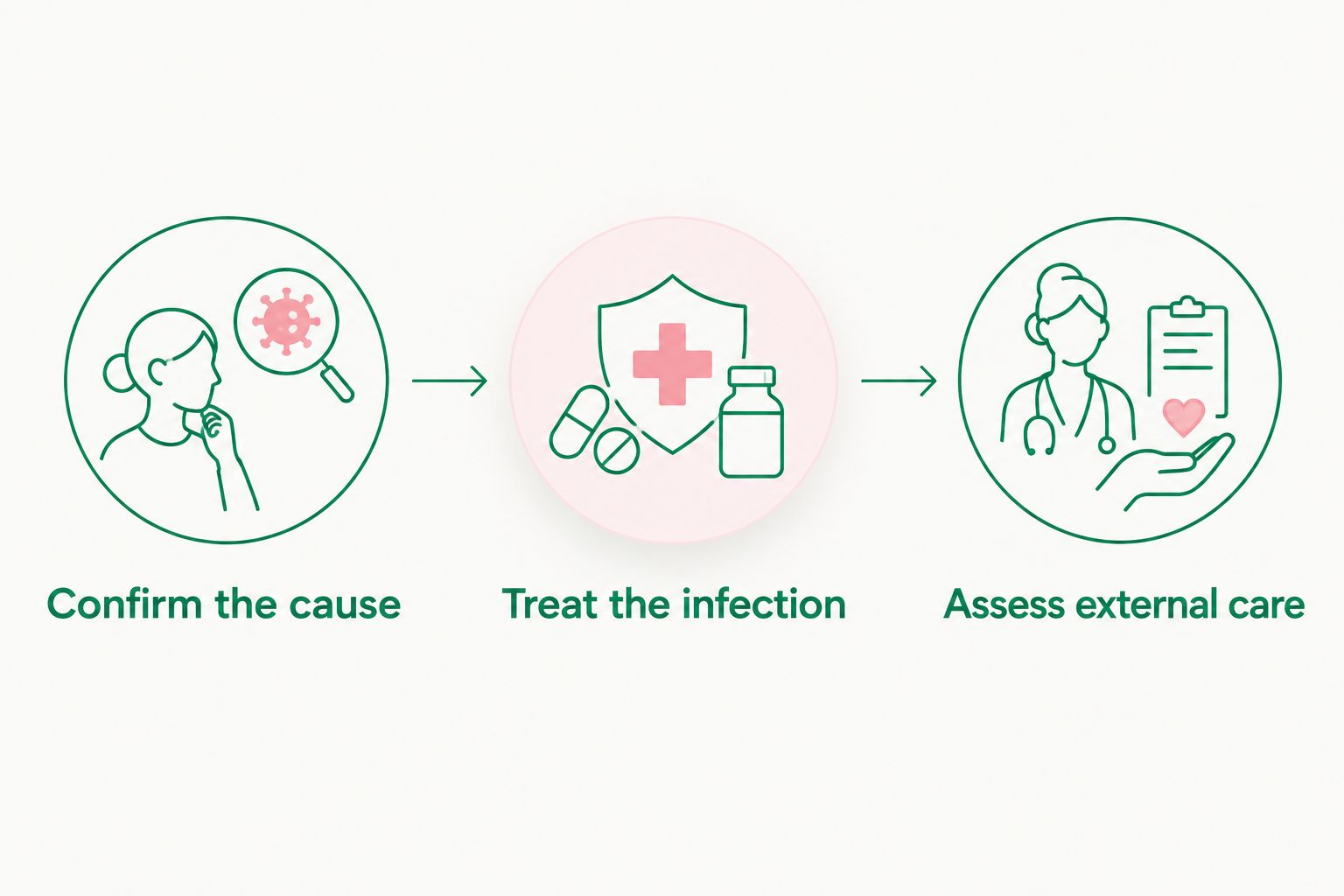
For your 2026 care plan, separate three decisions: confirm the cause, treat the infection, and assess external care. Buying several products together does not make those steps interchangeable.
- Confirm the cause: Tell your clinician about recurrence, recent treatment, pregnancy possibility, and symptoms such as odor or pain.
- Treat the infection: Follow the prescribed medicine, route, and duration. Ask whether testing or maintenance is needed.
- Assess external care: Keep washes and balms outside the vagina and discontinue products that increase irritation.
The CDC recommends clinical evaluation and testing when symptoms persist after an over-the-counter treatment or recur within 2 months of treatment. Fever, pelvic pain, or symptoms during pregnancy also call for medical assessment rather than another product experiment.
How these options were ranked
This 2026 ranking prioritizes diagnosis match, treatment role, safety, and clear limits. It does not report a head-to-head product trial or assume that an ingredient's clinical evidence transfers to a branded formula.
Medical guidance comes from the CDC's STI Treatment Guidelines: Vulvovaginal Candidiasis, covering diagnosis, recurrent infection, non-albicans infection, and pregnancy. ACOG's patient guidance on vaginitis supports distinguishing causes of vaginal symptoms. MedlinePlus drug information covers fluconazole precautions and interactions. These are general clinical sources, not endorsements of the products listed.
Which option should you choose?
For confirmed recurrent C. albicans infection, start with a clinician-directed antifungal plan—not an external wash or an automatic boric acid purchase. Oral fluconazole maintenance and vaginal azoles serve different treatment needs; the choice depends on your diagnosis and safety considerations.
For selected non-albicans recurrence, ask whether boric acid belongs in your plan. For external irritation, assess skin care separately. You do not need every category in this guide.
FAQ
What are the best products for recurring yeast infections in 2026?
The best choice is an antifungal plan matched to a confirmed diagnosis. Clinician-directed fluconazole maintenance is a standard option for recurrent C. albicans infection; vaginal azoles and selected boric acid use serve different situations.
Is boric acid better than fluconazole for recurring yeast?
Boric acid is not universally better than fluconazole. Fluconazole has a maintenance role for recurrent C. albicans infection, while boric acid has a conditional role in selected non-albicans recurrence.
Can Kushae feminine wash treat a yeast infection?
Kushae feminine wash does not treat a vaginal yeast infection. External cleansing and antifungal treatment have different purposes, and an external cleanser should not be inserted into the vagina.
What can I use for a yeast infection while pregnant?
CDC guidance recommends topical azole therapy for 7 days during pregnancy. Contact your pregnancy clinician to confirm the diagnosis and product; oral fluconazole is not recommended for vaginal candidiasis during pregnancy.
Why does itching come back after yeast treatment?
Returning itching needs reassessment because symptoms alone do not establish recurrent yeast. Persistent Candida, a different cause of vaginitis, or external skin irritation require different decisions.
When should I stop treating a yeast infection myself?
Seek clinical evaluation if symptoms persist after an over-the-counter treatment or return within 2 months. Repeated episodes, pregnancy, fever, or pelvic pain also warrant medical assessment.
Do I need a wash and balm with an antifungal?
No, a wash and balm are not required parts of antifungal treatment. Consider external products only for a separate skin-care need, follow their labels, and stop anything that worsens irritation.
One last thing
Your most useful preparation for a 2026 appointment is a treatment history: symptom dates, test results, medicines used, and whether symptoms actually cleared. Bring product labels too. That record helps separate repeated infection from repeated treatment of something that was never confirmed as yeast.


