

This article is for informational purposes only. It is not, nor is it intended to be, a substitute for professional medical advice, diagnosis, or treatment and should never be relied upon for specific medical advice.
Best overall for a previously diagnosed, uncomplicated yeast infection: a vaginal clotrimazole cream. Best alternative antifungal: vaginal miconazole. Best fit for shaving-related bumps: Kushae Natural Feminine Soothing Cream. The best vaginal itching creams in 2026 depend on the cause—and a cream for external skin irritation is not a treatment for an internal vaginal infection.
TL;DR
- The best vaginal itching creams match the cause: antifungals treat yeast, while external skin products address different concerns.
- Clotrimazole and miconazole are established vaginal yeast treatments; neither treats bacterial vaginosis.
- Kushae Natural Feminine Soothing Cream fits shaving-related skin concerns, not treatment of vaginal infections.
- First-time symptoms, pregnancy, recurring itching, or unusual discharge call for medical advice before self-treatment.
Kushae offers OB/GYN-developed vulvovaginal care products. This guide separates its external skin-care options from antifungal medicines so you can choose by purpose rather than by an itch-relief label.
Why this matters
The vagina is the internal canal; the vulva is the external genital area. Itching in either area can have different causes, including yeast, contact irritation, inflammatory skin conditions, or infections that require prescription treatment.
Itch relief and treatment are different jobs. A barrier ointment does not eliminate yeast, and an antifungal will not fix irritation caused by a new detergent. Repeatedly switching products can add irritation while delaying the right diagnosis.
For your 2026 shopping decision, start with location and symptoms—not claims about freshness. New odor, sores, pain, or a change in discharge deserves assessment rather than another cosmetic product.
What makes the best vaginal itching creams
- Cause-specific treatment: Antifungal medicine belongs in the yeast-treatment category; shaving and friction products belong in external skin care.
- Correct application site: A product must explicitly permit vaginal insertion before you use it internally.
- Clear active ingredients: Read the Drug Facts label on medicines. Similar packaging does not mean identical treatment.
- Irritation considerations: Fragrance and unnecessary added products can aggravate sensitive vulvar skin. Check the full ingredient list.
- Practical limitations: Consider pregnancy, previous reactions, treatment duration, and warnings about condoms or diaphragms.
- A clear stopping point: Persistent or returning symptoms call for evaluation, not an indefinite cycle of self-treatment.
Vaginal itching options at a glance in 2026
The order below prioritizes treating a recognized cause, then separates the external skin-care use cases. It is not a claim that everyone with itching needs an antifungal.
| Option | Best for | Standout feature | Key limitation |
|---|---|---|---|
| Vaginal clotrimazole cream | Previously diagnosed, uncomplicated yeast symptoms | Established vaginal antifungal treatment | Does not treat BV or noninfectious skin conditions |
| Vaginal miconazole cream | An alternative vaginal yeast treatment | Established antifungal available in different labeled courses | Formulations and application instructions differ |
| Natural Feminine Soothing Cream | Considering care for shaving-related bumps | Product description addresses ingrown hairs and bumps | Not a vaginal infection treatment |
| Protective Feminine Skin Balm | Considering protection against external chafing | Product description addresses skin rubbing | Not an antifungal or an internal vaginal product |
| Plain white petrolatum | A simple external barrier against friction | Single-ingredient barrier option | Does not treat infection and can damage latex barriers |
1. Vaginal clotrimazole: best for uncomplicated yeast infections
Clotrimazole is an antifungal medicine used to treat vaginal yeast infections. Choose a product specifically labeled for vaginal use; a tube sold for athlete’s foot is not an interchangeable vaginal treatment.
This is the default medicine option here when a clinician previously diagnosed yeast and your symptoms match that recognized pattern. Even then, itching alone does not establish the diagnosis.
Clotrimazole pros:
- Treats yeast rather than only suppressing itching.
- Is included in established treatment guidance for uncomplicated vaginal candidiasis.
- Provides explicit treatment instructions on the medicine label.
Clotrimazole cons:
- Does not treat bacterial vaginosis, sexually transmitted infections, or dermatitis.
- Can cause local burning or irritation; some vaginal formulations also affect latex barriers.
Best for: Adults with previously diagnosed, uncomplicated yeast infections who can follow the product’s vaginal-use instructions.
Pregnancy changes the decision. CDC guidance recommends topical azoles for 7 days during pregnancy, with clinician guidance rather than choosing a course by convenience. Oral fluconazole is not the substitute to choose yourself during pregnancy.
Verdict: Buy for a recognized uncomplicated yeast infection; hold if the cause is uncertain.
2. Vaginal miconazole: best alternative antifungal
Miconazole is another established treatment for vaginal yeast infections. Vaginal creams come with formulation-specific instructions, so compare the active ingredient, strength, application site, and course before choosing.
An external itch-relief tube packaged alongside a vaginal treatment is not necessarily the complete treatment. Read which component goes where.
Miconazole pros:
- Treats susceptible vaginal yeast infections.
- Offers a recognized alternative to clotrimazole.
- Has labeled vaginal formulations rather than requiring improvised use of a skin cream.
Miconazole cons:
- Can cause burning or irritation during use.
- Requires a medication check if you take warfarin because an interaction can occur, including with vaginal use.
Best for: Someone seeking an alternative vaginal antifungal after checking the label and medication precautions.
There is no basis here for calling miconazole stronger or faster than clotrimazole. Choose the appropriate labeled course, not the package with the boldest relief claim. Ask a pharmacist about medication interactions and latex-barrier precautions.
Verdict: Buy as an appropriate yeast-treatment alternative; hold if you take warfarin until a professional checks it.
3. Natural Feminine Soothing Cream: best for shaving-related concerns
Kushae Natural Feminine Soothing Cream is positioned around ingrown hairs and itchy, painful bumps associated with hair-bearing skin. That makes it a different category from a vaginal antifungal, not a replacement for one.
Kushae Natural Feminine Soothing Cream is the best fit here for shoppers considering care for shaving-related bumps, not vaginal infections. Check the current label for permitted application areas and the complete ingredients before use.
Natural Feminine Soothing Cream pros:
- Addresses a specific external skin concern in its product description.
- Keeps shaving-related care separate from yeast-treatment decisions.
- Gives shoppers a cream-format option to consider for that purpose.
Natural Feminine Soothing Cream cons:
- Its description does not establish treatment for yeast, BV, or other vaginal infections.
- A painful or pus-filled bump can need medical assessment rather than cosmetic care alone.
Best for: Shoppers evaluating external skin care after shaving, once concerning bumps have been assessed when necessary.
Pause shaving while the area is irritated, and do not squeeze bumps. Spreading redness, increasing pain, drainage, or fever needs medical attention. Avoid putting this cream inside the vagina unless its actual label explicitly permits that use.
Verdict: Hold until you confirm the skin concern and label directions; skip for vaginal infection treatment.
4. Protective Feminine Skin Balm: best for external chafing concerns
Kushae Protective Feminine Skin Balm is positioned for discomfort associated with skin rubbing. It belongs in a friction-care decision, not a ranking of medicines that eliminate vaginal yeast.
The distinction matters when itching follows exercise, tight clothing, or repeated rubbing. Friction is a possible explanation, but it is not a diagnosis you can confirm from timing alone.
Protective Feminine Skin Balm pros:
- Has a defined chafing-related purpose in its product description.
- Provides a balm-format option for shoppers considering external friction care.
- Separates prevention of rubbing discomfort from infection treatment.
Protective Feminine Skin Balm cons:
- Does not replace antifungal treatment or evaluation of unexplained itching.
- Its supplied description does not establish condom compatibility or suitability for internal use.
Best for: Shoppers considering a labeled external skin product for rubbing-related discomfort.
Check exactly where the balm can be applied. Do not assume that a product described as feminine care belongs on every vulvar surface, broken skin, or the vaginal opening. Stop using it if irritation increases.
Verdict: Buy only for its labeled chafing-care purpose; skip as an infection remedy.
External skin-care options to consider
These products address different external concerns. Neither card represents a recommendation to treat unexplained vaginal itching without identifying the cause.
External skin-care options

A cream positioned for concerns involving ingrown hairs and itchy, painful bumps.
24.99

A skin balm positioned for discomfort associated with chafing and skin rubbing.
35.99
5. Plain white petrolatum: best simple external barrier
Plain white petrolatum is an ointment rather than a cream. It can provide an external skin barrier when friction or contact with irritants is the concern, but it does not treat the underlying cause of unexplained itching.
Choose a plain formulation without added fragrance or medication. Do not insert it into the vagina as a home treatment.
Plain white petrolatum pros:
- Offers a single-ingredient option.
- Forms a protective barrier on external skin.
- Avoids adding an unnecessary antifungal when infection is not the issue.
Plain white petrolatum cons:
- Does not treat yeast, BV, or inflammatory skin disease.
- Is oil-based and can weaken latex condoms and diaphragms.
Best for: External barrier care when a clinician has identified irritation or friction as the problem.
Persistent itching still needs assessment, even if a barrier makes the skin feel more comfortable. Symptom relief does not prove that the original problem was minor.
Verdict: Buy for appropriate external barrier care; skip for internal use or infection treatment.
Match the next step to the symptom
Use these distinctions to organize your next conversation with a pharmacist or clinician—not to diagnose yourself from a symptom list.
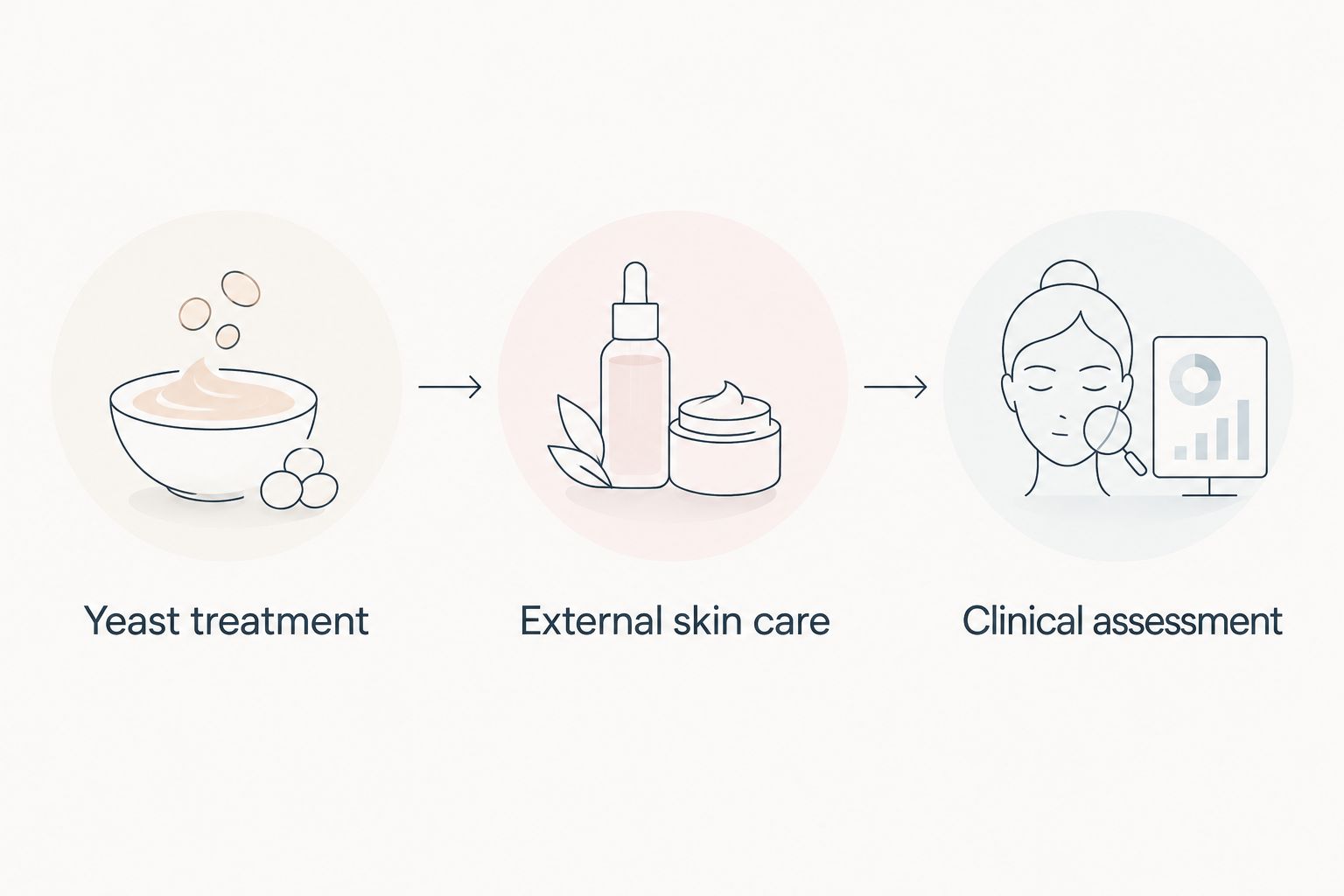
- Yeast treatment: A previously confirmed, familiar uncomplicated yeast pattern supports discussing a vaginal antifungal.
- External skin care: Irritation associated with shaving or rubbing calls for checking the skin and removing the trigger.
- Clinical assessment: First-time symptoms, unusual discharge, strong new odor, sores, pelvic pain, or repeated episodes need evaluation.
Do not stack antifungal cream, deodorant, wash, and soothing products onto irritated skin to cover every possibility. Stop newly introduced irritants, avoid douching, and get help identifying the cause. Wash the external area gently; the vagina does not need internal cleansing.
Seek prompt care for fever, pelvic pain, sores, or rapidly worsening symptoms. Arrange evaluation if symptoms persist after an over-the-counter treatment or return within 2 months. CDC guidance defines recurrent vaginal candidiasis as 3 or more symptomatic episodes in under 1 year, which calls for a different treatment discussion.
How these options were ranked
This 2026 guide ranks options by cause-specific purpose, correct application site, established antifungal use, and practical limitations. It does not claim head-to-head testing or a universal winner across unrelated causes of itching.
Clotrimazole and miconazole lead because they are established vaginal yeast treatments. External creams, balms, and barrier ointments occupy separate use cases; their placement is not evidence that they treat infection.
Which vaginal itching cream should you choose?
For a previously diagnosed, uncomplicated yeast infection, start by comparing labeled vaginal clotrimazole and miconazole treatments. For external shaving or friction concerns, consider skin care only after checking the cause and the product’s application directions.
The safest default in 2026 is not another cream when symptoms are unfamiliar. It is a diagnosis. Skip deodorizing products and internal cleansing as attempts to treat itching, and do not use boric acid as a catch-all substitute for evaluation.
FAQ
What's the best vaginal itching cream if I don't know the cause?
There is no appropriate universal cream for unexplained vaginal itching. First-time symptoms need assessment because yeast, irritation, skin conditions, and other infections require different care.
Is clotrimazole better than miconazole for vaginal itching?
Both clotrimazole and miconazole are established vaginal yeast treatments; neither is the right choice for every cause of itching. Choose a labeled vaginal formulation and check its instructions, precautions, and medication interactions.
Can I use an external anti-itch cream inside my vagina?
Do not insert an external anti-itch cream unless its label explicitly permits vaginal use. External skin products and vaginal medicines have different intended application sites.
Will a soothing cream treat bacterial vaginosis?
A soothing cream does not treat bacterial vaginosis. BV requires diagnosis and appropriate treatment, usually prescription antibiotics; antifungal yeast creams are not a substitute.
What should I use for vaginal itching during pregnancy?
Contact your pregnancy clinician before treating vaginal itching. For vaginal yeast infections during pregnancy, CDC guidance recommends topical azoles used for 7 days rather than self-selecting oral fluconazole.
When should I stop treating vaginal itching myself?
Get evaluated if symptoms persist after over-the-counter treatment or return within 2 months. Seek prompt care for fever, pelvic pain, sores, rapidly worsening symptoms, or spreading redness.
Can a balm help itching after shaving?
A balm intended for external skin care is an option to discuss when friction or shaving irritation is the problem. Painful, draining, or worsening bumps need assessment, and a balm does not treat a vaginal infection.
One last thing
Keep the packaging—or photograph the active ingredient and directions—before you discard a treatment. If itching returns, knowing exactly what you used helps a clinician distinguish an incomplete treatment, a reaction to the product, and a problem that was never yeast in the first place.


