


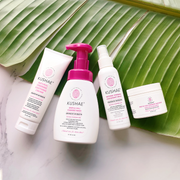
Kushae Complete Gift Set
Complete daily care for intimate wellness.
$100.00 USD
A vaginal wash does not automatically cause a yeast infection, but it can irritate sensitive vulvar skin, and washing inside the vagina can disturb its normal environment. Itching or burning after washing does not establish whether you have yeast, contact irritation, BV, or another condition. Stop the suspected product, avoid internal washing, and get persistent or recurring symptoms checked rather than treating them by guesswork.
A cleanser can cause irritation without causing an infection. Douching or putting cleansing products inside the vagina adds a separate concern: it can disrupt the vaginal environment, and CDC guidance associates douching with BV.
The timing of symptoms is a clue, not a diagnosis. Burning after a new wash deserves attention, but it does not confirm Candida overgrowth. The distinction also matters when choosing a feminine wash for sensitive skin: a cleanser belongs in an external-care routine, not an infection-treatment plan.
| Cleansing option | Best for | Useful role | Limitation or concern |
|---|---|---|---|
| Lukewarm water externally | Keeping vulvar care simple | Cleans external skin without adding cleanser ingredients | Does not treat an infection or explain persistent symptoms |
| A mild, fragrance-free cleanser externally, if tolerated | Readers who prefer a cleanser | Cleans external skin when used as directed | Can still irritate sensitive skin; does not treat yeast or BV |
| Douching or internal washing | Not recommended for routine hygiene | No routine cleansing role; the vagina cleans itself | Can disrupt the vaginal environment and is associated with BV |
The practical answer in 2026 is not to find a stronger wash. It is to separate skin irritation from vaginal infection before choosing what comes next.
Yeast, BV, and contact irritation require different responses. Adding antifungals, deodorants, or more cleanser to unexplained symptoms can delay the right diagnosis and add further irritation.
The vulva is the external genital area, including the labia. The vagina is the internal canal. A product marketed as a vaginal or feminine wash is not permission to wash inside that canal; follow its labeled application site.
ACOG's patient guidance on vulvovaginal health advises against douching and emphasizes avoiding irritating products. CDC guidance likewise states that symptoms alone are not specific enough to diagnose vulvovaginal candidiasis.
The product is only part of the picture. Where you apply it, how you use it, and whether an infection or skin condition is already present all change the next step.
Do not assume that natural, gentle, or pH-balanced wording guarantees tolerance. Those descriptions do not establish that a product will suit your skin or prevent infection.
You cannot reliably distinguish these conditions from one symptom or a photograph. A clinician considers your history, examines the affected area, and uses appropriate testing when needed.
| Possible cause | Symptoms that can occur | What the pattern does not prove |
|---|---|---|
| Contact irritation or allergy | External burning, itching, redness, or soreness after exposure | A reaction after washing does not establish yeast |
| Vulvovaginal candidiasis | Itching, soreness, redness, external burning with urination, or thick discharge | Discharge appearance alone does not confirm Candida |
| Bacterial vaginosis | Thin discharge and a fishy odor; some people have no symptoms | Odor alone does not establish BV |
| Other conditions | Overlapping irritation, discharge, pain, or skin changes | A previous yeast diagnosis does not identify every later episode |
CDC's candidiasis guidance notes that yeast infection typically occurs with a normal vaginal pH below 4.5. That is why a home pH result is not a yeast test: normal acidity does not rule yeast out, and an elevated result does not identify the cause by itself.
A pH-balanced feminine wash is not a diagnostic test. Neither a product label nor a change in odor tells you which treatment you need.
For your 2026 care routine, simplify first. Do not add several products while trying to identify what caused the reaction.
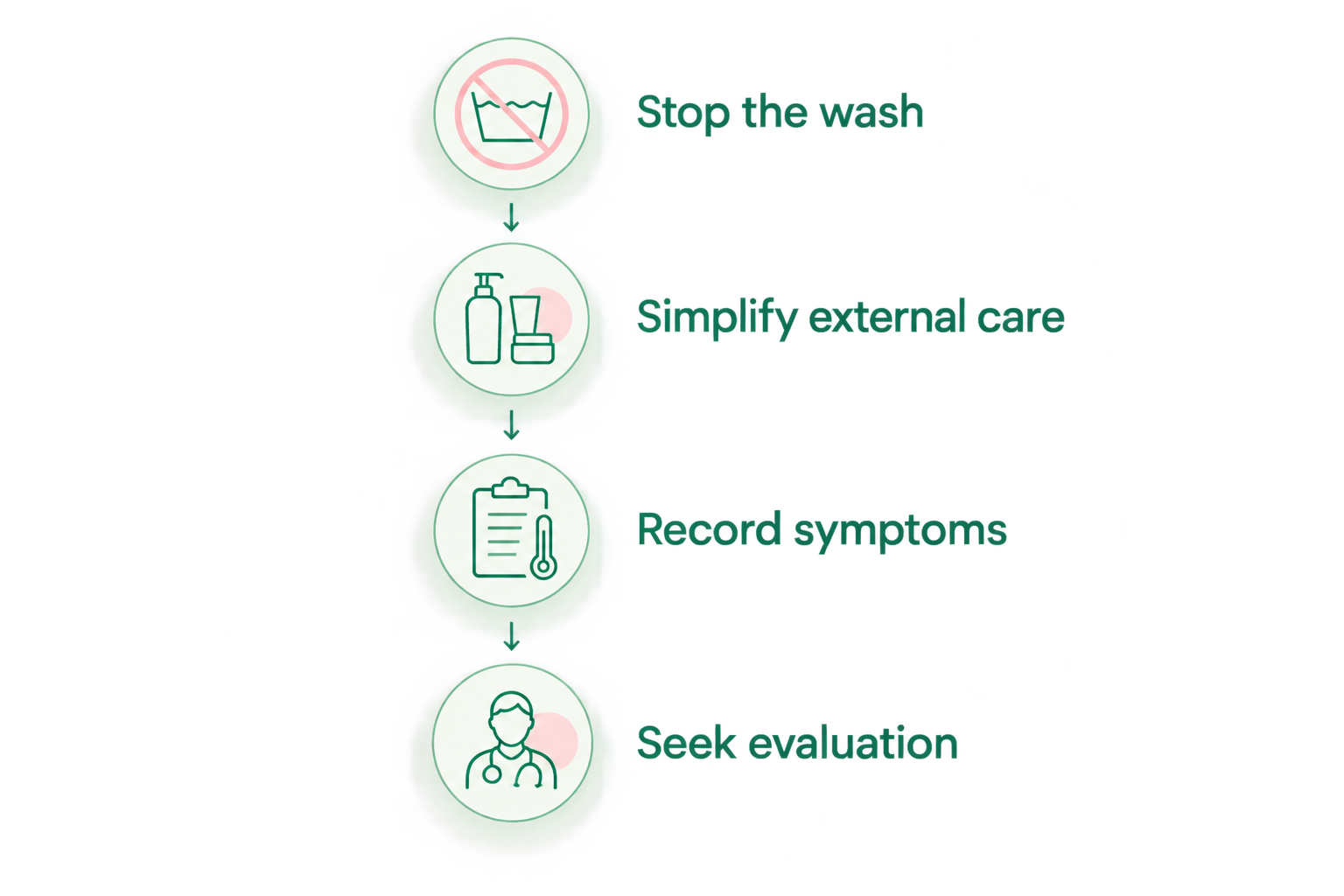
Tell your clinician about recent antibiotics, pregnancy, diabetes, medications, and any antifungals or suppositories you have already used. These details help interpret the symptoms and choose appropriate testing.
If symptoms improve after you stop a wash, that supports reviewing the product as a possible trigger. It still does not prove that the wash caused a yeast infection.
Get evaluated if this is your first suspected vaginal infection, the symptoms feel different from previous episodes, or you are unsure of the cause. Seek prompt care for fever, pelvic pain, significant swelling, sores, unexpected bleeding, or feeling unwell.
CDC advises clinical evaluation and testing when symptoms persist after an over-the-counter yeast treatment or return within 2 months of treatment. Repeating the same treatment without confirming the cause can miss another condition.
CDC generally defines recurrent vulvovaginal candidiasis as 3 or more symptomatic episodes in less than 1 year. That pattern needs a clinical plan, not a stronger cleansing routine.
Pregnancy changes treatment decisions. CDC recommends topical azole treatment for 7 days for yeast infection during pregnancy; contact your prenatal clinician rather than selecting treatment from symptoms alone. Do not use vaginal boric acid during pregnancy.
No. A pH-balanced label does not establish that a wash prevents yeast infections. Vaginal yeast can occur at a normal acidic pH, and external cleansing does not treat Candida inside the vagina.
For a 2026 purchase decision, prioritize the intended application site, the full ingredient list, label directions, and your own tolerance. Do not treat pH wording as proof of infection protection.
The same boundary applies to BV. An external cleanser is not a substitute for BV diagnosis or prescribed treatment, even if it changes how your skin feels after washing.
Start with the actual label rather than the product category name. Check whether the directions specify external use, whether fragrance is listed, and whether any ingredient has caused a previous reaction.
A shorter routine also makes troubleshooting easier. If you introduce a wash, spray, cream, and suppository together, you lose a clear record of which exposure preceded your symptoms.
Kushae is best for women seeking OB/GYN-developed vulvovaginal care with a clear distinction between external products and intravaginal products. That development background does not mean every product suits every person or treats an infection.
The Kushae Gentle 2-N-1 Foaming Feminine Wash is a cleansing option to consider only for external care, according to its directions. Its role is cleansing, not treating yeast, BV, or unexplained vaginal odor.
The useful distinction is purpose: a wash belongs to cleansing, while an infection needs a diagnosis and appropriate treatment. The limitation is equally clear: an OB/GYN-developed wash can still be unsuitable for an individual's sensitive skin. Stop using it if it causes burning, itching, or redness.
Do not use boric acid simply because a wash caused itching. Contact irritation does not require an intravaginal antifungal approach, and unexplained symptoms need the right diagnosis first.
CDC includes vaginal boric acid in specific clinical approaches for selected recurrent or non-albicans infections. That is not a recommendation to use it for every episode of odor, discharge, or burning.
Boric acid is for vaginal use only, must never be swallowed, and should be kept away from children and pets. Do not use it during pregnancy; discuss use with a clinician if you are planning pregnancy or pregnancy is possible.
The medical distinctions here come from CDC's Vulvovaginal Candidiasis and Bacterial Vaginosis sections of its STI Treatment Guidelines, and ACOG's patient guidance, Vulvovaginal Health. CDC supports the symptom, testing, recurrence, and pregnancy-treatment points; ACOG supports the external-care and irritation guidance.
These are general clinical sources. They do not establish that a particular commercial wash causes, prevents, or treats yeast infection, and they are not clinical evidence for a specific formula.
Can a vaginal wash cause a yeast infection, or is it just irritation?
Symptoms after a vaginal wash can reflect irritation rather than yeast, and timing alone cannot distinguish them. Stop the suspected product and get persistent, unfamiliar, or recurring symptoms evaluated.
Why do I itch right after using feminine wash?
Itching after feminine wash can be a reaction to an ingredient or to cleansing already-irritated skin. Stop the product, avoid internal washing, and seek care if symptoms persist or worsen.
Can I use feminine wash while I have a yeast infection?
Feminine wash does not treat a yeast infection. Keep external care simple, avoid products that sting, and follow the treatment plan recommended for your diagnosis.
Does a normal vaginal pH mean I do not have yeast?
No. CDC guidance states that vaginal yeast infection typically occurs with a normal vaginal pH below 4.5. A home pH test cannot confirm or exclude yeast infection by itself.
When should I see a doctor if yeast treatment did not work?
Get evaluated if symptoms persist after an over-the-counter yeast treatment or return within 2 months of treatment. CDC recommends clinical evaluation and testing rather than repeated self-treatment.
Is recurrent vaginal itching always a yeast infection?
No. Recurrent itching can reflect yeast, contact irritation, a vulvar skin condition, or another cause. CDC generally defines recurrent yeast infection as 3 or more symptomatic episodes in less than 1 year, but testing is needed to establish the diagnosis.
Can I use boric acid during pregnancy if a wash causes itching?
No. Do not use vaginal boric acid during pregnancy. Contact your prenatal clinician because itching needs assessment and pregnancy changes which treatments are appropriate.
For your 2026 routine, keep the ingredient list from any wash that causes symptoms. Bring it, along with a record of other products and treatments, to your appointment; that gives the clinician something specific to assess.
A normal vaginal pH does not rule out yeast, and itching does not prove it. The next useful purchase is not automatically another product. Sometimes the next useful step is testing.
This article is for informational purposes only. It is not, nor is it intended to be, a substitute for professional medical advice, diagnosis, or treatment and should never be relied upon for specific medical advice.
Pairs well with what's in your cart
Complete daily care for intimate wellness.
$100.00 USD
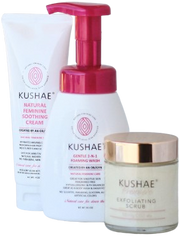
Smooth skin care after shaving days.
$69.99 USD