


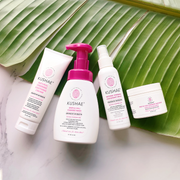
Kushae Complete Gift Set
Complete daily care for intimate wellness.
$100.00 USD
Yes, allergies can cause itching around the vaginal opening, usually by inflaming the external vulvar skin after contact with an allergen such as fragrance, preservatives, or latex. Irritation, yeast infections, and other conditions can feel similar, so itching alone does not establish the cause.
Contact allergies can cause vulvar itching, burning, redness, and swelling. The vulva is the external genital area; the vagina is the internal canal. That distinction matters because a skin reaction outside the vagina needs a different assessment from an internal infection.
ACOG's patient guidance, Disorders of the Vulva, identifies contact dermatitis among causes of vulvar discomfort. If symptoms started after a cleanser change, the guide to irritation after switching feminine wash brands addresses that specific exposure.
These patterns help organize your symptoms. They do not replace an examination or testing.
| Possible cause | Typical clues | Important limitation |
|---|---|---|
| Allergic contact dermatitis | Itching or rash after contact with an ingredient your immune system recognizes | A familiar product can become a trigger after previous uneventful use |
| Irritant contact dermatitis | Burning, stinging, or rawness after washing, friction, or repeated product exposure | An immune-system allergy is not required |
| Vaginal yeast infection | Vulvar itching, soreness, redness, sometimes thick discharge | Symptoms overlap with dermatitis; appearance alone is not reliable |
| Bacterial vaginosis | Thin discharge and vaginal odor are common features | Itching does not confirm BV, and external washing does not treat it |
| Other vulvar conditions | Persistent itching, skin changes, cracks, or recurring soreness | Conditions such as lichen sclerosus need medical diagnosis |
Treating every itch as yeast can leave the actual problem untreated. Adding antifungals, deodorants, wipes, or suppositories also introduces more ingredients to already uncomfortable tissue.
For your 2026 care decisions, separate three questions: Where does it itch? What touched that area? What other symptoms changed? The answers help a clinician choose between skin evaluation, vaginal testing, and other examinations.
Itching is a symptom, not proof that you are unclean. Scrubbing harder is not the answer, and neither is trying to make the vulva completely odorless.
Allergic contact dermatitis happens when your immune system reacts to a substance touching your skin. Fragrances, preservatives, rubber-related allergens, and ingredients in topical medications are recognized contact allergens.
DermNet's clinical overview of allergic contact dermatitis describes a delayed reaction that typically develops 24–72 hours after exposure. That delay explains why the product used immediately before itching is not always the only exposure worth reviewing.
The benefit of identifying a specific allergen is precision: you can avoid that ingredient rather than abandon every care product. The limitation is that timing alone cannot identify the allergen; persistent or recurrent cases sometimes require patch testing through a clinician.
Best next step for suspected contact allergy: remove the suspected exposure and arrange assessment if symptoms persist or return. Do not deliberately reapply a suspected product to vulvar tissue to test your theory.
Irritant contact dermatitis does not require an allergy. Soap residue, repeated washing, moisture, friction, and some topical products can irritate vulvar skin directly.
The symptoms overlap with allergic dermatitis. Burning or stinging after exposure is a useful clue, but it is not a diagnosis, and both processes can occur together.
A simpler routine reduces unnecessary exposures. Its limitation is equally important: removing irritants does not treat an infection or a separate inflammatory skin condition.
Best next step for suspected irritation: stop unnecessary products and reduce rubbing rather than add another treatment. A clinician can assess persistent redness, cracks, or changes in skin texture.
The severity of itching is not a reliable measure of whether an allergy, irritation, or infection caused it. Several factors change the pattern:
These are clinical distinctions, not a checklist that confirms allergy. Bring the pattern to your appointment rather than choosing treatment from a symptom match.
For a 2026 symptom plan, start with exposure reduction and clear observations—not a stack of new products. If a clinician prescribed a treatment, contact that clinician before changing the plan unless you are experiencing an emergency reaction.
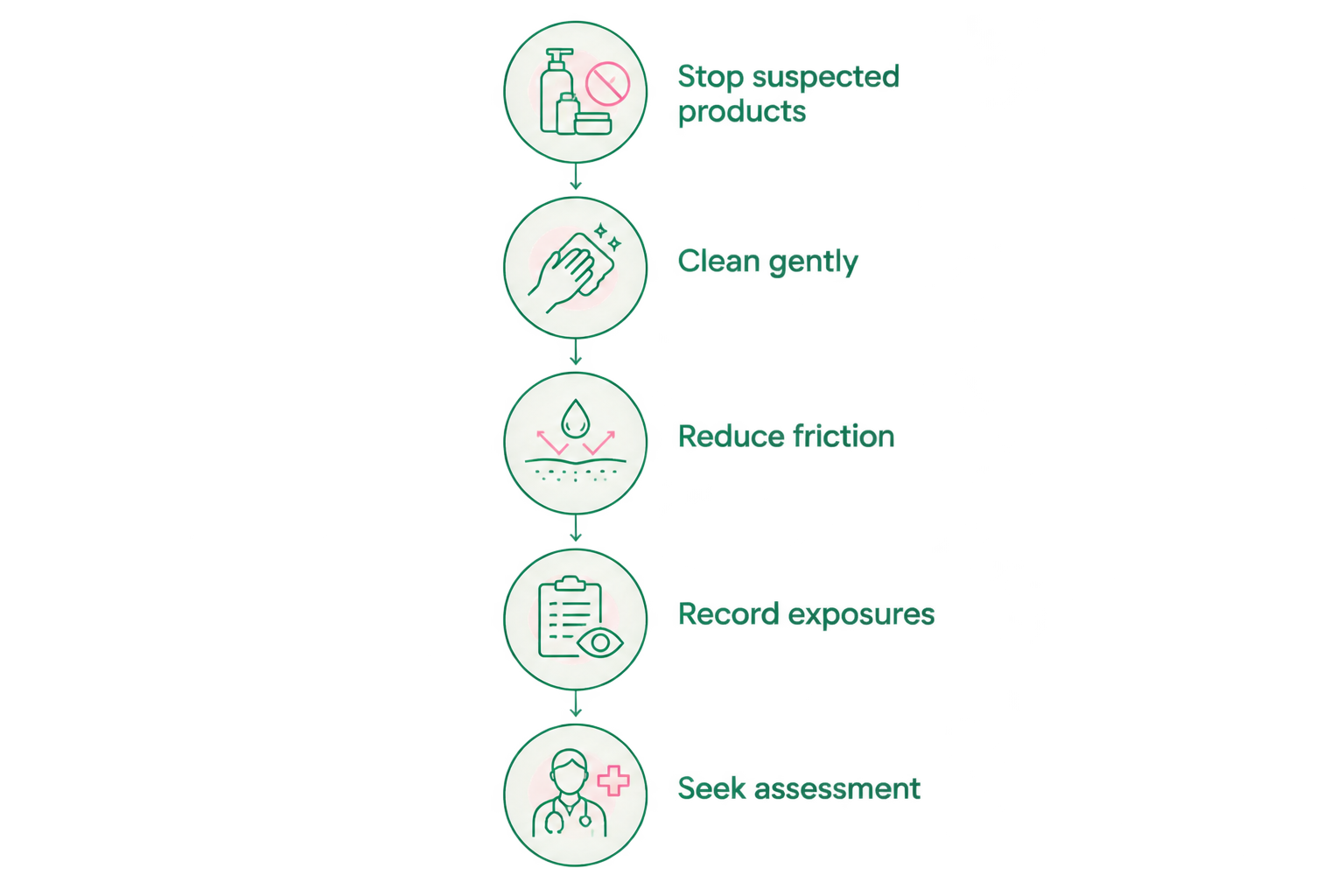
For temporary comfort, the American Academy of Dermatology's contact dermatitis guidance recommends a cool, damp compress for 10–15 minutes. Apply it externally without rubbing; stop if it increases discomfort.
Do not put essential oils, vinegar, or household remedies on inflamed vulvar tissue. Avoid using a topical anesthetic or steroid on this sensitive area without guidance about the correct product and diagnosis.
You cannot reliably separate contact dermatitis, yeast, and BV from itching alone. A reaction after a new product is a clue, not confirmation, and more than one condition can be present.
The CDC's clinical guidance on vulvovaginal symptoms explains that history alone is insufficient for an accurate diagnosis of vaginitis. An examination and appropriate testing help distinguish causes that need different treatment.
For your 2026 symptom record, note discharge, odor, pain with urination, skin lesions, and recent sexual exposures alongside itching. Do not interpret a vaginal pH result as an allergy test: it does not identify contact allergens or explain every cause of discomfort.
Avoid repeatedly treating presumed yeast when the symptoms keep returning. Tell the clinician which antifungals or other treatments you have already used and whether they helped, worsened symptoms, or made no difference.
Yes. Laundry fragrance, fabric-treatment ingredients, rubber components, or dyes can cause contact reactions in susceptible people. Separately, seams, tags, and tight elastic can cause mechanical irritation without an allergy.
That difference matters when choosing clothing. Removing a rough label with tagless underwear for sensitive skin addresses one source of rubbing, but it does not remove detergent residue or prove that the fabric is free of your particular allergen.
Review what touches the skin during ordinary activities, not just products marketed for intimate use. Pads, liners, workout clothing, towels, and laundry additives belong on the exposure list too.
Best for reducing mechanical irritation: a comfortable fit without rubbing seams or tags. The limitation is that comfort features cannot diagnose or prevent every allergic reaction; ingredient-specific avoidance depends on identifying the actual trigger.
No. OB/GYN development does not establish that a product is suitable for every individual allergy. Terms such as natural, gentle, or pH-balanced also do not replace a full ingredient review.
Kushae is best suited to women seeking OB/GYN-developed vulvovaginal care, not a diagnosis for unexplained itching. That distinction keeps a purchasing decision separate from a medical assessment.
For a 2026 purchasing checklist, identify the intended body area, read the complete ingredient list, and compare it with any known allergies. External washes and balms belong outside the vagina; intravaginal suppositories have a different purpose and different precautions.
General evidence about contact dermatitis does not establish that any specific Kushae formula treats allergic vulvar itching. During an active, unexplained flare, adding a wash or balm can complicate the exposure history instead of clarifying it.
Allergic contact dermatitis can take 2–4 weeks to clear after the trigger is avoided, according to Mayo Clinic's contact dermatitis overview. That general skin-recovery timeline is not a reason to wait weeks before seeking care for unexplained vulvar symptoms.
Continued exposure, scratching, or a different diagnosis changes the course. Arrange an assessment if symptoms persist, worsen, or repeatedly return rather than using a calendar to confirm an allergy.
Get prompt medical advice for itching with unusual discharge, strong new odor, painful urination, sores, blisters, bleeding, or persistent skin changes. Fever, pelvic pain, severe pain, or rapidly worsening swelling warrant urgent assessment.
Tell your clinician if you are pregnant, immunocompromised, or managing diabetes. These details affect evaluation and treatment choices; they are reasons to avoid guessing with repeated over-the-counter treatments.
Trouble breathing, throat tightness, faintness, or widespread hives after latex or another exposure require emergency care. Those symptoms are different from a localized delayed skin reaction.
Bring product packaging or clear photographs of complete ingredient labels, including laundry products and treatments already tried. A brief symptom record is more useful than a long list of suspected diagnoses.
Include the location of itching, the timing of exposures, visible changes, and any discharge or odor. If sex seems connected, describe condom, lubricant, and spermicide use without assuming which exposure caused the reaction.
Your clinician can decide whether you need vaginal testing, treatment for dermatitis, evaluation of another skin condition, or referral for patch testing. Patch testing evaluates delayed contact allergy; it is not the same as testing for every possible cause of vaginal symptoms.
Can seasonal allergies cause vaginal itching?
Seasonal pollen allergies are not the usual explanation for localized vulvar itching. Contact exposures, irritation, infections, and vulvar skin conditions need consideration rather than assuming hay fever is responsible.
Can I become allergic to a feminine wash I have used for years?
Yes, contact allergy can develop after previous use without symptoms. Stop the suspected wash and seek assessment if itching persists or returns; prior tolerance does not rule out an allergy.
Can a latex condom cause itching around my vagina?
Yes, latex or other condom-related ingredients can cause a reaction, while lubricant or friction can also cause irritation. Trouble breathing, throat tightness, or faintness after exposure requires emergency care.
Will an antihistamine fix vulvar contact dermatitis?
An antihistamine does not remove the trigger or establish the diagnosis. Ask a clinician or pharmacist whether one is appropriate for symptom relief; contact dermatitis sometimes needs other treatment.
Should I use boric acid for itching caused by allergies?
Boric acid is not a treatment for allergic contact dermatitis. Do not insert it for unexplained itching; it can irritate tissue, must never be swallowed, and should not be used during pregnancy.
Does a pH-balanced wash rule out an allergic reaction?
No, a pH-balanced wash can still contain an ingredient that triggers an individual allergy or irritation. Vaginal pH and contact allergy are different issues, and external washing does not treat BV.
Can Kushae products diagnose the cause of recurring itching?
No, Kushae vulvovaginal care products do not diagnose recurring itching. Persistent symptoms need medical assessment, and OB/GYN development does not guarantee that a formula avoids your individual allergens.
The product you have used longest still belongs on your exposure list. A delayed contact allergy can develop after earlier uneventful use, so limiting your search to the newest purchase can miss the trigger.
Take ingredient labels to the appointment. Identifying the cause is more useful than repeatedly replacing one soothing product with another.
This article is for informational purposes only. It is not, nor is it intended to be, a substitute for professional medical advice, diagnosis, or treatment and should never be relied upon for specific medical advice.
Pairs well with what's in your cart
Complete daily care for intimate wellness.
$100.00 USD
Smooth skin care after shaving days.
$69.99 USD