


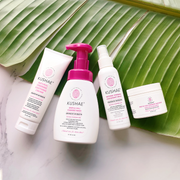
Kushae Complete Gift Set
Complete daily care for intimate wellness.
$100.00 USD
Vaginal itching has no fixed untreated duration: it can continue while an irritant, infection, or skin condition remains. In 2026, the safest approach is still to identify the cause rather than wait for a set number of days. Temporary relief does not prove the cause has cleared, and persistent, recurring, or worsening symptoms need medical assessment.
You do not need to feel embarrassed about itching. You do need to know whether the discomfort involves external vulvar skin, the vaginal opening, or symptoms inside the vagina. That distinction helps a clinician choose an examination, testing, and treatment.
Adding more products can complicate the picture. If itching started after a cleanser change, read about irritation after switching feminine washes, and stop the suspected trigger rather than trying to wash the itching away.
The severity, associated symptoms, and recurrence matter more than the calendar alone. Mild symptoms are not proof that nothing needs treatment.
There is no medically reliable countdown that applies to all vaginal itching. Irritation from a product, a yeast infection, and a chronic vulvar skin disorder do not follow the same course. An untreated-duration estimate without a diagnosis gives you false certainty.
MedlinePlus’s guidance on vaginal itching and discharge and the NHS’s guidance on vaginitis describe several possible causes, including irritation, infections, and hormone-related changes. Neither makes itching alone a diagnosis.
| Possible cause | What you might notice | What it means for waiting |
|---|---|---|
| Contact irritation | External burning or itching after a cleanser, wipe, pad, or detergent | Removing the trigger matters; continuing exposure can prolong irritation |
| Yeast infection | Itching, soreness, redness, or discharge | Symptoms overlap with other conditions; persistent symptoms need assessment |
| BV or another vaginal infection | A change in odor or discharge, sometimes with irritation | Do not assume itching identifies the infection or its treatment |
| Hormone-related dryness | Dryness, irritation, or discomfort with sex | Waiting alone does not address the underlying tissue changes |
| Vulvar skin disorder | Persistent itching, skin changes, cracks, or recurrent soreness | Examination matters because treatment depends on the condition |
These are possibilities, not a self-diagnosis checklist. You can have more than one contributor, and the absence of discharge does not rule out a vulvar condition.
A new wash is not the only possible trigger. Pads, fragranced wipes, laundry products, lubricants, and repeated rubbing can also irritate sensitive external skin.
The American College of Obstetricians and Gynecologists’ guidance on vulvar disorders identifies contact dermatitis as a cause of itching and burning. Stop the suspected irritant; do not cover the reaction with additional scented products. Persistent symptoms still deserve an examination, even when the timing suggests a product reaction.
Itching is common with vulvovaginal candidiasis, but the CDC states that its symptoms are not specific to yeast. A previous yeast infection does not make every later episode yeast.
The CDC recommends clinical evaluation and testing when symptoms persist after an over-the-counter treatment or recur within 2 months after treatment. That is a follow-up threshold, not permission to leave untreated symptoms unchecked for that long.
Hormonal changes and vulvar skin conditions can produce ongoing or recurrent itching. Menopause-related changes, for example, can involve dryness and discomfort rather than an infection.
White patches, cracks, sores, bleeding, or a change in skin texture need clinical attention. A clinician can assess whether the problem involves irritated skin, a condition such as lichen sclerosus, or another cause requiring specific care.
The length of an episode depends on what is causing it and whether that cause remains. These factors explain why another person’s experience is not a useful deadline for your symptoms:
The CDC defines recurrent vulvovaginal candidiasis as 3 or more symptomatic episodes in less than 1 year. If that describes your experience, bring a symptom and treatment history to your appointment rather than assuming each episode is uncomplicated yeast.
Simplify your routine. The goal is to avoid adding irritation while you work out what is happening, not to erase normal genital scent or force a change in vaginal pH.
These steps support comfort; they do not treat an unidentified infection. Avoid sex if it hurts or worsens irritation. If an STI is possible, avoid sexual contact until you receive medical advice and appropriate testing.
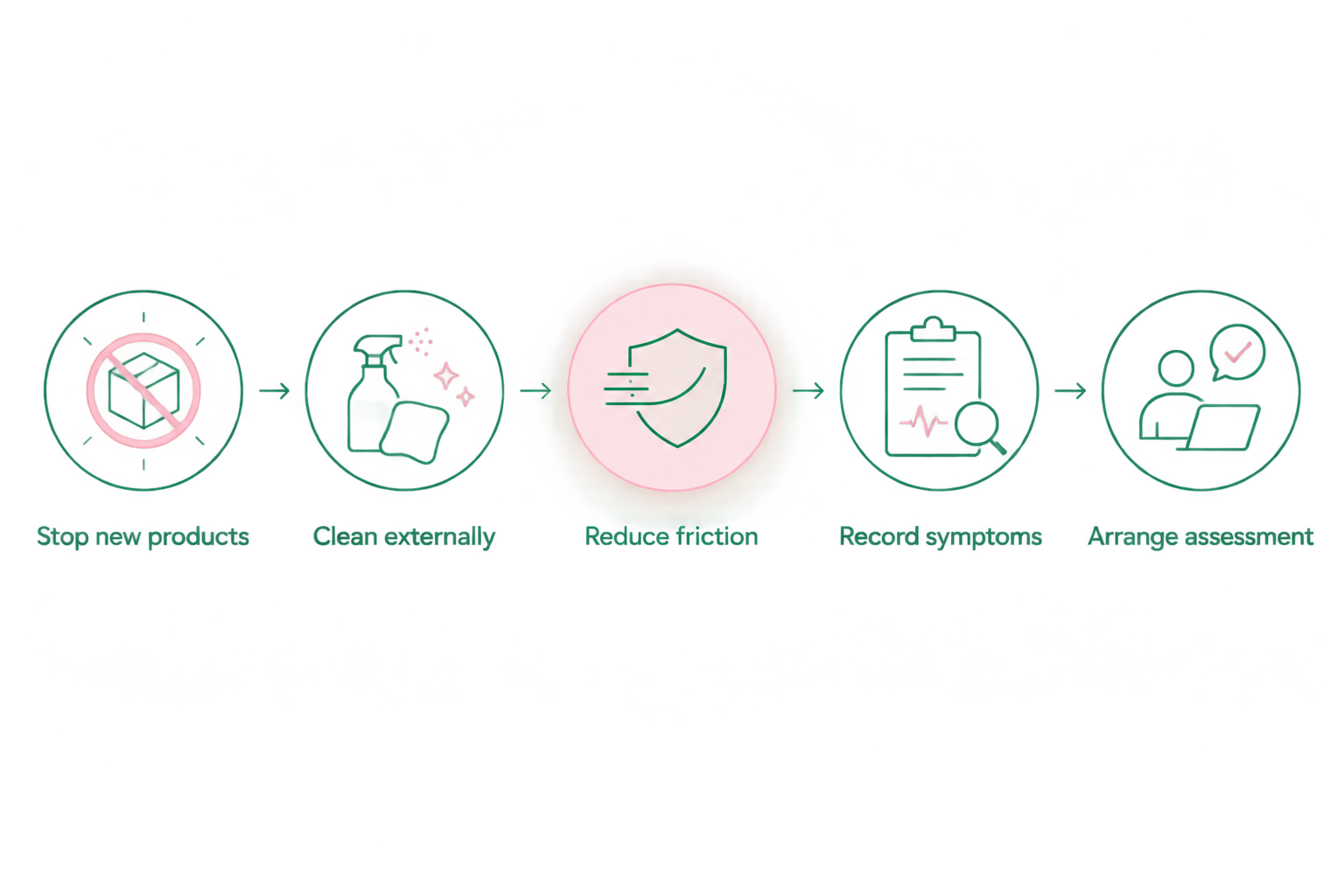
When booking, describe the symptom directly: itching outside, itching at the opening, or itching with discharge. Tell the clinician about pregnancy, recent antibiotics, diabetes, immune-suppressing medicines, and anything you have already applied or inserted. Those details help guide the evaluation.
Get urgent medical assessment for genital symptoms accompanied by fever, pelvic or lower abdominal pain, severe pain or swelling, or feeling significantly unwell. Trouble passing urine also needs prompt attention.
Contact a clinician promptly if you notice sores, blisters, unexplained bleeding, unusual discharge, a strong new odor, or symptoms after a possible STI exposure. These findings need assessment rather than a guess based on an online symptom description.
Arrange care if:
You do not need to reach a particular itch severity before asking for help. Sleep disruption, pain with daily activity, and repeated unsuccessful self-treatment are valid reasons to book an appointment.
Vaginal itching sometimes settles when a temporary irritant is removed, but that does not establish the cause. Symptoms from infection, dryness, or a skin disorder can persist or return without appropriate care.
Improvement is useful information, not a diagnosis. Tell your clinician what changed and whether odor, discharge, pain, or visible skin changes remain.
Vaginal itching does not reliably distinguish BV from yeast or a noninfectious condition. The CDC’s guidance on vaginal symptoms emphasizes history, examination, and appropriate testing because symptoms alone can lead to incorrect treatment.
BV commonly involves changes in discharge or odor, while yeast commonly involves itching and soreness. Those patterns are clues, not confirmation, and external irritation can occur without either infection.
Kushae external vulvar care is best for women seeking skin care, not treatment for an undiagnosed vaginal infection. The brand offers an OB/GYN-developed vulvovaginal care line, but product development does not establish the cause of your symptoms.
For example, Kushae Protective Feminine Skin Balm is positioned for skin rubbing and chafing. That is a different concern from unexplained itching inside the vagina. Its limit is equally important: a skin balm does not diagnose or treat BV, yeast, or an STI, and any topical product can disagree with sensitive skin.
During an unexplained flare, do not add a balm, wash, or spray simply because the discomfort is intimate. Follow the product’s labeled application area, stop if irritation develops, and ask a clinician whether external skin care belongs in your plan.
Boric acid suppositories are intravaginal products, not external moisturizers or a general answer to itching. Do not swallow them or use them during pregnancy. The CDC discusses boric acid in selected treatment situations; that guidance does not establish effectiveness for every commercial formula or justify self-treating unexplained symptoms.
These references support the general medical guidance above. They are not clinical studies of a specific Kushae formula, and they do not replace an examination:
How long can vaginal itching last without treatment?
Vaginal itching has no fixed untreated duration because irritation, infections, dryness, and skin disorders follow different courses. Persistent, recurring, or worsening itching needs assessment rather than an assumed waiting period.
Can I wait for vaginal itching to stop by itself?
Do not rely on waiting when vaginal itching is persistent, recurring, unfamiliar, or accompanied by other symptoms. Stop suspected irritants, use gentle external care, and seek medical advice; fever, pelvic pain, or severe symptoms need urgent assessment.
Does itching without discharge mean it is not an infection?
Itching without discharge does not establish or exclude an infection. External irritation, dryness, and vulvar skin disorders are also possible, so persistent symptoms need an examination.
Should I use yeast treatment whenever I feel itchy?
No. Itching alone does not confirm yeast, and unnecessary treatment can delay the right diagnosis. CDC guidance recommends evaluation when symptoms persist after an over-the-counter treatment or recur within 2 months after treatment.
Can a feminine wash treat vaginal itching or BV?
An external feminine wash does not treat BV or every cause of itching. Do not put cleanser inside the vagina, and stop using any wash that causes burning or irritation.
Is boric acid a good first step for unexplained itching?
Boric acid is not a general first step for unexplained itching. A clinician should establish whether it fits a specific diagnosis; never swallow boric acid suppositories or use them during pregnancy.
What should I tell my gynecologist about recurring itching?
Tell your gynecologist where the itching occurs, what other symptoms accompany it, and which products or treatments you have tried. Include recent antibiotics, pregnancy possibility, diabetes, and whether symptoms returned after treatment.
For your 2026 care plan, separate feeling better from knowing the cause. An itch that fades after applying a product does not prove you treated an infection. Bring the product names and symptom history to your appointment; that information is more useful than trying another product first.
This article is for informational purposes only. It is not, nor is it intended to be, a substitute for professional medical advice, diagnosis, or treatment and should never be relied upon for specific medical advice.
Pairs well with what's in your cart
Complete daily care for intimate wellness.
$100.00 USD
Smooth skin care after shaving days.
$69.99 USD