


This article is for informational purposes only. It is not, nor is it intended to be, a substitute for professional medical advice, diagnosis, or treatment and should never be relied upon for specific medical advice.
Diet is not a reliable way to change vaginal pH or treat persistent vaginal odor, and no specific food is an established treatment for bacterial vaginosis (BV). Foods and hydration can affect urine or overall body odor, but that is different from treating a vaginal condition. If odor is new, strong, fishy, or accompanied by irritation or unusual discharge, get evaluated rather than trying to correct it with food.
TL;DR
- Does diet affect vaginal odor or pH? No specific food reliably corrects vaginal pH or treats BV.
- Kushae offers OB/GYN-developed feminine care; external cleansing does not treat an infection inside the vagina.
- Vaginal pH tests provide clues, not a diagnosis; symptoms and clinical testing matter.
- Keep foods outside the vagina, avoid douching, and get recurring odor evaluated.
Does diet affect vaginal odor or pH?
Changing your diet is not an established treatment for vaginal odor or an abnormal vaginal pH. The CDC’s bacterial vaginosis guidance addresses diagnosis and medical treatment—not food-based pH correction. Its vulvovaginal candidiasis guidance also states that substantial evidence does not support probiotics as treatment for yeast infections.
The useful distinction is between supporting general health and treating a specific condition. A balanced eating pattern supports your health, but it does not tell you whether odor comes from sweat, urine, BV, or another cause. For external skin concerns, this guide to feminine wash for sensitive skin addresses a separate care decision.
| Approach | Best for | Useful role | Important limit |
|---|---|---|---|
| Food changes | General nutrition | Supporting overall health | No specific food reliably treats BV or corrects vaginal pH |
| Hydration | Avoiding dehydration | Reducing concentrated urine associated with inadequate fluid intake | Does not treat vaginal infection |
| External cleansing | Sweat and residue on vulvar skin | Gently cleaning the outside of the genitals | Does not clean or treat the vaginal canal |
| Clinical evaluation | New, persistent, or recurring symptoms | Identifying the cause and choosing treatment | Requires assessment rather than a food-based shortcut |
Why this matters
Odor is not proof that you are unclean or eating the wrong foods. Treating every change as a hygiene failure encourages unnecessary washing and delays the care that addresses the actual cause.
For your 2026 care decisions, separate three questions: Is the smell coming from external skin, urine, or vaginal discharge? Is it different from your usual scent? Are there accompanying symptoms? Those answers are more useful than deciding which fruit to buy.
ACOG’s patient guidance on vulvovaginal health distinguishes the external vulva from the internal vagina and discourages douching. The vagina does not need internal cleansing. External care has a different purpose.
What vaginal pH can—and cannot—tell you
Vaginal pH measures acidity, not cleanliness. In many reproductive-age women, vaginal pH is approximately 3.8–4.5, although life stage and other circumstances affect the expected value. Lower estrogen after menopause commonly raises vaginal pH.
In the CDC’s diagnostic criteria for BV, a vaginal pH above 4.5 is one finding considered alongside other evidence. A pH above 4.5 does not diagnose BV by itself. Blood, semen, and other conditions also affect interpretation.
Yeast infections illustrate why chasing a number fails. CDC guidance describes vulvovaginal candidiasis as typically associated with a normal vaginal pH below 4.5. A reading within the usual acidic range therefore does not rule out a cause of itching or irritation.
If you use a home test in 2026, follow its instructions and bring the result to your clinician when symptoms persist. Do not use the result alone to choose antibiotics, antifungals, or boric acid. Different conditions need different care.
Medical references: CDC, STI Treatment Guidelines, sections on bacterial vaginosis, vulvovaginal candidiasis, and vaginal discharge. These describe clinical diagnostic findings, not evidence that a particular consumer product changes health outcomes.
Can pineapple, yogurt, or cranberry change vaginal odor?
Pineapple is not an established treatment for vaginal odor or BV. Claims that a particular serving makes vaginal secretions smell or taste a certain way are not a dependable basis for care. Enjoy fruit as food—not as a requirement for having an acceptable body.
Yogurt is also food, not a substitute for diagnosing an infection. Eating yogurt does not establish that a specific probiotic strain reaches the vagina or produces a clinical benefit. Do not put yogurt inside the vagina.
Cranberry products are sometimes discussed for urinary tract infection prevention in selected people. That is a separate question from treating vaginal odor, BV, or vaginal pH. Do not transfer a urinary-health claim to vaginal care.
For 2026 purchasing decisions, skip foods or supplements marketed as a guaranteed vaginal “reset.” Ask what condition was studied, which formulation was used, and whether the research measured symptoms or merely laboratory findings. Evidence for one preparation does not automatically apply to another.
Why vaginal odor and pH vary
Several factors matter more directly than whether you ate a particular food. These are not diagnoses; they are reasons to consider the timing and context of symptoms.
- Menstruation: Menstrual blood affects vaginal pH and changes how vaginal fluid smells during your period.
- Sex and semen: Semen temporarily changes the vaginal environment. Repeated odor after sex still deserves evaluation rather than automatic attribution to semen.
- Vaginal microbiome changes: BV involves a shift in vaginal bacteria. It is not simply evidence of poor hygiene.
- Hormonal changes: Lower estrogen, including after menopause, changes vaginal tissues and the vaginal environment.
- Sweat and urine: External sweat and concentrated urine produce smells that are easily mistaken for vaginal odor.
- Douching and irritating products: Internal cleansing disrupts the vaginal environment; fragranced products also irritate sensitive vulvar skin.
CDC guidance supports the distinctions involving BV, vaginal pH, sex-related factors, and douching. ACOG’s vulvovaginal health guidance addresses hormonal changes and irritation. None of these factors makes smell alone a reliable diagnostic test.
What should you do when you notice a change?
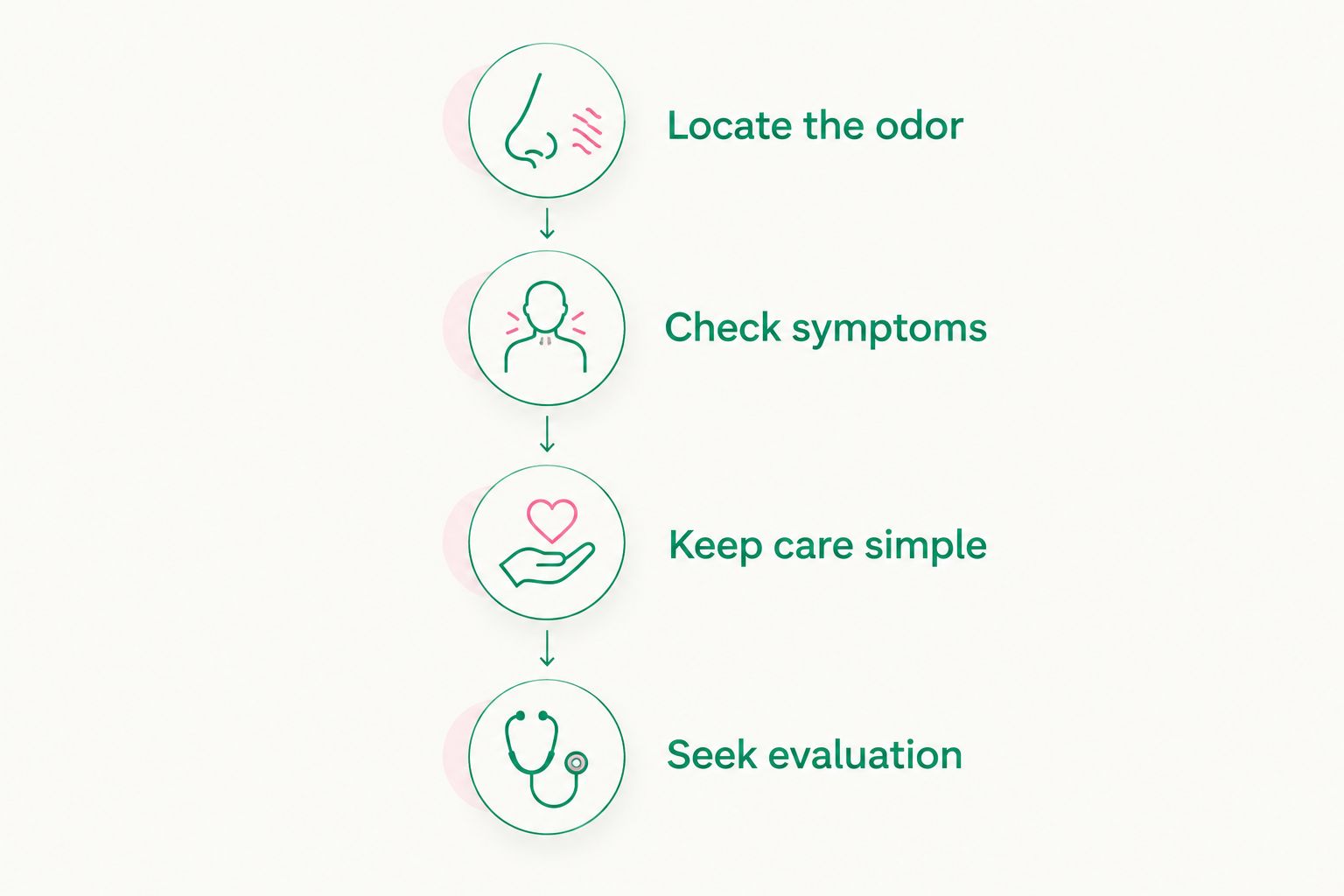
Use a simple sequence instead of adding several foods, supplements, and intimate products at once. Identify the location, check the accompanying symptoms, and choose care that matches the problem.
- Locate the odor. Notice whether it seems associated with sweaty underwear, urination, or a change in vaginal discharge. You do not need to insert anything to investigate.
- Check symptoms. Note itching, burning, pain, unusual discharge, bleeding, or discomfort with urination or sex. Tell your clinician if symptoms followed a new sexual exposure.
- Keep care simple. Avoid douching, internal deodorizing, and inserting food. Gently clean the external vulva and stop products that sting or worsen irritation.
- Seek evaluation. Arrange care for persistent or recurring odor, particularly with discharge or discomfort. Seek prompt medical attention for pelvic pain, fever, pregnancy-related concerns, or suspected retained material such as a tampon.
A short symptom record helps a clinician understand the pattern. Record whether symptoms started around your period, after sex, after a new product, or following medication use. Include treatments you already tried and whether symptoms returned.
Do not wait for a diet experiment to finish before requesting care. A possible retained tampon, severe pain, or fever needs a different response from ordinary external sweat odor.
Where external feminine care fits
External cleansing removes sweat and residue from vulvar skin. It does not treat BV, eradicate vaginal yeast, or establish why vaginal discharge smells different. A pH-balanced feminine wash is not a treatment for an abnormal vaginal pH.
Kushae feminine care is best for women seeking OB/GYN-developed care options, not a substitute for evaluating recurring odor. If you prefer an external cleanser, Kushae Gentle 2-N-1 Foaming Feminine Wash belongs in that external-care decision—not in a plan to treat an internal infection.
The benefit of separating these decisions is clarity: you can consider comfort and cleansing without mistaking a wash for medication. The limit is equally clear. Any cleanser can disagree with sensitive skin, and “OB/GYN-developed” does not mean every person will tolerate a formula.
Check the current ingredient list and directions before purchasing. Stop use if irritation develops. General medical guidance about vulvar care does not establish clinical outcomes for a specific Kushae formula.
Can drinking more water fix vaginal odor?
Water does not treat BV or directly correct vaginal pH. Adequate hydration helps prevent concentrated urine, which sometimes explains a stronger smell noticed around urination. That is a urinary effect, not evidence of a vaginal treatment.
Drink according to your needs and any fluid guidance from your healthcare team. If odor comes with burning urination, urgency, or pelvic discomfort, seek assessment instead of assuming dehydration is the explanation.
For your 2026 routine, treat hydration as basic health maintenance. It should not become a reason to dismiss recurring symptoms or postpone testing.
Will cutting sugar stop BV or yeast infections?
Cutting sugar is not an established stand-alone treatment for BV or a vaginal yeast infection. Eating dessert does not diagnose an infection, and avoiding it does not confirm that an infection has cleared.
Poorly controlled diabetes is a different clinical issue. CDC candidiasis guidance identifies poorly controlled diabetes as a factor that affects treatment considerations. If you have diabetes and recurrent symptoms, discuss both infection testing and glucose management with your clinician.
Avoid blaming yourself for symptoms after a particular meal. Repeated symptoms require confirmation of the cause, not progressively stricter food rules.
Are probiotics or boric acid a better next step than changing food?
Neither probiotics nor boric acid should replace an evaluation for unexplained recurring odor. CDC guidance does not support currently available probiotic products as a replacement for established BV treatment and finds no substantial evidence supporting probiotics for treating vulvovaginal candidiasis.
Boric acid has a limited role in clinician-directed care for selected recurrent vaginal conditions. That does not make it a general-purpose odor remedy or a routine response to a home pH result. Do not use boric acid vaginal suppositories during pregnancy, and never swallow them.
The useful 2026 question is not which product changes pH fastest. It is which diagnosis explains your symptoms and which treatment has evidence for that diagnosis. Ingredients added to a formula do not prove that the finished product prevents recurrence.
FAQ
Does diet affect vaginal odor or pH enough to treat BV?
Diet is not an established treatment for BV or a reliable way to correct vaginal pH. Persistent fishy odor or unusual discharge needs evaluation and diagnosis-based care.
Will pineapple make my vagina smell better?
Pineapple is not an established treatment for vaginal odor. Eat it if you enjoy it, but do not use food to mask or postpone assessment of new symptoms.
Can dehydration make me notice a stronger smell?
Dehydration can make urine more concentrated and stronger-smelling. That does not mean dehydration has caused BV or that drinking water treats a vaginal infection.
Is a vaginal pH above 4.5 always BV?
A vaginal pH above 4.5 is not enough to diagnose BV. Clinicians interpret pH alongside symptoms and other findings, and blood, semen, and life stage affect interpretation.
Can my vaginal pH be normal if I have a yeast infection?
A yeast infection typically occurs with vaginal pH below 4.5. A normal-range home result does not rule out yeast or explain persistent itching.
Should I use feminine wash inside my vagina after eating certain foods?
Do not use feminine wash inside your vagina after eating any food. External cleansing and internal vaginal health are different matters, and douching is not recommended.
When should I see a clinician about vaginal odor?
See a clinician when odor is persistent, recurring, or accompanied by unusual discharge, itching, burning, or pain. Seek prompt attention for fever, pelvic pain, pregnancy-related concerns, or a possible retained tampon.
One last thing
A normal pH result does not mean every symptom is normal. Yeast-related symptoms can occur without an elevated pH, while life-stage changes can raise pH without proving BV. Treat the symptom pattern as information to investigate—not a score you must correct through food.
Bring your questions, symptom history, and product list to your appointment. You deserve an explanation, not another rule about what your body should smell like.


