


This article is for informational purposes only. It is not, nor is it intended to be, a substitute for professional medical advice, diagnosis, or treatment and should never be relied upon for specific medical advice.
Postpartum vaginal dryness can last several weeks and persist for months while breastfeeding; there is no single recovery deadline. Healing tears, scar sensitivity, infection, or pelvic floor pain can also cause discomfort, so dryness does not explain every painful symptom. This 2026 guide explains what affects recovery, what helps, and when to contact your maternity clinician.
TL;DR
- How long does postpartum vaginal dryness last? Several weeks or longer; breastfeeding can extend symptoms for months.
- Vaginal moisturizers and lubricants serve different purposes; neither replaces assessment of persistent pain.
- Kushae external vulvar care is not a treatment for low-estrogen vaginal dryness.
- Seek prompt care for fever, foul-smelling discharge, worsening pelvic pain, or problems with a healing wound.
Why this matters
You do not need to wait until breastfeeding ends to ask for relief. Postpartum hormone changes can reduce vaginal lubrication, but pain deserves attention whether you delivered vaginally or by cesarean birth. An examination helps distinguish dryness from healing tissue, skin irritation, infection, and pelvic floor problems.
The NHS identifies childbirth and breastfeeding as causes of vaginal dryness. Its guidance also recommends medical assessment when symptoms persist or affect daily life. If you are sorting through products, start with feminine care products for postpartum recovery, while keeping external skin care separate from treatment inside the vagina.
How long does postpartum vaginal dryness last?
Postpartum vaginal dryness often improves as hormone levels recover after birth. Breastfeeding can keep estrogen levels lower and extend symptoms, including beyond the early postpartum recovery period. Neither your delivery date nor your return to sexual activity provides a reliable finish line.
The NHS's guidance on sex after pregnancy explains that hormonal changes can make the vagina feel drier than usual. Its vaginal dryness guidance also lists breastfeeding as a cause. These explain the pattern, not an exact duration for an individual woman.
| Postpartum situation | What it means for dryness | Practical next step |
|---|---|---|
| Early recovery after birth | Hormonal changes and healing can occur together | Avoid friction that hurts and discuss troublesome symptoms |
| Breastfeeding | Lower estrogen can prolong reduced lubrication | Ask about symptom relief compatible with breastfeeding |
| After reducing feeds or weaning | Hormonal recovery does not follow one fixed schedule | Seek assessment if dryness remains troublesome |
| Persistent pain or new discharge | Dryness alone does not establish the cause | Arrange an examination rather than adding products |
A postpartum checkup is not a deadline by which dryness must disappear. The more useful questions are whether symptoms are improving, whether they interfere with daily activities, and whether anything else has changed.
Does breastfeeding make postpartum dryness last longer?
Breastfeeding can prolong postpartum vaginal dryness because lactation is associated with lower estrogen levels. Estrogen helps maintain vaginal tissue and lubrication. This is a hormonal effect, not evidence that you are washing incorrectly or failing to recover.
Some women notice improvement as breastfeeding changes or ends. Others need assessment and treatment while they are still nursing. There is no dependable countdown from the last feed to comfortable sex or symptom-free daily activity.
You do not have to stop breastfeeding solely to seek care for dryness. Tell your clinician whether you are exclusively breastfeeding, combining feeding methods, reducing feeds, or weaning. That information helps guide treatment discussions without making feeding decisions for you.
Can postpartum dryness happen if you are not breastfeeding?
Postpartum dryness can happen without breastfeeding because hormone levels change after delivery. Birth-related tissue healing, irritation, and discomfort during sex can also overlap with reduced lubrication.
Not breastfeeding does not create a guaranteed recovery date. If discomfort continues, ask your clinician to assess the actual source rather than assuming hormones are responsible for everything.
Be precise about location. Burning on the outer vulvar skin, pain at a healing tear, and dryness inside the vagina are different complaints. Describing where you feel discomfort often gives your clinician more useful information than simply saying that sex hurts.
Why postpartum vaginal dryness varies
Several factors change what you feel and what care you need:
- Breastfeeding: Lactation-related hormone changes can sustain reduced vaginal lubrication.
- Tissue healing: Tears, an episiotomy, and scar tenderness can contribute to pain alongside dryness.
- Product irritation: Fragranced products, douching, and unsuitable creams can irritate sensitive tissue.
- Sexual arousal: Reduced arousal can mean less lubrication; more time and less pressure help address this component.
- Other causes of pain: Infection, vulvar skin conditions, and pelvic floor problems need different care from uncomplicated dryness.
The NHS lists hormonal changes, insufficient arousal, and perfumed products among causes or contributors to vaginal dryness. ACOG's patient guidance on painful sex describes additional causes, including skin conditions and pelvic floor problems. These are reasons to investigate persistent symptoms, not reasons to diagnose yourself from a checklist.
What helps postpartum vaginal dryness?
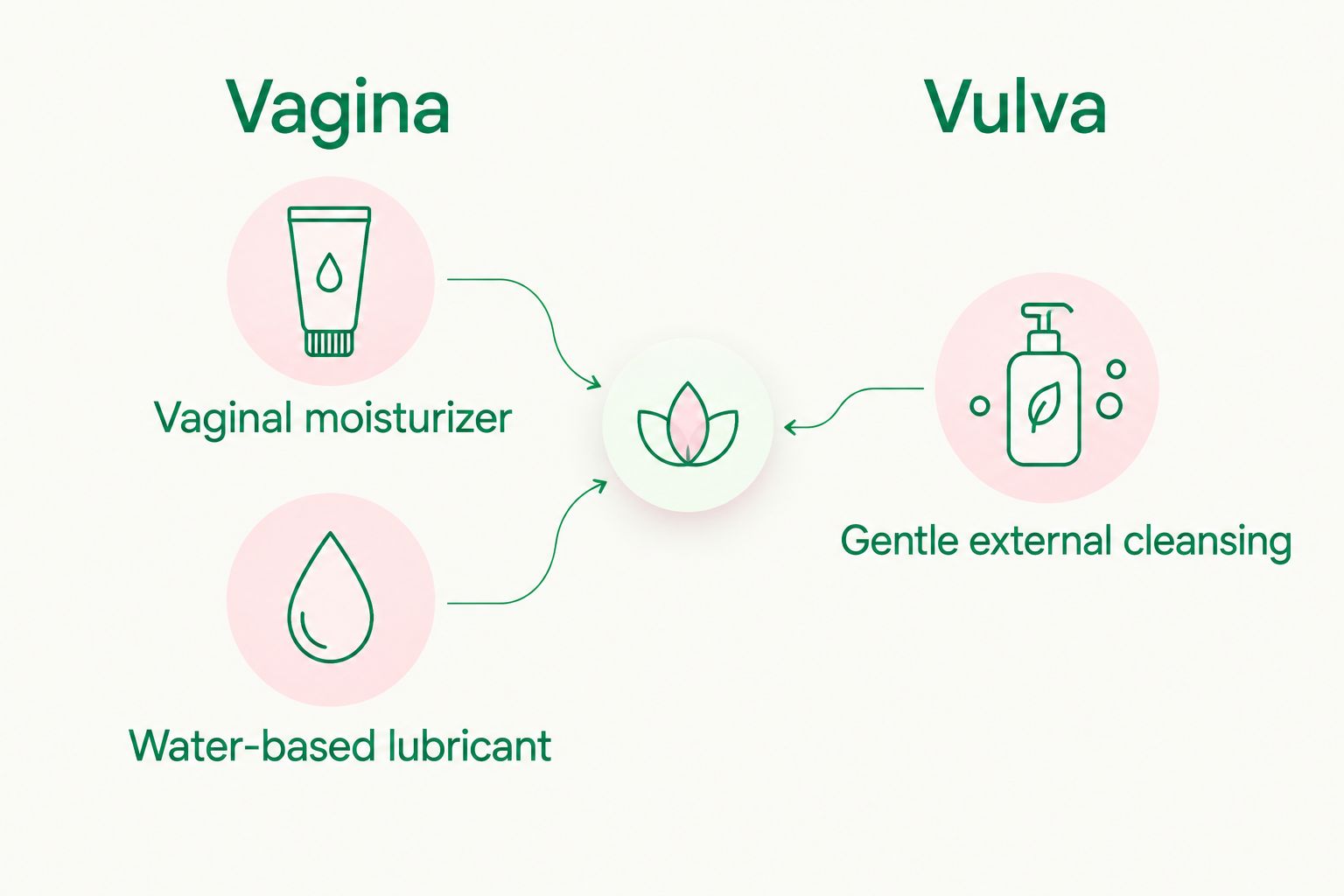
Choose care by the symptom and the body area, not by a general promise of freshness. The vagina is the internal canal. The vulva is the external genital area, where cleansing products or external skin treatments have a different role.
NHS vaginal dryness guidance distinguishes lubricants used around sex from vaginal moisturizers used for ongoing dryness. Neither product category establishes why you are uncomfortable. Check the label for intended use and discuss suitability after delivery, particularly while wounds are healing.
| Option | Best for | Benefit | Limit or caution |
|---|---|---|---|
| Water-based lubricant | Friction during sexual activity | Adds lubrication when needed | Does not treat infection or explain persistent pain |
| Vaginal moisturizer | Ongoing vaginal dryness | Designed for use inside the vagina according to its label | Not every moisturizer is suitable for vaginal use |
| Gentle external cleansing | Cleaning the vulva | Removes surface sweat and residue | Does not restore vaginal estrogen or treat BV |
| Clinician-guided treatment | Persistent or disruptive symptoms | Matches care to the diagnosed cause | Requires individual assessment, especially during breastfeeding |
These options are not interchangeable. A wash does not become a vaginal moisturizer because its label says pH-balanced. A skin balm does not become a lubricant because it feels slippery.
If you use condoms, check lubricant compatibility on both labels. Oil-based products can damage latex condoms, according to NHS condom guidance. Avoid using a body oil or household cream inside the vagina as an improvised treatment.
A practical 2026 care plan
- Locate the discomfort. Note whether symptoms affect the outer skin, vaginal opening, internal vagina, or a healing wound.
- Remove avoidable irritants. Stop douching and avoid fragranced intimate products, especially if they sting.
- Reduce painful friction. Pause penetration that hurts. If you choose sexual activity, discuss suitable lubrication and allow time for arousal.
- Arrange follow-up. Ask about persistent dryness, scar pain, pelvic floor symptoms, and treatment options compatible with breastfeeding.
Introduce changes carefully rather than starting several intimate products together. If something causes burning or worsens irritation, stop using it and seek advice. A more complicated routine is not automatically a better one.
When should you contact your clinician?
Contact your maternity clinician when dryness affects daily life, makes sex painful, or does not improve with appropriate self-care. You do not need to prove that symptoms have lasted a particular number of weeks before asking.
ACOG's postpartum care guidance recommends contact with an obstetric care professional within 3 weeks after birth, followed by ongoing care and a full postpartum visit no later than 12 weeks after birth. Those are care checkpoints, not predictions of how long dryness lasts. Raise symptoms earlier when they trouble you.
Seek prompt medical care for:
- Fever of 100.4°F or higher.
- Foul-smelling vaginal discharge.
- Severe or worsening abdominal or pelvic pain.
- Increasing redness, swelling, discharge, or separation at a healing wound.
- Heavy bleeding, dizziness, or feeling acutely unwell.
The CDC's Hear Her maternal warning-sign guidance identifies fever, severe abdominal pain, and concerning postpartum bleeding or discharge as reasons for urgent attention. Do not assume these symptoms are part of vaginal dryness.
Is postpartum dryness the same as BV or a yeast infection?
Postpartum dryness is not the same as BV or a yeast infection. Hormonal dryness, infections, and skin irritation can share symptoms such as burning or discomfort, so symptoms alone do not establish the diagnosis.
New odor, unusual discharge, significant itching, or pain with urination deserves assessment. More washing does not treat BV, and boric acid is not a general-purpose moisturizer for postpartum vaginal dryness.
Tell your clinician about every vaginal product you have used, including suppositories and over-the-counter yeast treatments. That history helps guide the examination and treatment discussion. Avoid repeatedly treating a presumed infection when the symptoms keep returning without a confirmed cause.
Should you ask about vaginal estrogen while breastfeeding?
Vaginal estrogen requires an individual prescribing discussion during breastfeeding. The NHS's guidance on vaginal estrogen states that it is not usually prescribed while breastfeeding unless a specialist recommends it.
Ask about nonhormonal options, symptom severity, feeding status, and whether another diagnosis explains the discomfort. Do not borrow someone else's prescription or copy a menopause treatment routine without medical advice.
The decision is not simply whether a treatment works for dryness in general. Your clinician also needs to consider postpartum healing, breastfeeding, your medical history, and the specific medicine being considered.
Where external vulvar care fits
Kushae vulvovaginal care is best for women seeking OB/GYN-developed product options, not a diagnosis of postpartum dryness. The distinction matters when sensitive outer skin and internal vaginal dryness happen together.
Kushae offers washes, skin balms, sprays, and vaginal suppositories. These categories have different purposes; they are not interchangeable treatments for dryness. The brand's OB/GYN-developed positioning does not establish that a specific formula treats postpartum low-estrogen symptoms.
Keep Kushae external care separate from intravaginal treatment, and follow the individual product's intended use. During postpartum healing, ask your maternity clinician before applying a product to a tear, stitches, or irritated tissue. An optional care product should never delay evaluation of pain or abnormal discharge.
FAQ
How long does postpartum vaginal dryness last while breastfeeding?
Postpartum vaginal dryness can persist for months while breastfeeding, but there is no fixed duration. Ask about relief if symptoms affect daily life or sex; you do not have to wait until weaning.
Is vaginal dryness normal at my postpartum checkup?
Vaginal dryness can still be present at your postpartum checkup, especially while breastfeeding. Tell your clinician about burning, painful sex, or wound discomfort rather than assuming every symptom is hormonal.
Can I have postpartum vaginal dryness after a C-section?
Yes, postpartum vaginal dryness can occur after a cesarean birth because hormone changes happen regardless of delivery method. Persistent pain still needs assessment rather than automatic attribution to dryness.
Does a pH-balanced feminine wash fix postpartum dryness?
No, a pH-balanced feminine wash does not treat low-estrogen vaginal dryness. An external cleanser cleans vulvar skin; it does not replace vaginal lubrication or treat BV.
Should I use boric acid for postpartum vaginal dryness?
Boric acid is not a treatment for postpartum vaginal dryness. Do not use vaginal suppositories to treat unexplained postpartum burning or discomfort without discussing the cause with your clinician.
What should I ask at my postpartum appointment in 2026?
Ask whether your symptoms come from hormonal dryness, healing tissue, infection, skin irritation, or pelvic floor problems. Also ask which lubricants, moisturizers, or prescription treatments fit your healing and breastfeeding status.
When is postpartum vaginal discomfort urgent?
Postpartum discomfort needs urgent attention when it occurs with fever of 100.4°F or higher, severe or worsening abdominal pain, foul-smelling discharge, or heavy bleeding. Contact your maternity team or seek urgent medical care.
Medical sources for this 2026 guide
- NHS, Vaginal dryness and Sex and contraception after birth: Hormonal causes, breastfeeding, self-care, and assessment of persistent symptoms.
- ACOG, Optimizing Postpartum Care: Postpartum contact and follow-up timing.
- ACOG, When Sex Is Painful: Possible causes of pain and the role of clinical assessment.
- NHS, Vaginal oestrogen and Condoms: Breastfeeding prescribing cautions and lubricant compatibility.
- CDC, Hear Her urgent maternal warning signs: Symptoms requiring prompt medical attention after pregnancy.
These sources support general clinical education. They are not clinical evidence for a particular product formula.
One last thing
For your 2026 postpartum visit, write down where it hurts, what triggers it, and whether symptoms are improving. Include breastfeeding status and any products you have tried. That short record is more useful than choosing a product based only on the word dryness.
You do not need to resume penetration to test whether you have recovered. Comfortable healing, not a calendar deadline, is the goal.


