


This article is for informational purposes only. It is not, nor is it intended to be, a substitute for professional medical advice, diagnosis, or treatment and should never be relied upon for specific medical advice.
Wait until you have finished your boric acid treatment and followed the product’s instructions or your clinician’s advice before having vaginal sex; do not rely on a universal hour count. Avoid oral contact with the treated area while suppository residue remains, because boric acid is not safe to swallow, and delay penetration if you still have burning, irritation, or pain.
TL;DR
- How long should you wait to have sex after a boric acid suppository? Follow treatment instructions, not a universal countdown.
- Cleveland Clinic advises avoiding sex until boric acid treatment is finished; lingering symptoms need attention.
- Kushae boric acid suppositories are intravaginal products, not external cleansers or permission to resume sex.
- Avoid oral contact with suppository residue. Boric acid is for vaginal use only, never swallowing.
Why this matters
The question is not just whether the capsule has dissolved. You also need to consider the condition being treated, ongoing irritation, residue exposure, and whether the formulation affects your contraception.
Less discharge does not prove an infection has cleared, and a dissolved capsule does not establish that sex is safe. This 2026 guide separates those decisions so you can protect your comfort without guessing from the clock. If you are also tracking symptom changes, read about how long boric acid suppositories take to work.
How long should you wait to have sex after a boric acid suppository?
Finish the prescribed or labeled treatment, follow any additional waiting instructions, and do not resume painful sex. Cleveland Clinic’s patient instructions for vaginal boric acid advise against sex until treatment is finished. They do not provide a single waiting interval that applies to every formulation and treatment plan.
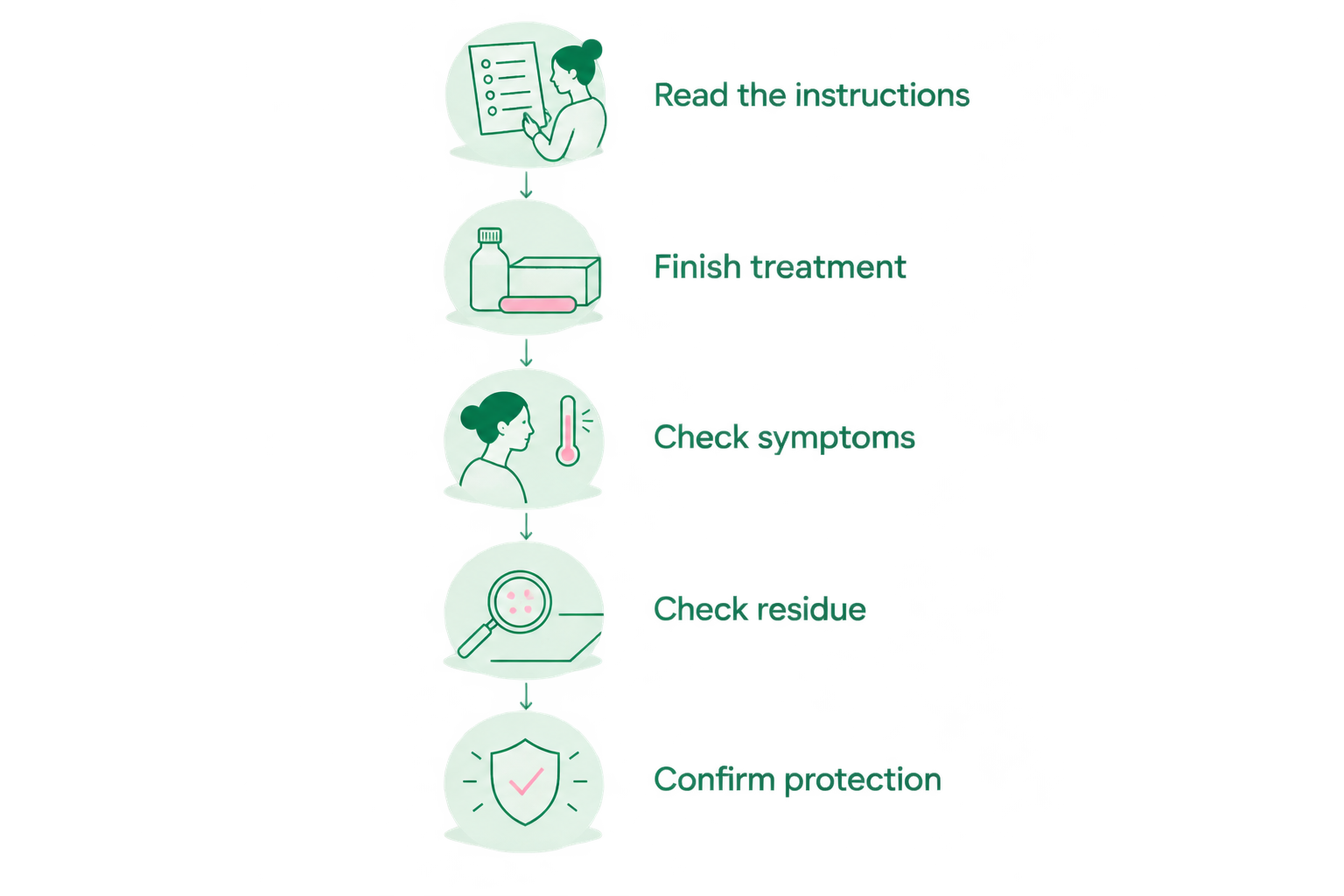
Use this sequence rather than treating the next morning as automatic clearance:
- Read the instructions. Check the package for sexual-activity warnings, treatment duration, pregnancy precautions, and contraception information. Your clinician’s directions take priority when boric acid is part of a prescribed plan.
- Finish treatment. Do not skip scheduled doses to create a window for sex. Ask the prescriber what to do if the treatment schedule conflicts with your plans.
- Check symptoms. Burning, soreness, pain with penetration, or persistent unusual discharge calls for reassessment rather than pushing through discomfort.
- Check residue. Do not expose a partner’s mouth to suppository material. Leakage and dissolved medication still matter after the capsule itself is no longer visible.
- Confirm protection. Ask a pharmacist whether your exact formulation affects condoms, diaphragms, or spermicides, and what contraception precautions apply afterward.
These checks answer different questions. Completing treatment addresses the treatment plan; checking symptoms addresses comfort and the possibility of an unresolved condition. Neither step replaces the product’s sexual-activity warning.
Does the type of sexual contact change the advice?
Yes. Penetration, oral sex, and intimacy without genital contact create different kinds of exposure. Changing the activity does not cancel the treatment instructions.
| Activity | Main concern | Best for | Limit or precaution |
|---|---|---|---|
| Vaginal penetration | Friction against irritated tissue and contact with medication | After treatment restrictions are satisfied and penetration is comfortable | A dissolved capsule alone is not clearance |
| Oral contact with the vulva or vagina | Swallowing suppository residue | After treatment restrictions and residue concerns are resolved | Do not use taste or smell to check for residue |
| Fingers or inserted toys | Irritation and transfer of medication | After treatment restrictions are satisfied | Wash exposed hands and clean toys before any mouth contact |
| Kissing or massage away from the genitals | Avoiding contact with the treated area | Maintaining intimacy during a treatment pause | Keep medication and contaminated hands away from mouths |
You do not have to choose between painful sex and no closeness. Kissing, cuddling, or massage away from the treated area avoids vaginal friction and direct medication exposure. Stop any activity that causes discomfort.
For this 2026 guide, the distinction is contact with the treated area, not whether an activity counts as intercourse. Tell your partner you are using a vaginal medication and need to avoid exposure while you follow the treatment plan.
Why the waiting period varies
A generic countdown leaves out the details that determine the right advice for you. These factors explain why instructions differ:
- The product formulation. Boric acid suppositories contain other ingredients as well as boric acid. Check the exact product’s warnings rather than borrowing directions from another brand.
- The treatment schedule. A clinician-directed course is different from a single unsupervised dose. A scheduled next dose means the treatment plan is still underway.
- The diagnosis. BV, yeast infection, contact irritation, and sexually transmitted infections require different care. Odor or itching alone cannot distinguish them.
- Your symptoms. Ongoing burning or pain means the tissue is not comfortable with friction, regardless of how much time has passed.
- The planned contact. Oral exposure adds an ingestion concern; penetration adds friction and possible contraception questions.
- Your contraception. The formulation’s effect on a barrier method matters independently of whether you feel better.
Do not shorten a longer package warning because another article gives a shorter interval. Likewise, do not extend or repeat boric acid treatment simply because symptoms remain. Persistent symptoms require a diagnosis, not an improvised schedule.
Can you have oral sex once the suppository dissolves?
Dissolving does not make boric acid safe to swallow. Avoid oral contact with the treated area while medication residue remains, and follow the full treatment restrictions before resuming sexual activity.
Cleveland Clinic identifies boric acid suppositories as vaginal-use medication and warns against taking them by mouth. Poison Control also distinguishes vaginal use from ingestion, which requires exposure-specific advice.
There is no reliable home taste, smell, or visual test that proves all medication has cleared. Rinsing the external vulva is not a way to clear the vaginal canal, and douching is not a safe shortcut.
If a partner gets medication in their mouth, stop contact and call Poison Control for guidance. In the United States, the number is 1-800-222-1222. Do not induce vomiting; describe the product, the exposure, and any symptoms so the specialist can advise you.
Does a condom make sex safe during boric acid treatment?
A condom does not override an instruction to avoid sex during treatment. It also does not prevent friction from irritating sore vaginal tissue.
Cleveland Clinic’s boric acid patient information warns that condoms, diaphragms, and spermicides might not work as well during use. That is a reason to ask about your exact formulation, not to assume every barrier material has the same compatibility.
Ask the pharmacist two separate questions: whether the product affects your contraceptive method, and whether any additional precautions apply after the last dose. Do not guess from the suppository’s appearance or from another vaginal medication’s label.
If a condom breaks or you have unprotected sex and pregnancy is possible, contact a pharmacist or clinician promptly about emergency contraception. Also tell the clinician that you have been using boric acid, especially if you think you might already be pregnant.
What if you are using boric acid for BV or recurring yeast?
The underlying diagnosis determines the treatment plan. Boric acid is not a substitute for an examination when symptoms are new, persistent, or recurring.
CDC guidance places boric acid within specific approaches to recurrent BV and certain difficult-to-treat yeast infections. That does not establish boric acid as the right first treatment for every episode of odor, itching, or discharge.
For BV, CDC guidance advises refraining from sex or using condoms consistently and correctly during the treatment regimen. When that regimen includes boric acid, you must also account for the suppository’s own sexual-activity and barrier-method warnings. Do not treat the general condom advice as permission to ignore a product-specific restriction.
Tell your clinician about previous diagnoses, recent treatment, and how quickly symptoms returned. Testing can distinguish causes that look similar from symptoms alone. An external feminine wash does not treat BV inside the vagina.
The medical distinction remains central in 2026: general evidence about vaginal boric acid is not evidence that a particular commercial formula cures your symptoms. Added ingredients do not establish a shorter waiting period before sex.
Where does Kushae fit into the decision?
Kushae boric acid suppositories are best suited to women whose clinician has recommended vaginal boric acid. The brand offers an OB/GYN-developed vulvovaginal care line, but that does not replace individual diagnosis or product-specific safety instructions.
If you are considering the boric acid suppositories, read the current label before use and ask about the complete formula. The listed product name includes probiotics and aloe; those ingredients do not establish that oral exposure is safe or that sex can resume sooner.
Kushae’s product safety information states not to use boric acid vaginal suppositories during pregnancy. If you are pregnant, planning pregnancy, or think pregnancy is possible, discuss treatment with your clinician rather than starting or continuing on your own.
The purchasing decision comes after the care decision. Choose an intravaginal product only when it fits your treatment plan—not simply because odor appeared before an upcoming date.
What should you do if you already had sex?
Stop if you develop burning, soreness, or pain. Do not insert an extra suppository, douche, or add another vaginal product to compensate; ask the prescriber or pharmacist how to continue the existing schedule.
If your partner had oral exposure, contact Poison Control rather than waiting for symptoms. For penetration without oral exposure, review the product warning and check whether your contraception was affected.
Seek prompt medical care for severe pelvic pain, fever, significant bleeding, or rapidly worsening symptoms. If you feel well but the instructions were unclear, a pharmacist can help interpret the label before your next dose. Having sex once does not tell you whether treatment succeeded or failed.
FAQ
How long should you wait to have sex after a boric acid suppository?
Wait until treatment is finished and follow the product’s instructions or your clinician’s advice; there is no universal hour count. Do not resume penetration while it hurts, and avoid oral exposure to medication residue.
Can I have sex the morning after using boric acid?
The next morning is not automatic clearance for sex after boric acid. Follow the complete treatment instructions, including restrictions that apply beyond a single dose.
Can my partner perform oral sex after the capsule dissolves?
A dissolved capsule does not make oral sex safe while medication residue remains. Boric acid must not be swallowed; avoid oral contact and follow the treatment restrictions.
Will a condom protect my partner from boric acid?
A condom does not cancel the instruction to avoid sex during treatment. Ask a pharmacist about the exact formulation because vaginal boric acid patient information warns that some contraceptive methods might not work as well.
Can I wash out boric acid so I can have sex sooner?
Do not douche or wash inside the vagina to remove boric acid. External washing does not clear the vaginal canal or shorten a treatment restriction.
Can I use Kushae boric acid suppositories while pregnant?
Do not use Kushae boric acid suppositories during pregnancy. Contact your clinician if you are pregnant, planning pregnancy, or think you might be pregnant.
Does less odor mean it is safe to have sex again?
Less odor does not prove the underlying condition has cleared or the medication residue is gone. Finish the treatment plan and seek care if symptoms persist or return.
Medical sources for this 2026 guide
- Cleveland Clinic, patient information on vaginal boric acid: medication use, avoiding sex during treatment, ingestion warnings, and possible effects on contraceptive methods.
- CDC, STI Treatment Guidelines, bacterial vaginosis section: sexual-activity advice during BV treatment and the limited role of boric acid in selected recurrent cases.
- CDC, STI Treatment Guidelines, vulvovaginal candidiasis section: diagnosis and management of complicated or recurrent yeast infections, including selected uses of boric acid.
- Poison Control, guidance on boric acid suppositories: the distinction between intended vaginal use and accidental ingestion, and access to exposure-specific advice.
These sources inform general safety guidance. They do not establish a waiting interval for a specific commercial formula or confirm the cause of your symptoms.
One last thing
The most useful question is not just when you inserted the suppository—it is whether you have finished the plan and resolved the reasons to wait. Before resuming sex, keep the package nearby and confirm the instructions rather than relying on memory.
Your practical 2026 rule: follow the treatment plan, avoid medication exposure, and never push through pain to meet a deadline. Recurring odor or irritation deserves medical attention, not repeated attempts to make sex fit around symptoms.


