


This article is for informational purposes only. It is not, nor is it intended to be, a substitute for professional medical advice, diagnosis, or treatment and should never be relied upon for specific medical advice.
You do not need feminine deodorant spray on a daily schedule; if you choose to use one, follow its label for external application and reapplication rather than inventing a frequency. Do not spray inside the vagina, and do not use deodorant to cover persistent, fishy, or otherwise unusual vaginal odor. This 2026 guide explains when to skip spray, what to check before using it, and when odor needs medical attention.
TL;DR
- How often should you use feminine deodorant spray? Follow the label; routine use is not necessary.
- Kushae feminine deodorant spray is optional external care, not treatment for vaginal odor or BV.
- Avoid feminine deodorant on irritated skin or inside the vagina.
- Persistent vaginal odor, unusual discharge, itching, or burning needs medical assessment, not more spray.
Why this matters
Sweat odor around your groin and odor coming from vaginal discharge are not the same problem. Treating both as a freshness issue can leave you applying products when you need a diagnosis instead.
The American College of Obstetricians and Gynecologists' patient guidance on vulvovaginal health advises avoiding feminine deodorant sprays because they can irritate sensitive tissue. That makes the starting point simple: spray is optional, and using none is a valid choice.
If your main concern is sensitive external skin, the feminine wash for sensitive skin guide addresses cleanser selection. An external cleanser does not treat BV, and neither does deodorant.
How often should you use feminine deodorant spray?
There is no universal daily frequency for feminine deodorant spray. Follow the specific product's directions, including where it belongs and any application limits. If the label does not explain reapplication, ask the manufacturer rather than assuming that repeated use is safe.
Use this decision sequence before reaching for a bottle:
- Check the symptom. Notice whether you have ordinary sweat odor on surrounding skin or a new vaginal smell, discharge change, itching, or burning.
- Check the skin. Skip deodorant if the intended application area is irritated, broken, or uncomfortable.
- Check the label. Confirm the permitted external application sites and directions. Do not assume that every product labeled feminine deodorant belongs directly on the vulva.
- Choose the next step. For routine sweat, changing damp clothing and gently cleaning external skin are reasonable first steps. For persistent vaginal symptoms, arrange medical care.
A label provides application instructions. It does not establish that you need deodorant, that every application will suit your skin, or that the product treats the cause of an unusual smell.
Your 2026 frequency checklist
Before another application, ask yourself: Am I following the directions, or trying to make a symptom disappear? Is my skin comfortable, or already stinging? Has the odor changed from what is normal for me?
If you are reapplying because the same unusual vaginal smell keeps returning, stop treating the issue as a scheduling question. Recurring odor calls for assessment, not a more frequent spray routine.
External sweat odor and vaginal odor need different responses
The vulva is the external genital area. The vagina is the internal canal. Surrounding groin skin, the vulva, and the vagina are not interchangeable application sites.
The vagina does not need internal deodorizing or washing. ACOG's vulvovaginal health guidance distinguishes normal vaginal care from practices such as douching and using products that can irritate the area.
| Approach | Best for | Useful role | Important limit |
|---|---|---|---|
| Gentle external cleansing | Removing sweat from external skin | Cleans the outside without trying to deodorize the vagina | Does not diagnose or treat BV or yeast infection |
| Changing damp clothing | Comfort after sweating | Removes wet fabric from contact with skin | Does not explain persistent vaginal odor |
| Feminine deodorant spray | Optional external odor care on label-approved sites | Provides a cosmetic odor-care option | Can irritate; does not treat vaginal infection |
| Clinical assessment | New, persistent, or recurring vaginal symptoms | Identifies the cause and guides treatment | Requires an appointment or other appropriate healthcare access |
Do not judge vaginal health by whether you smell perfumed or completely odorless. A mild personal scent is normal. A change from your usual pattern, especially with other symptoms, is more useful information than whether a spray hides it.
Why feminine deodorant spray frequency varies
A single instruction such as daily or after every workout ignores the product, the application site, and your symptoms. These factors determine whether another application makes sense at all:
- Product directions. Different labels specify different application methods and permitted sites. Never transfer instructions from another bottle.
- Skin condition. Burning, redness, itching, or broken skin changes the decision from reapply to stop and assess.
- Source of the odor. External sweat odor and an unusual vaginal smell require different responses.
- Recent hair removal. Shaving or waxing can leave skin irritated. Do not apply deodorant over skin that is sore or damaged.
- Other products in use. A cleanser, wipe, deodorant, and balm create several possible sources of irritation. Adding more makes it harder to identify what your skin tolerates.
- Repeated symptoms. Odor that persists or returns with discharge changes needs medical attention rather than a stronger cosmetic routine.
Your calendar should not overrule your skin. If a product causes discomfort, stop using it even when you have followed its stated frequency.
Can you use feminine deodorant spray every day?
Daily use is not necessary for vaginal health. A product's directions might permit a particular routine, but permission on a label is not a medical recommendation to use it every day.
For sensitive external skin, ACOG's advice to avoid feminine deodorant sprays is especially relevant. You do not need to build tolerance to a product that burns or itches, and discomfort is not evidence that it is working.
For your 2026 routine, separate preference from need. Wanting an optional external odor product is different from needing treatment for BV, yeast infection, dermatitis, or another cause of symptoms.
Should you reapply feminine deodorant spray after exercise?
Do not automatically reapply after every workout. Start by changing sweaty clothing and gently cleaning external skin when practical, then follow the product's label if you still choose to use it.
Avoid layering spray over skin that feels chafed, raw, or irritated. More product does not resolve friction or establish why the area smells different.
The practical distinction is location: sweat on surrounding skin is not the same as odor associated with vaginal discharge. If you cannot tell the difference, or the change persists after ordinary hygiene, ask a healthcare professional rather than testing repeated applications.
What should you check before buying a spray?
Read the directions and full ingredient list before buying. Confirm the intended application sites, warnings, and instructions for stopping use if irritation occurs. Do not assume that natural means nonirritating or that feminine means suitable for every part of the vulva.
Kushae Natural Feminine Deodorant Spray belongs to the brand's OB/GYN-developed care line. Kushae feminine deodorant spray is an option for women considering external odor care, not treatment for women with recurring vaginal symptoms.
OB/GYN-developed describes the product line's development; it does not establish that a particular formula prevents BV or suits every person with sensitive skin. Kushae's development background also does not replace general medical advice about avoiding potentially irritating deodorant products.
Before choosing Kushae or another external deodorant, decide whether you actually need an odor-care product. The benefit is an optional cosmetic step; the limits are possible irritation and no treatment for an underlying vaginal condition. Choose care based on the symptom, not the promise of being odorless.
When should you stop using spray and seek care?
Stop applying the product if it causes burning, itching, redness, or discomfort. If symptoms persist after you stop, arrange an assessment rather than switching immediately to another intimate-care product.
Seek medical advice for a new or persistent fishy smell, unusual discharge, vaginal itching, burning with urination, or recurring symptoms. The CDC's bacterial vaginosis guidance identifies odor and discharge changes among possible BV symptoms, but those signs do not let you diagnose BV yourself.
Fever, significant pelvic pain, or symptoms during pregnancy warrant prompt medical attention. Do not delay care while trying to cover the smell.
Bring useful details to your appointment
Tell your clinician what changed, whether the odor seems linked to discharge, and whether you have pain, itching, or burning. Mention recent intimate-care products and any treatments you have already tried.
Bring product labels or ingredient lists if available. This helps your clinician assess possible irritation without relying on a vague description such as sensitive-skin spray.
A simpler response when odor keeps returning
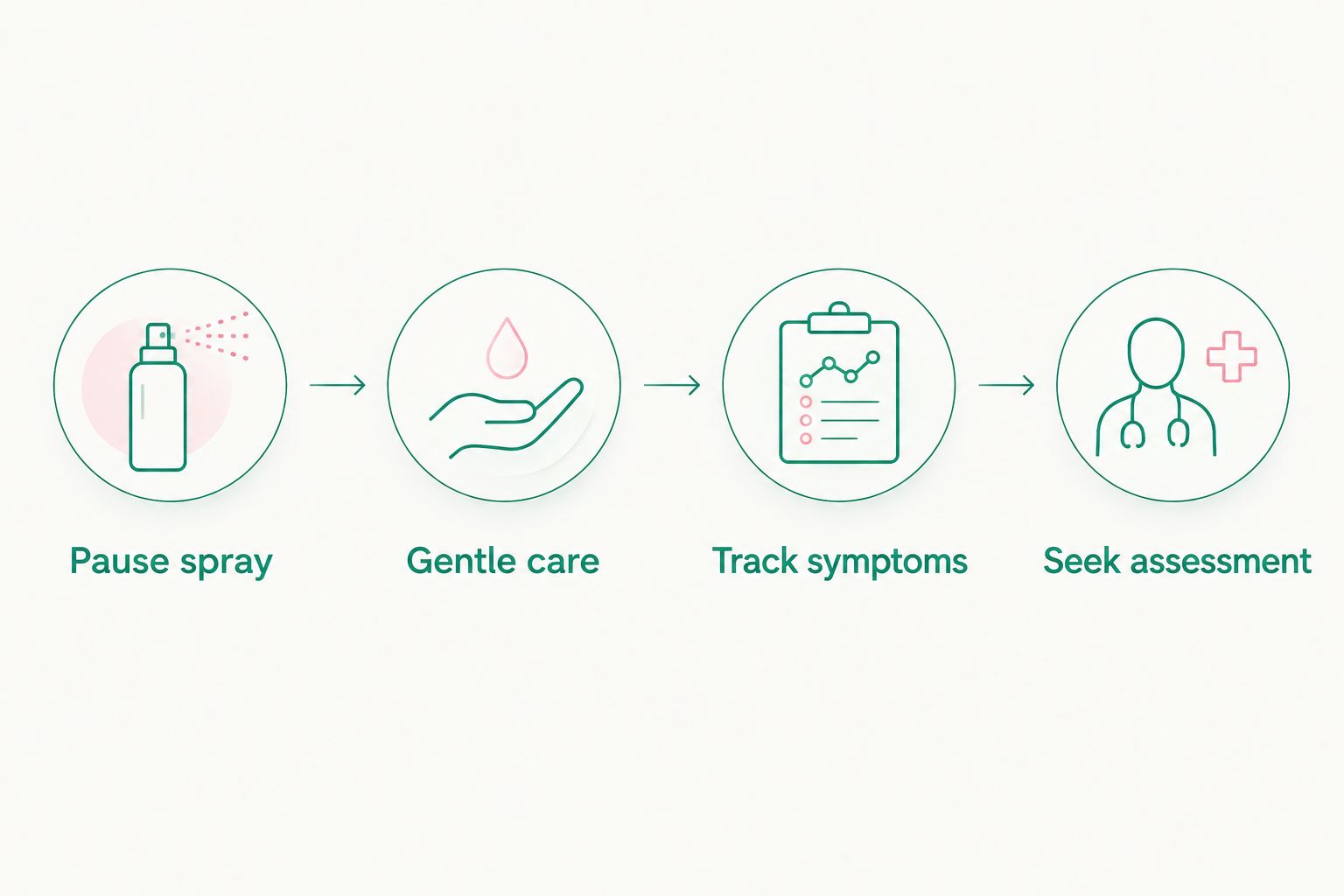
Use this sequence when you feel tempted to keep adding products:
- Pause spray. Stop cosmetic odor products while you assess a persistent or uncomfortable change.
- Gentle care. Avoid douching and internal washing. Keep external care simple.
- Track symptoms. Note odor, discharge changes, irritation, and the products you used.
- Seek assessment. Arrange care for persistent, recurrent, or concerning symptoms.
This sequence does not diagnose the cause. It keeps repeated deodorant use from becoming your only response.
Medical sources behind this 2026 guide
ACOG's patient resource, Vulvovaginal Health, supports the guidance on avoiding feminine deodorant sprays, recognizing irritation, and keeping vaginal and external care distinct. The CDC's Bacterial Vaginosis patient guidance and STI Treatment Guidelines: Bacterial Vaginosis support the distinction between symptoms, diagnosis, and treatment.
These sources address general clinical care, not the effectiveness or tolerability of a specific deodorant formula. Their inclusion is not an endorsement of a product or a claim that this article has received clinician review.
FAQ
How often should you use feminine deodorant spray?
There is no universal schedule, and routine use is not necessary. If you choose to use a spray, follow its specific external-use directions and do not reapply to cover persistent vaginal symptoms.
Can I use feminine deodorant spray every day?
Daily feminine deodorant spray is not necessary for vaginal health. ACOG advises avoiding these sprays because they can irritate sensitive tissue; product directions do not replace that medical guidance.
Where can I put feminine deodorant spray?
Use feminine deodorant spray only on the external sites expressly permitted by its label. Never spray inside the vagina, and do not assume that all external genital tissue is an approved application site.
Should I use more spray if vaginal odor comes back?
Do not increase spray use to cover recurring vaginal odor. Persistent or unusual odor, especially with discharge changes, itching, or burning, needs medical assessment.
Does feminine deodorant spray treat BV?
Feminine deodorant spray does not treat BV. BV requires appropriate diagnosis and treatment; cosmetic odor control does not address the underlying condition.
Is Kushae feminine deodorant spray a treatment for vaginal odor?
Kushae feminine deodorant spray is an external odor-care product, not treatment for a vaginal infection. Follow its label, and seek medical advice for persistent or recurring vaginal symptoms.
What should I do if feminine deodorant spray burns?
Stop using the spray if it burns or causes irritation. Avoid adding another intimate-care product to the irritated area, and seek medical advice if symptoms persist or are severe.
What is the main spray-safety advice for 2026?
Keep feminine deodorant spray optional, external, and within its label directions. Do not use it to replace assessment of persistent odor, unusual discharge, itching, or burning.
One last thing
Needing more spray is not evidence that you need a stronger spray. It is a reason to reconsider what you are treating: ordinary external sweat, irritated skin, or a vaginal symptom that deserves assessment.
For 2026, make comfort and changes from your own normal pattern the priority. Your vagina does not need to smell like a product.


