



Kushae Complete Gift Set
Complete daily care for intimate wellness.
$100.00 USD
Boric acid suppositories are not a proven, safe option for indefinite daily use. A clinician can recommend them for specific recurrent vaginal infections, but long-term safety evidence is limited, and repeated self-treatment can delay the right diagnosis. For your 2026 care decisions, the key distinction is a supervised treatment plan versus repeatedly treating odor without knowing its cause.
Long-term use needs a diagnosis, a defined schedule, and follow-up—not an open-ended routine. The CDC’s STI Treatment Guidelines describe vaginal boric acid in selected treatment pathways for recurrent bacterial vaginosis and non-albicans yeast infections. Those pathways do not establish that daily use for months or years is safe for everyone.
Kushae offers OB/GYN-developed vulvovaginal care. That development background is separate from clinical evidence establishing how long any particular formula can safely be used.
| Approach | Best for | Potential benefit | Limit or drawback |
|---|---|---|---|
| Defined boric acid course | Selected diagnosed infections under clinician guidance | Has a role in specific CDC treatment pathways | Can cause irritation; is not appropriate for every infection |
| Clinician-directed maintenance | People with confirmed recurrent infections | Provides a scheduled plan with reassessment | Long-term boric acid safety evidence remains limited |
| Repeated self-treatment | Not recommended for unexplained recurring symptoms | Does not require a prescription purchase | Can delay diagnosis and expose irritated tissue to more treatment |
| External vulvar care | Cleaning external skin without treating an internal infection | Keeps cleansing separate from vaginal treatment | Does not treat BV or vaginal yeast infections |
The distinction matters: evidence for a particular treatment course is not evidence for unlimited use. Feeling better after a suppository also does not confirm what caused your symptoms.
Recurring odor, discharge, and itching deserve care without shame. They also deserve an accurate diagnosis, because BV, yeast infections, sexually transmitted infections, and skin irritation can cause overlapping symptoms.
The American College of Obstetricians and Gynecologists’ patient guidance on vaginitis explains why history, examination, and testing matter. An article, a smell, or a home pH result cannot reliably identify every cause.
For a 2026 care plan, separate these questions: “What is causing my symptoms?” and “Which treatment fits that diagnosis?” Buying another bottle answers neither.
The CDC guidance below describes specific clinical situations. These are examples to discuss with your clinician, not instructions to start, combine, or extend treatments yourself.
For women with multiple BV recurrences, the CDC describes a possible approach that includes an oral antibiotic, followed by vaginal boric acid at 600 mg daily for 21 days, followed by suppressive metronidazole gel for 4–6 months. The CDC explicitly characterizes the supporting data for this approach as limited.
The longer maintenance phase in that example is metronidazole gel—not daily boric acid. Reading “months of treatment” as “months of boric acid” changes the regimen and its meaning.
Boric acid is therefore not a replacement for the entire BV treatment plan. Your clinician needs to decide whether this approach fits your diagnosis, recurrence history, and medical circumstances.
For recurrent non-albicans vulvovaginal candidiasis, the CDC describes 600 mg of vaginal boric acid daily for 3 weeks after recurrence following a recommended treatment course. If symptoms recur again, the guidance recommends referral to a specialist.
That recommendation does not apply automatically to every episode of itching. Identifying the yeast species can matter when symptoms persist or return despite treatment.
A defined course for a difficult infection also does not establish a safe daily maintenance schedule. Do not turn the course into an indefinite routine without reassessment.
Some clinicians prescribe intermittent boric acid for selected patients with recurrent symptoms. Published clinical experience with maintenance use does not establish a universal safe duration, frequency, or lifetime exposure limit.
There is no evidence-based number of months that makes unsupervised boric acid use safe for everyone. A maintenance prescription should explain the purpose, schedule, review point, and reasons to stop.
Your diagnosis and how you use the product matter more than whether the packaging describes it as natural. These factors belong in the decision:
A previous prescription does not answer whether boric acid fits a new episode. Tell your clinician what changed, including new pain, bleeding, discharge, or pregnancy possibility.
Before continuing boric acid in 2026, make sure you can explain the diagnosis, the intended schedule, and when the plan will be reviewed. If your routine is simply “whenever something smells different,” arrange an evaluation instead of extending it.
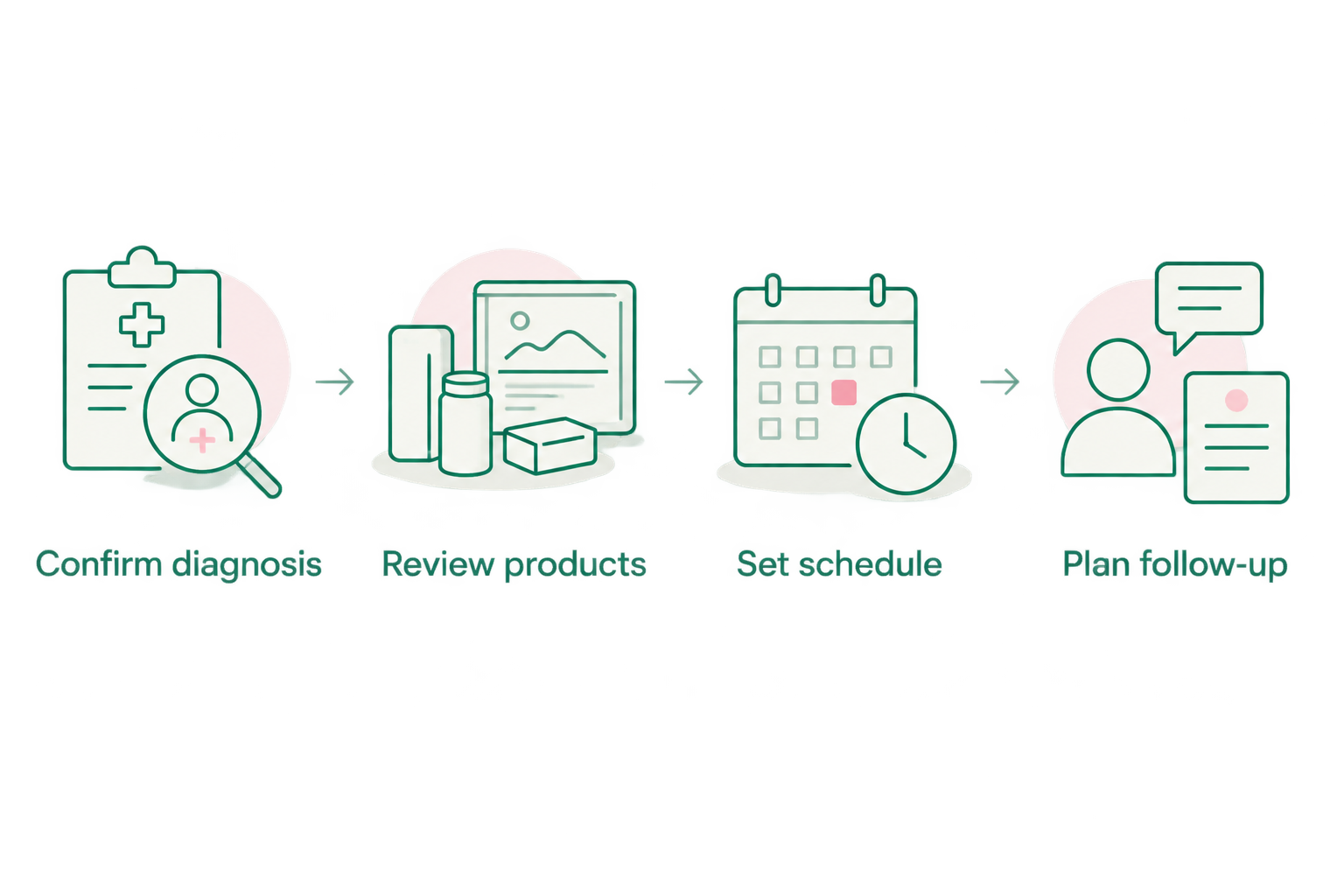
A useful appointment question is: “What would make you change this treatment?” It asks for a decision rule, not just permission to keep buying the same product.
Stop using the suppository and contact a clinician if it causes significant burning, worsening irritation, pain, or unexpected bleeding. Do not assume discomfort means the product is working.
Seek prompt medical evaluation for pelvic pain, fever, sores, or symptoms during pregnancy. These findings need assessment beyond an over-the-counter vaginal care routine.
New discharge or odor after a possible STI exposure also needs testing. Boric acid does not replace STI testing or prescribed treatment.
For persistent symptoms, tell the clinic what you used and when. Ask whether you should avoid vaginal products before the appointment so the examination and testing can be planned appropriately.
Boric acid suppositories are for vaginal use only. Never swallow them. Poison Control warns that swallowing boric acid can cause poisoning.
If someone swallows a suppository, contact Poison Control immediately for individualized instructions; do not wait for symptoms. Keep the package available, and store suppositories away from children, pets, and oral medicines.
No. External cleansing and intravaginal treatment serve different purposes. The vulva is the external genital skin; the vagina is the internal canal.
An external wash cannot treat BV inside the vagina. It also cannot replace an antifungal treatment for a diagnosed vaginal yeast infection. Avoid douching or putting an external cleanser into the vagina.
ACOG’s vulvovaginal health guidance supports gentle external care and avoiding irritating products. If your skin is sensitive, keep the routine simple and stop products that sting or worsen irritation.
Kushae intimate care includes external products and intravaginal suppositories. Choosing between those categories starts with where the problem is—not which product promises a fresher feeling.
For a 2026 purchase, start with the treatment plan rather than the ingredient list. Confirm that your clinician recommends boric acid for your current situation, then check the exact product’s directions and warnings.
Kushae intimate care is best for women seeking OB/GYN-developed options, not a substitute for diagnosis. The Kushae Vaginal Boric Acid Suppositories + Probiotics & Aloe! are an intravaginal product, not an external cleanser.
The product name identifies added probiotics and aloe. Their presence does not establish that this particular formula is safer for indefinite use or more effective than a formula without them. General evidence about vaginal boric acid is not a clinical trial of this specific product.
Before purchasing, check:
Do not buy a larger supply as a substitute for setting a review date. A product choice comes after a treatment decision.
Do not make nightly boric acid an indefinite odor-prevention routine without medical supervision. The vagina does not need to be odorless, and a change in odor does not identify its cause.
If odor repeatedly returns, arrange testing rather than assuming you need more frequent treatment. Tell your clinician whether the odor occurs with discharge, itching, pain, sex, or your period.
No. Temporary relief does not confirm BV, yeast, or successful treatment. Symptoms can fluctuate, and different conditions can feel similar.
Testing is especially useful when symptoms keep returning or previous treatment has not worked as expected. Keep a record of what you used and how the symptoms changed.
Is it safe to use boric acid suppositories long term?
Indefinite daily use is not established as safe. A clinician can recommend boric acid for selected recurrent infections, but a maintenance plan needs a diagnosis, a schedule, and follow-up.
Can I use boric acid suppositories every day forever?
Do not use boric acid suppositories every day indefinitely without medical supervision. Guidelines describing defined courses do not establish the safety of lifelong daily use.
How long do you use boric acid for recurrent BV?
The CDC describes 21 days of vaginal boric acid within one possible clinician-directed regimen for multiple BV recurrences. That regimen also includes antibiotics; it is not a recommendation to treat recurring odor with boric acid alone.
Can I use boric acid suppositories while pregnant?
Do not use vaginal boric acid during pregnancy. If pregnancy is possible or you are trying to conceive, speak with your clinician before using it.
Does burning mean boric acid is working?
Burning does not prove that boric acid is working. Stop use and contact a clinician if burning is significant, persists, or comes with worsening irritation, pain, or bleeding.
Are probiotics and aloe proof that a boric acid formula is safe long term?
Added probiotics and aloe do not establish long-term safety for a specific boric acid formula. Evidence for individual ingredients cannot substitute for evidence about the finished product and its intended use.
Can feminine wash treat BV instead of boric acid?
An external feminine wash does not treat BV. External vulvar cleansing and treatment of an infection inside the vagina are different forms of care.
The most useful change to a recurring-symptom routine is a review date. Before continuing treatment in 2026, write down the diagnosis being treated, the schedule, and the reason you would stop or seek reassessment.
Relief matters. So does knowing why symptoms keep returning.
Medical references for the clinical distinctions above: CDC STI Treatment Guidelines, “Bacterial Vaginosis” and “Vulvovaginal Candidiasis”; ACOG patient guidance, “Vaginitis” and “Vulvovaginal Health”; and Poison Control guidance on boric acid exposure. These sources describe general care and safety, not evidence for a specific commercial formula.
This article is for informational purposes only. It is not, nor is it intended to be, a substitute for professional medical advice, diagnosis, or treatment and should never be relied upon for specific medical advice.
Pairs well with what's in your cart
Complete daily care for intimate wellness.
$100.00 USD
Smooth skin care after shaving days.
$69.99 USD