


This article is for informational purposes only. It is not, nor is it intended to be, a substitute for professional medical advice, diagnosis, or treatment and should never be relied upon for specific medical advice.
Best overall: treatment matched to a confirmed cause. Best for confirmed uncomplicated yeast: a vaginal azole antifungal. Best for optional external cleansing: a gentle wash—not an infection treatment. This 2026 guide explains the limits of each option, including Kushae, so you can choose care without confusing vulvar cleansing with vaginal treatment.
TL;DR
- The best products for abnormal discharge symptoms depend on the diagnosis, not discharge color alone.
- Prescription antibiotics treat BV; vaginal antifungals treat yeast. Neither is interchangeable with a feminine wash.
- Kushae boric acid suppositories belong in selected clinician-directed care, not automatic treatment for vaginal odor.
- External vulvar care can support comfort but does not treat an infection inside the vagina.
Why this matters
A change in vaginal discharge does not automatically mean you need a suppository. Normal discharge varies with your menstrual cycle, while BV, yeast infections, sexually transmitted infections, and irritation can produce overlapping symptoms.
The vagina is the internal canal. The vulva is the external genital area. A cleanser used on external skin does not treat an infection inside the vagina, and a vaginal suppository is not a substitute for evaluating unexplained symptoms.
The best purchase is the one that addresses the confirmed problem—not the one that promises to remove every odor. For this 2026 buying guide, medical distinctions follow CDC STI Treatment Guidelines sections on bacterial vaginosis, vulvovaginal candidiasis, and trichomoniasis. Those guidelines support diagnosis-specific care, not conclusions about the effectiveness of an individual brand formula.
What makes the best products for abnormal discharge symptoms
Use these criteria before comparing products:
- Diagnosis fit: The treatment must match BV, yeast, or another identified cause. Symptoms alone do not reliably separate them.
- Correct application: Intravaginal medicines and external cleansers serve different purposes. Keep each product where its directions specify.
- Clinical evidence: Evidence for an ingredient or treatment regimen does not establish results for every finished formula.
- Safety fit: Pregnancy, recurring symptoms, allergies, and previous treatment failures change the decision.
- Clear limitations: A useful product explains what it cannot treat. External washes cannot treat BV, yeast infections, or STIs.
- Skin tolerance: Sensitive vulvar skin needs a simple routine. More products do not necessarily mean more comfort.
Options at a glance
These options are ranked by their role in care, not by a claim that one product treats every discharge concern. The 2026 comparison separates infection treatment from optional external hygiene.
| Option | Best for | Standout role | Key limitation |
|---|---|---|---|
| Prescription antibiotics | Confirmed BV | Treat the diagnosed bacterial condition | Require appropriate diagnosis; recurrence needs reassessment |
| Vaginal azole antifungals | Confirmed uncomplicated yeast | Target susceptible Candida infections | Do not treat BV or trichomoniasis |
| Kushae Vaginal Boric Acid Suppositories + Probiotics & Aloe! | Discussing boric acid for selected recurrent conditions | Intravaginal boric acid option | Not a default first treatment; general evidence does not prove this formula's results |
| Kushae Gentle 2-N-1 Foaming Feminine Wash | Optional external cleansing | Wash format for external hygiene | Does not treat abnormal vaginal discharge or infection |
1. Prescription antibiotics: best for confirmed BV
Prescription antibiotics are the appropriate treatment category when a clinician diagnoses bacterial vaginosis. CDC guidance includes metronidazole and clindamycin regimens; the choice depends on your circumstances and the prescribed formulation.
BV involves a change in vaginal bacteria. It is not evidence of poor hygiene, and washing more aggressively does not correct it. If your diagnosis is trichomoniasis instead, treatment and partner management differ from BV care.
Prescription antibiotic pros:
- Match an established treatment pathway for diagnosed BV.
- Provide a defined regimen rather than repeated product switching.
- Allow your clinician to account for pregnancy, allergies, and previous treatment.
Prescription antibiotic cons:
- Do not treat a yeast infection.
- Can cause side effects and require adherence to the prescribed instructions.
- Do not eliminate the possibility of BV returning.
Best for: Women with confirmed BV who need treatment directed at the infection.
Tell your clinician if symptoms return after treatment. Repeating leftover medicine or adding several vaginal products can delay reassessment of the cause.
Verdict: Buy only the treatment prescribed for your diagnosis; skip cosmetic substitutes for BV care.
2. Vaginal azole antifungals: best for confirmed uncomplicated yeast
Vaginal azole antifungals, including clotrimazole and miconazole, treat susceptible vaginal yeast infections. They do not treat BV, even when both conditions cause uncomfortable changes in discharge.
A familiar symptom pattern is not proof of yeast. CDC guidance recommends clinical evaluation when symptoms persist after an over-the-counter treatment or return soon afterward.
Vaginal azole antifungal pros:
- Target yeast rather than masking odor.
- Have established clinical use for uncomplicated vaginal candidiasis.
- Offer a treatment category distinct from antibiotics for BV.
Vaginal azole antifungal cons:
- Can cause local burning or irritation.
- Do not treat every Candida species or every recurrent infection.
- Can delay the right care when discharge is incorrectly self-diagnosed as yeast.
Best for: Women with confirmed uncomplicated yeast whose clinician or pharmacist considers the selected treatment appropriate.
Pregnancy changes treatment selection. Ask your pregnancy-care clinician before using a vaginal treatment, and do not substitute boric acid for a recommended antifungal.
Verdict: Buy for an appropriate yeast diagnosis; skip antifungals for unexplained odor alone.
3. Boric acid suppositories: best for selected clinician-directed care
Kushae Vaginal Boric Acid Suppositories + Probiotics & Aloe! is an intravaginal product, not an external cleanser. Its title identifies boric acid, probiotics, and aloe, but that ingredient list does not establish that the finished formula treats every cause of discharge.
CDC guidance includes vaginal boric acid in selected recurrent BV strategies and certain recurrent non-albicans yeast situations. These are specific clinical contexts—not a recommendation to insert boric acid whenever discharge changes.
What the evidence does and does not mean
Some guideline regimens use 600 mg of vaginal boric acid. That figure describes a clinical regimen, not a verified dose for this product or instructions for your symptoms. A clinician should determine whether boric acid belongs in your care and explain the regimen.
Evidence about boric acid does not automatically establish added benefits from probiotics or aloe in a particular suppository. Do not read an ingredient name as proof of infection clearance, recurrence prevention, or faster relief.
Boric acid suppository pros:
- Provide an intravaginal option to discuss for selected recurrent conditions.
- Keep the treatment route distinct from external hygiene products.
- Offer a category included in specific clinical guidance rather than an odor-covering approach.
Boric acid suppository cons:
- Are not the default first treatment for unexplained discharge.
- Can cause local irritation.
- Are toxic if swallowed and should not be used during pregnancy.
Best for: Women whose clinician has specifically recommended vaginal boric acid after evaluating recurrent symptoms.
Keep boric acid away from children and pets. Never take a vaginal capsule by mouth, and seek urgent poison-control advice if someone swallows it.
Verdict: Hold until a clinician confirms boric acid fits your diagnosis.
4. Gentle feminine wash: best for optional external cleansing
Kushae Gentle 2-N-1 Foaming Feminine Wash belongs in the external-care category. The brand offers an OB/GYN-developed line, but that background does not turn a cleanser into treatment for BV, yeast, or abnormal discharge.
Kushae feminine wash is best for optional external cleansing, not treatment of abnormal vaginal discharge. If your vulvar skin is sensitive, check the full ingredient list and label directions before introducing a cleanser.
Gentle feminine wash pros:
- Provides a wash option for readers who prefer a cleanser for external hygiene.
- Has a separate purpose from intravaginal medicines.
- Allows external care to remain distinct from diagnosis-specific treatment.
Gentle feminine wash cons:
- Does not treat BV, yeast infections, or STIs.
- Cannot diagnose or correct the cause of abnormal discharge.
- Still requires individual tolerance; an OB/GYN-developed product is not an irritation-free guarantee.
Best for: Women choosing an optional external cleanser while managing vaginal symptoms through appropriate medical care.
Do not put wash inside the vagina or use it to douche. If a cleanser causes burning, stinging, or worsening irritation, stop using it and simplify your routine.
Verdict: Buy only for external hygiene if it suits your skin; skip it as an infection treatment.
Keep the care routes separate
Your 2026 routine needs a clear boundary between treating a vaginal condition and caring for external skin. Use three distinct categories: Vaginal treatment, External cleansing, and Clinical evaluation.
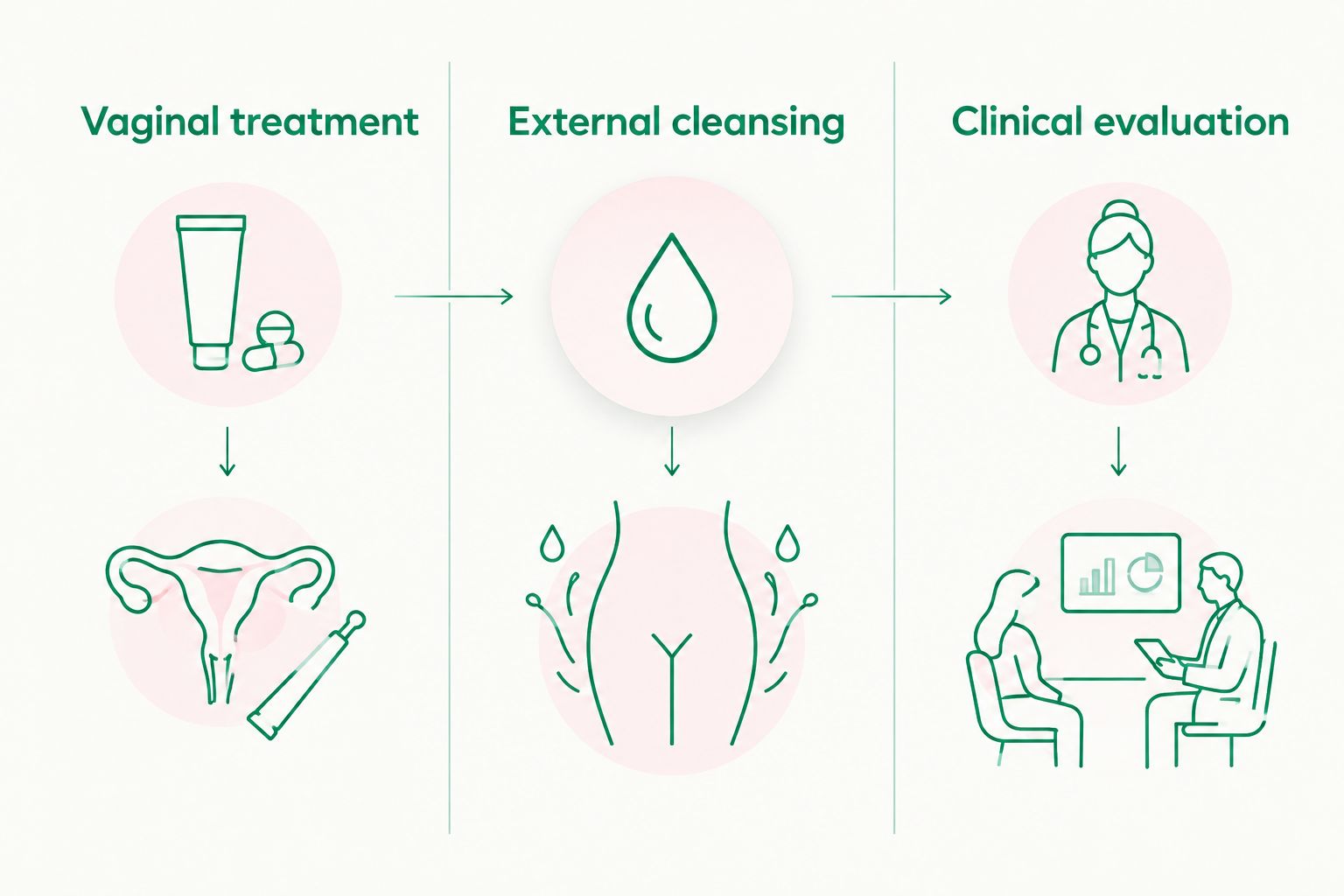
The products below illustrate different care routes, not a recommended bundle. You do not need both because you have discharge, and using them together does not establish better results.
Different products, different purposes
When to stop shopping and seek care
Get evaluated for new, persistent, or recurrent discharge changes, especially with strong odor, itching, burning, painful urination, bleeding, or pain during sex. Discharge appearance alone cannot tell you which treatment to buy.
Seek prompt medical care for pelvic pain, pregnancy with new symptoms, or fever of 100.4°F (38°C) with vaginal symptoms. Severe pain, fainting, or feeling seriously unwell needs urgent assessment.
Bring a short symptom history to your appointment. Include when the change began, any recent antibiotics, menstrual timing, sexual exposures, and every vaginal or external product used. That information helps your clinician choose testing without assuming the problem is yeast or BV.
How the options are ranked
This 2026 ranking puts diagnosis-matched treatment first, selected clinician-directed options next, and optional external hygiene last. It uses the criteria above: diagnosis fit, correct application, clinical evidence, safety, product limits, and skin tolerance.
It is not a head-to-head product trial. CDC guidance supports the treatment categories described here; it does not establish comparative outcomes for the featured formulas.
Which option should you choose?
If the cause is unknown, choose evaluation before an intravaginal product. If BV is confirmed, follow the prescribed BV treatment. If uncomplicated yeast is confirmed, use an appropriate antifungal.
Consider boric acid only when a clinician recommends it for your situation. Keep an external wash optional and separate from treatment. For 2026, the practical default is simple: diagnose the vaginal problem, treat that problem, and avoid adding products that have no clear job.
FAQ
What's the best product for abnormal vaginal discharge?
The best product depends on the confirmed cause. BV generally requires prescription antibiotics, while uncomplicated yeast is treated with an appropriate antifungal; unexplained discharge needs evaluation rather than a universal product.
Can a feminine wash treat BV or yeast discharge?
No. A feminine wash is an external hygiene product and does not treat BV or a vaginal yeast infection. Do not put cleanser inside the vagina or use it to douche.
Are boric acid suppositories the best first choice for vaginal odor?
No. Boric acid is not the default first choice for unexplained vaginal odor. CDC guidance includes it in selected recurrent conditions, so discuss the diagnosis and treatment plan with a clinician.
Can I tell whether I have BV or yeast from discharge color?
No. Discharge color alone cannot reliably distinguish BV, yeast, an STI, or other causes. A clinician can use your history, examination, and appropriate testing to identify the problem.
Is boric acid safe during pregnancy?
Do not use vaginal boric acid during pregnancy. Contact your pregnancy-care clinician about new discharge, odor, or irritation so you receive an appropriate evaluation and treatment.
What should I do if an over-the-counter yeast treatment does not work?
Arrange a clinical evaluation instead of repeatedly switching products. Persistent symptoms can reflect a different diagnosis, a complicated yeast infection, or irritation that needs a different approach.
When does abnormal discharge need urgent medical care?
Seek prompt medical care when discharge occurs with pelvic pain, fever, or new symptoms during pregnancy. Severe pain, fainting, or feeling seriously unwell requires urgent assessment.
One last thing
Write down every product you used before symptoms changed. Include washes, wipes, lubricants, deodorants, and suppositories—not just medicines. That list helps your clinician assess possible irritation as well as infection, and keeps your next purchase tied to a clear purpose.


