

This article is for informational purposes only. It is not, nor is it intended to be, a substitute for professional medical advice, diagnosis, or treatment and should never be relied upon for specific medical advice.
Best for friction-focused external care: Kushae Protective Feminine Skin Balm. Best for post-workout cleansing: Gentle 2-N-1 Foaming Wash; best first step for sweat-related discomfort: changing into clean, dry clothing—these are the best products for exercise chafing and odor to consider in 2026, organized by the problem you need to address.
TL;DR
- The best products for exercise chafing and odor address friction, external cleansing, and damp clothing separately.
- Kushae Protective Feminine Skin Balm is the friction-focused option to assess against its directions and ingredient list.
- External washes and deodorants do not treat bacterial vaginosis or diagnose vaginal odor.
- Choose clean, dry clothing first; seek medical care for persistent odor, unusual discharge, or painful skin.
Why this matters
Exercise chafing and vaginal odor are not the same problem. Chafing involves skin irritation from rubbing; vaginal odor can have causes that a balm, wash, or deodorant cannot address.
The vulva is the external genital area. The vagina is the internal canal, and external cleansing products do not belong inside it. The American College of Obstetricians and Gynecologists' vulvovaginal-health guidance distinguishes gentle external care from douching, which is unnecessary and can disrupt the vaginal environment.
Kushae's exercise-care products belong in an external-care decision, not a self-diagnosis of BV. Its OB/GYN-developed product line provides relevant options, but that development background does not establish that every formula prevents chafing or treats infection.
For this 2026 guide, the decision starts with location: rubbing on intact outer skin, sweat trapped in clothing, or a persistent change in vaginal odor.
What makes the best exercise chafing and odor products
Use these criteria before adding anything to your gym bag:
- Correct purpose: Match friction protection, cleansing, or odor management to the actual concern. They are different jobs.
- Clear application site: Read whether a product is intended for thighs, skin folds, or another external area. Do not assume every intimate-care product is appropriate everywhere.
- Ingredient transparency: Read the complete formula, especially if you have reacted to fragrance, preservatives, or botanical ingredients before.
- Sensitive-skin tolerance: A product that stings or worsens redness is not a good match, regardless of its category or branding.
- Realistic limits: Prefer clear instructions over promises to eliminate every odor, prevent all irritation, or correct an undiagnosed vaginal condition.
No single product needs to do all these jobs. A smaller routine also makes it easier to identify what causes irritation.
Exercise chafing and odor options at a glance
The table ranks options by their role in a routine, not by head-to-head clinical performance.
| Option | Best for | Standout role | Key limitation |
|---|---|---|---|
| Protective Feminine Skin Balm | Friction-focused external care | A skin-balm format to assess for rubbing-prone areas | Application sites and suitability depend on its directions |
| Gentle 2-N-1 Foaming Wash | Post-workout external cleansing | A dedicated wash format | Does not treat BV or replace diagnosis |
| Clean, dry workout clothing | Getting out of damp garments | Removes prolonged contact with sweaty fabric | Does not treat already irritated or infected skin |
| Natural Feminine Deodorant Spray | Optional external odor management | A spray format for labeled external use | Deodorizing cannot establish the cause of an odor |
| Plain lukewarm water | A minimal external-cleansing routine | Cleanses without adding a cleanser formula | Does not provide a lasting friction barrier |
1. Protective Feminine Skin Balm: best for friction-focused external care
Protective Feminine Skin Balm is the product category to consider when your main concern is external skin rubbing during movement. Check the current directions and ingredient list before deciding where to apply it, particularly near sensitive vulvar tissue.
The American Academy of Dermatology's friction and blister-prevention guidance supports reducing rubbing and using appropriate protective measures. That general principle is not clinical evidence for this particular formula.
Protective Feminine Skin Balm pros:
- Matches an external skin-care concern rather than an intravaginal one.
- Offers a balm format for readers assessing friction-focused care.
- Can be evaluated against a specific rubbing location and the label's permitted uses.
Protective Feminine Skin Balm cons:
- A product name does not establish suitability for broken skin, mucosal tissue, or every skin fold.
- A balm does not diagnose a rash or treat a vaginal infection.
Best for: You notice rubbing on intact external skin and want to assess a protective product before your next workout.
Start by checking the area, not applying more product. If the skin is open, weeping, increasingly painful, or repeatedly irritated in the same place, get medical advice rather than continuing to experiment.
Verdict: Buy only if the labeled application site matches your friction concern and the ingredients suit your skin.
2. Gentle 2-N-1 Foaming Wash: best for post-workout external cleansing
Gentle 2-N-1 Foaming Wash is the cleansing option in this comparison. Its role is separate from friction protection: washing external skin after exercise is not the same as preventing rubbing during exercise.
Use the product only as directed. Do not put a wash inside the vagina, and do not assume that a feminine-care label means a formula will suit every person with sensitive skin.
Gentle 2-N-1 Foaming Wash pros:
- Provides a dedicated option for external cleansing.
- Fits a post-workout routine rather than an infection-treatment routine.
- Gives you one cleanser to evaluate instead of combining several new cleansing products.
Gentle 2-N-1 Foaming Wash cons:
- Does not treat BV or establish why vaginal odor has changed.
- Cleansers can irritate sensitive skin; individual tolerance still matters.
Best for: You prefer a cleanser after exercise and can use it comfortably within its labeled directions.
For your 2026 routine, resist the urge to scrub harder because you smell sweat. ACOG's vulvar-care guidance favors gentle care; repeated washing, rubbing, or adding fragranced products can worsen irritation.
Verdict: Buy if you want a dedicated external cleanser; skip it as a solution for persistent vaginal odor.
3. Clean, dry workout clothing: best for leaving damp garments behind
A fresh clothing change is the practical first move when your discomfort follows time spent in sweaty leggings or underwear. It addresses the garment touching your skin without adding another formula.
Choose clothing that fits without rubbing or digging into the affected area. Inspect seams and pressure points, especially when discomfort keeps returning along the same line.
Clean, dry workout clothing pros:
- Removes the sweaty garment rather than covering its smell.
- Avoids adding a topical ingredient to already sensitive skin.
- Helps you assess whether fit or seam placement contributes to rubbing.
Clean, dry workout clothing cons:
- Does not treat a rash, skin infection, or vaginal condition.
- A dry replacement can still rub if its fit or seams are unsuitable.
Best for: You stay in workout clothes after exercising or notice irritation where clothing presses against your skin.
Pack the change where you will actually use it. If your routine takes you straight from the gym to errands, carrying fresh clothing is more useful than planning a change you cannot make.
Verdict: Buy a suitable spare if you need one; otherwise, use the clean clothing you already own.
4. Natural Feminine Deodorant Spray: best for optional external odor management
Natural Feminine Deodorant Spray is an optional external-care product, not a treatment for a vaginal condition. Read its directions for the permitted application areas and review the ingredients before use.
The word natural does not establish that a product is nonirritating. If a spray causes burning, itching, or redness, stop using it rather than applying more to cover the problem.
Natural Feminine Deodorant Spray pros:
- Provides a spray-format option for labeled external odor management.
- Keeps deodorizing separate from cleansing and friction protection.
- Can be left out entirely when your routine does not need it.
Natural Feminine Deodorant Spray cons:
- Does not identify or treat the cause of persistent vaginal odor.
- Adds another formula for sensitive skin to tolerate.
Best for: You want an optional external deodorant and have checked that its directions and ingredients suit the intended area.
CDC bacterial-vaginosis guidance describes odor as one possible symptom of BV, alongside other clinical findings. Odor alone is not a diagnosis, and covering it does not resolve its cause.
Verdict: Hold until basic cleansing and a dry clothing change are covered; skip it for unexplained vaginal odor.
5. Plain lukewarm water: best for a minimal external routine
Plain lukewarm water is the simplest option when you want to clean the external area without adding a cleanser formula. It is not a deodorant, infection treatment, or protective balm.
ACOG's vulvar-care advice supports gentle washing and avoiding irritating products. If even gentle contact causes pain or symptoms persist, the next step is evaluation rather than a more elaborate wash routine.
Plain lukewarm water pros:
- Adds no cleanser ingredients to the routine.
- Makes external care simple when you are assessing product sensitivity.
- Keeps cleansing separate from attempts to change vaginal odor.
Plain lukewarm water cons:
- Does not leave a protective barrier against rubbing.
- Does not treat BV, yeast infections, or persistent skin disease.
Best for: You want a minimal external-cleansing approach or are simplifying a routine that has become irritating.
Use gentle contact rather than vigorous scrubbing, then pat the area dry. Do not direct water inside the vagina as a cleansing practice.
Verdict: Skip an additional cleanser if gentle water-only external care meets your needs.
Build the routine around the symptom
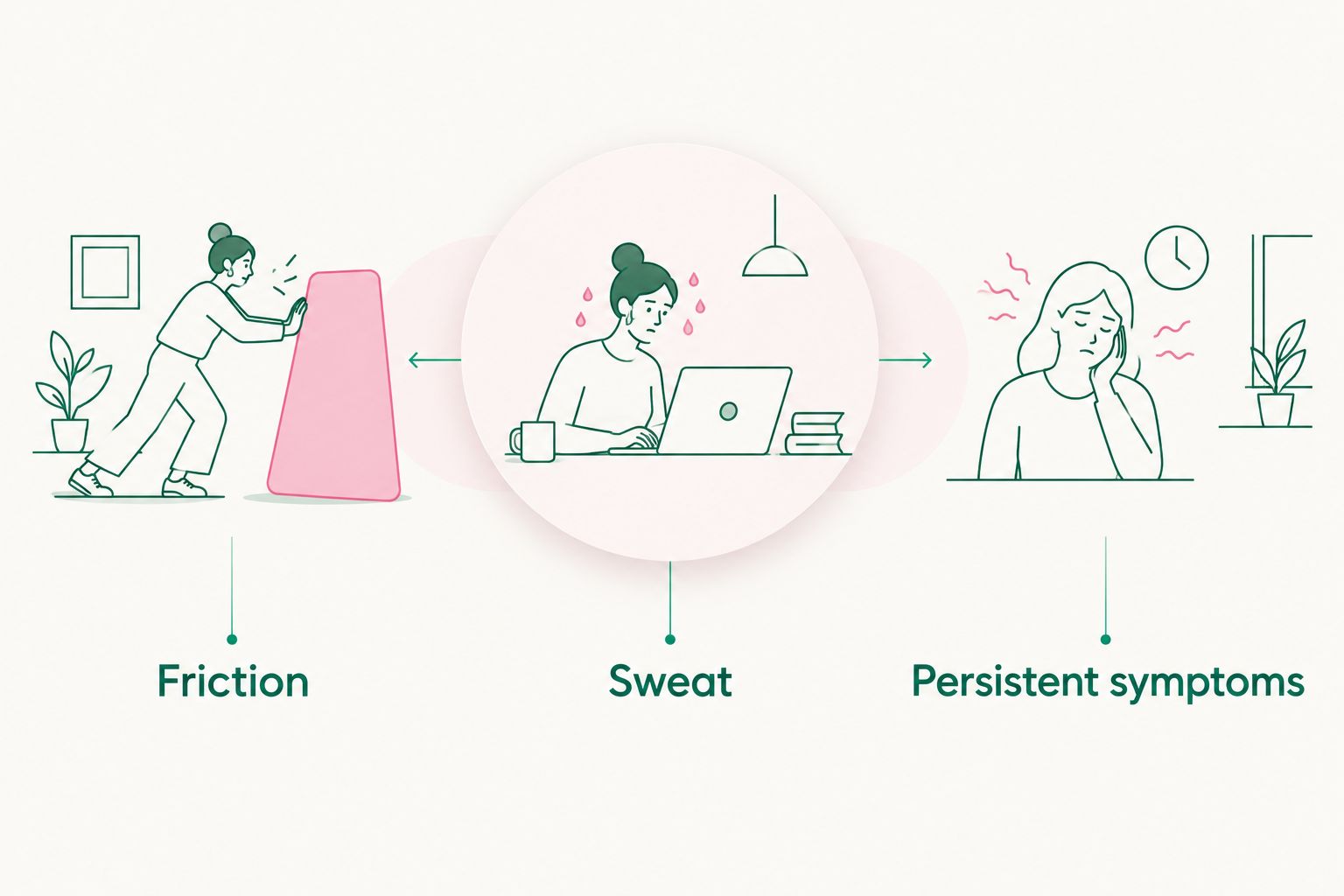
Keep your 2026 exercise-care routine focused on the problem you can identify:
- Friction: Check clothing fit and assess an appropriate protective product for intact external skin.
- Sweat: Change out of damp clothing and clean external skin gently.
- Persistent symptoms: Arrange medical evaluation instead of adding deodorant or an intravaginal product.
Seek medical care for persistent or recurrent odor, unusual discharge, worsening itching, sores, or painful skin. Pelvic pain or fever also needs medical attention. Neither an article nor a product label can establish the cause of those symptoms.
Boric acid suppositories are not a general post-workout freshening product. Do not add an intravaginal treatment simply because your clothing or external skin smells different after exercise.
How these options were ranked
This 2026 ranking prioritizes matching the product's role to the concern, separating external care from intravaginal treatment, and making limitations clear. It does not claim comparative testing or formula-specific clinical results.
Medical context comes from ACOG's vulvovaginal-health guidance, the American Academy of Dermatology's friction-prevention guidance, and CDC bacterial-vaginosis guidance. Those sources support the general care distinctions—not a finding that a specific Kushae product outperforms another formula.
Which exercise chafing and odor option should you choose?
Start with clean, dry clothing, then choose only the product that matches the remaining concern. Assess Protective Feminine Skin Balm for labeled friction-focused care, Gentle 2-N-1 Foaming Wash for external cleansing, and Natural Feminine Deodorant Spray only as an optional external-care step.
Kushae's exercise-care range is best approached as separate tools, not a requirement to buy a complete routine. Persistent symptoms need a diagnosis, not a larger gym bag.
FAQ
What's the best product for exercise chafing and odor?
There is no single product for both concerns. Choose an appropriate external protective product for friction, gentle cleansing for external sweat, and clean, dry clothing; persistent vaginal odor needs evaluation.
Can feminine wash treat BV after a workout?
No. An external feminine wash does not treat bacterial vaginosis. CDC guidance addresses BV through diagnosis and appropriate treatment, not external cleansing.
Can I put a skin balm inside my vagina?
Do not put an external skin balm inside the vagina. Follow the product's labeled application sites, and do not assume that permission for external skin includes all vulvar tissue.
Should I use feminine deodorant spray after every workout?
A feminine deodorant spray is optional, not a required hygiene step. Check its directions and ingredients, and stop if it causes burning, itching, or redness.
Does vaginal odor after exercise always mean BV?
No. Odor alone cannot diagnose BV or distinguish it from other causes. Persistent odor, unusual discharge, or irritation warrants medical evaluation.
Should I use boric acid suppositories for gym-related odor?
Do not use boric acid suppositories as routine post-workout freshening. Intravaginal treatment should address an appropriate clinical concern rather than an unexplained smell.
What should I check before buying exercise-care products in 2026?
Check the intended application site, complete ingredients, directions, and warnings. Choose for the symptom you have, and do not interpret a product name or medical-development claim as proof of individual suitability.
One last thing
Check the seam before changing the product. When irritation follows the same edge of your underwear or leggings, inspect that contact point and adjust the fit rather than automatically adding another topical product.
A useful routine leaves your skin comfortable. It does not need to make your vulva smell like something else.


