

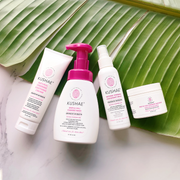
Kushae Complete Gift Set
Complete daily care for intimate wellness.
$100.00 USD
Best vulva balm for friction-focused care: Kushae Protective Feminine Skin Balm. Best simple option for dry external skin: plain white petrolatum. Best moisture-barrier option to discuss with your clinician: zinc oxide ointment. This 2026 guide compares their uses and limits, with a clear boundary: external skin protection is not treatment for BV, yeast, or unexplained vulvar irritation.
Dryness, rubbing, and itching can feel similar. They do not always have the same cause. Choosing by symptom alone can leave you applying a barrier when you actually need an examination or prescription treatment.
The vulva is the external genital area; the vagina is the internal canal. A vulva balm belongs only on external areas permitted by its directions. Do not insert a skin balm into the vagina or assume that a product labeled “feminine” is suitable for every intimate surface.
ACOG’s patient guidance, Disorders of the Vulva: Common Causes of Vulvar Pain, Burning, and Itching, describes several possible causes of these symptoms. Its central relevance here is diagnostic: irritation is a symptom, not a diagnosis.
For this 2026 guide, the strongest choice is the one that matches the affected skin and avoids unnecessary exposure—not the one making the largest promise.
University of Iowa Health Care’s Vulvar Skin Care Guidelines supports avoiding irritants and discusses protective options including white petrolatum and zinc oxide. That is general skin-care guidance, not evidence that every commercial formula containing these ingredients performs identically.
| Option | Best for | Standout feature | Key limitation |
|---|---|---|---|
| Kushae Protective Feminine Skin Balm | Friction-focused external skin care | Part of an OB/GYN-developed care line, with a chafing-focused purpose | Requires an individual ingredient and application-site check; not infection treatment |
| Plain white petrolatum | A simple barrier for dry external skin | Available as a single-ingredient ointment | Greasy texture; oil-based products can weaken latex condoms |
| Zinc oxide ointment | External skin needing protection from moisture | Provides a protective barrier | Formulas vary; thick residue can encourage excessive wiping |
These are different use-case choices, not evidence that one formula outperforms the others. If you have unexplained symptoms, choosing between them comes after identifying the cause.
Kushae Protective Feminine Skin Balm is positioned around chafing and skin rubbing. It belongs on your shortlist when your purchasing goal is external friction care, rather than changing vaginal odor or treating discharge.
The brand’s OB/GYN-developed positioning is relevant to shoppers seeking intimate-care products. It does not replace checking the current label, permitted application areas, and full ingredient list against your own sensitivities.
Product pros:
Product cons:
Best for: You want a purpose-made external protective balm and have identified rubbing as the concern.
Verdict: Buy for label-directed friction care; hold if the cause of your symptoms is unclear.
Plain white petrolatum is an occlusive ointment: it forms a barrier that reduces moisture loss from skin. For a genuinely single-ingredient choice, select a label listing 100% white petrolatum, rather than assuming every petroleum-based ointment has the same formula.
University of Iowa Health Care includes white petrolatum among protective options in its vulvar skin-care guidance. This supports its role as a barrier, not as an antifungal, antibiotic, or treatment for every cause of dryness.
Plain white petrolatum pros:
Plain white petrolatum cons:
Best for: You need a straightforward external barrier and prefer to minimize the number of ingredients touching sensitive skin.
Choose plain petrolatum, not a fragranced variation, when simplicity is the goal. Ask your clinician where to apply it if the discomfort involves the vaginal opening or you already have a vulvar diagnosis.
Verdict: Buy for simple external barrier care when appropriate; skip it as an infection remedy.
Zinc oxide ointment forms a protective barrier on skin. University of Iowa Health Care’s vulvar guidance includes zinc oxide as a protective option, making it a category to discuss when moisture exposure is contributing to external irritation.
The words “zinc oxide” do not describe the entire formula. Check the other ingredients and choose a product appropriate for the application site rather than transferring any rash product into your intimate-care routine.
Zinc oxide ointment pros:
Zinc oxide ointment cons:
Best for: Your clinician recommends protecting external skin from moisture, and the selected formula fits that plan.
Do not scrub to remove every trace. Repeated rubbing defeats the purpose of protecting irritated skin; ask your clinician how to clean the area if the ointment builds up.
Verdict: Hold until the formula and application site match your care needs.
The ranking prioritizes application site, intended purpose, ingredient clarity, and practical limitations. It separates a branded friction-care product from general barrier categories rather than treating them as interchangeable treatments.
Kushae’s vulva balm is best for shoppers seeking an OB/GYN-developed product focused on friction-related external care. Plain petrolatum is the simpler ingredient choice; zinc oxide serves a moisture-barrier use case. These are use-based recommendations, not results from a head-to-head clinical trial.
A balm can protect skin while leaving the reason for irritation unresolved. Use these distinctions to prepare for a medical conversation, not to diagnose yourself.
Clothing belongs in that assessment because a balm cannot remove a fabric trigger. Choosing cotton underwear for fabric sensitivities still requires checking the entire garment: elastic, seams, dyes, and detergent exposure can matter alongside the main fabric.
Bring those observations to your appointment. A clear description of where and when symptoms occur is more useful than cycling through products labeled for “balance” or “freshness.”
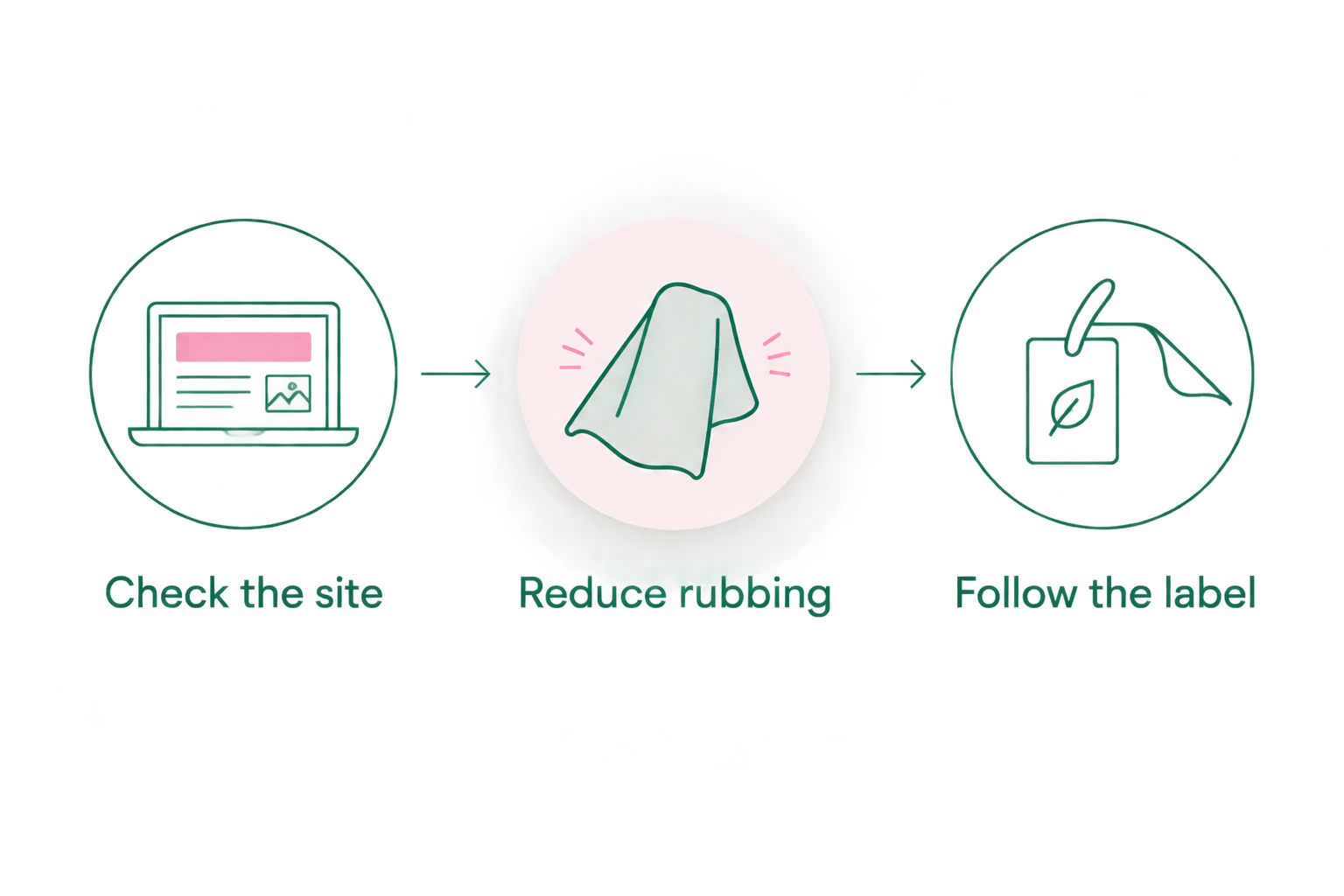
Keep your 2026 routine focused on 3 steps: check the site, reduce rubbing, and follow the label. The aim is to protect skin without adding avoidable irritation.
Introduce 1 new product at a time so you can identify what your skin tolerates. Avoid starting a balm, wash, deodorant, and new laundry product together; if irritation follows, the trigger becomes harder to identify.
A cleanser is optional external care, not a treatment for BV. If you use one, choose it for skin tolerance and follow its directions rather than washing more often to chase odor.
Do not keep covering symptoms that are worsening or returning. Arrange medical assessment for persistent itching, sores, cracks, bleeding, new skin changes, unusual discharge, or pain with urination or sex.
Seek prompt care for fever with pelvic pain or severe symptoms. During pregnancy, ask your maternity clinician before treating new vulvovaginal symptoms yourself.
ACOG’s vulvar-disorders guidance explains why examination matters: infections, contact irritation, and vulvar skin disorders can produce overlapping symptoms. CDC guidance on bacterial vaginosis and vulvovaginal candidiasis also distinguishes diagnosis and treatment from routine skin care.
Those medical references inform the safety boundaries of this 2026 guide. They do not establish that a particular balm treats infection, prevents recurrence, or corrects vaginal pH.
Choose by purpose, not by the broadest promise. For friction-focused external care, consider the branded protective balm after checking its label. For a minimal-ingredient dry-skin barrier, consider plain white petrolatum; for moisture protection, discuss zinc oxide with your clinician.
If you cannot tell whether the problem is external rubbing, vaginal dryness, infection, or a skin condition, hold the purchase and get assessed. That is the most useful default for an undecided reader with persistent symptoms.
What's the best vulva balm for sensitive skin?
The best vulva balm matches your application site and avoids your known triggers. Plain white petrolatum offers a single-ingredient barrier option, while any multi-ingredient balm requires checking the complete label.
Can I put vulva balm inside my vagina?
Do not insert an external vulva balm into the vagina. Use it only on the external areas permitted by its directions; internal dryness needs a product and care plan intended for that location.
Will a vulva balm treat BV or a yeast infection?
A protective vulva balm does not treat BV or a yeast infection. New odor, discharge, or persistent itching needs assessment rather than relying on a skin barrier.
Is petroleum jelly safe for external vulvar dryness?
University of Iowa Health Care includes white petrolatum in its vulvar skin-care guidance as a protective option. Choose a plain formula, confirm the application site when needed, and remember that oil-based products can weaken latex condoms.
Is a natural vulva balm better for sensitive skin?
The word natural does not establish that a vulva balm is better for sensitive skin. Fragrances, essential oils, and botanical ingredients still need checking against your personal sensitivities.
Can I use a vulva balm every day?
Follow the selected product's directions and any advice from your clinician. If daily use is needed because symptoms keep returning, arrange an assessment instead of assuming ongoing irritation is normal.
When should I see a doctor instead of using balm?
See a clinician for persistent or worsening itching, pain, sores, bleeding, unusual discharge, or new skin changes. Fever with pelvic pain or severe symptoms needs prompt care.
A product can feel soothing without addressing the cause. Before buying a second balm, remove an obvious source of rubbing or a recently introduced irritant, and arrange care if symptoms persist. The goal is comfortable skin—not a growing collection of products.
This article is for informational purposes only. It is not, nor is it intended to be, a substitute for professional medical advice, diagnosis, or treatment and should never be relied upon for specific medical advice.
Pairs well with what's in your cart
Complete daily care for intimate wellness.
$100.00 USD
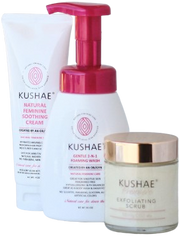
Smooth skin care after shaving days.
$69.99 USD