


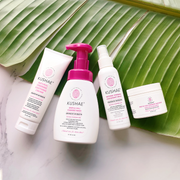
Kushae Complete Gift Set
Complete daily care for intimate wellness.
$100.00 USD
Mild itching before your period can happen, but persistent, intense, or recurring itching is not something to dismiss as normal. Cycle timing alone cannot tell you whether the cause is irritation, yeast, bacterial vaginosis (BV), or another condition. Start with gentle external care, and get evaluated if symptoms persist, return, or come with unusual discharge, odor, pain, or sores.
Itching before your period is a symptom, not a diagnosis. Menstrual-cycle changes can coincide with vulvovaginal symptoms, but an itch that appears on schedule still deserves attention when it repeats or disrupts your day.
First, identify the location. The vulva includes the external genital skin and labia; the vagina is the internal canal. What you call vaginal itching might actually be irritation on the outside, where cleansers, pads, detergents, sweat, and friction contact your skin.
These patterns help you describe symptoms. They do not replace an examination or testing.
| Possible cause | Clues to describe to your clinician | What the pattern cannot prove |
|---|---|---|
| Contact irritation or dermatitis | External itching or burning after exposure to a cleanser, wipe, pad, detergent, or other product | That every symptom comes from the new product |
| Vulvovaginal yeast infection | Itching, soreness, redness, and sometimes thick discharge | That itching alone confirms yeast |
| Bacterial vaginosis | Thin discharge and a fishy odor; irritation can also occur | That odor or cycle timing confirms BV |
| Vulvar skin condition | Persistent external itching, skin changes, cracks, or recurring sore areas | Which skin condition is present without assessment |
| Another vaginal infection | Changed discharge, burning, discomfort with urination, or symptoms after sexual exposure | Which infection is responsible without appropriate testing |
The CDC's Vulvovaginal Candidiasis, Bacterial Vaginosis, and Trichomoniasis clinical guidance supports these distinctions. Those sources also make a central point relevant to this 2026 guide: symptoms overlap, and treatment depends on the cause.
Repeatedly treating an assumed yeast infection can delay the right diagnosis. Adding a wash, deodorant, suppository, and itching cream together also makes it harder to identify what is helping or irritating your skin.
A practical first question is whether anything touching your vulva changed before symptoms started. This guide to whether switching feminine wash can cause irritation explains that external-care question separately from vaginal infection treatment.
You do not need to wash more aggressively because you itch. A new symptom calls for a clearer history and, when needed, medical assessment—not more scrubbing.
Several factors can explain why symptoms feel different from one cycle to another. None establishes a diagnosis on its own.
ACOG's Vulvovaginal Health patient guidance addresses irritant avoidance and gentle external care. The CDC's candidiasis guidance addresses recurrent symptoms and relevant medical factors; these are general clinical sources, not evidence for a particular care product.
Separate symptom relief from diagnosis. You can reduce avoidable external irritation while arranging care, without deciding on your own that the problem is yeast or BV.
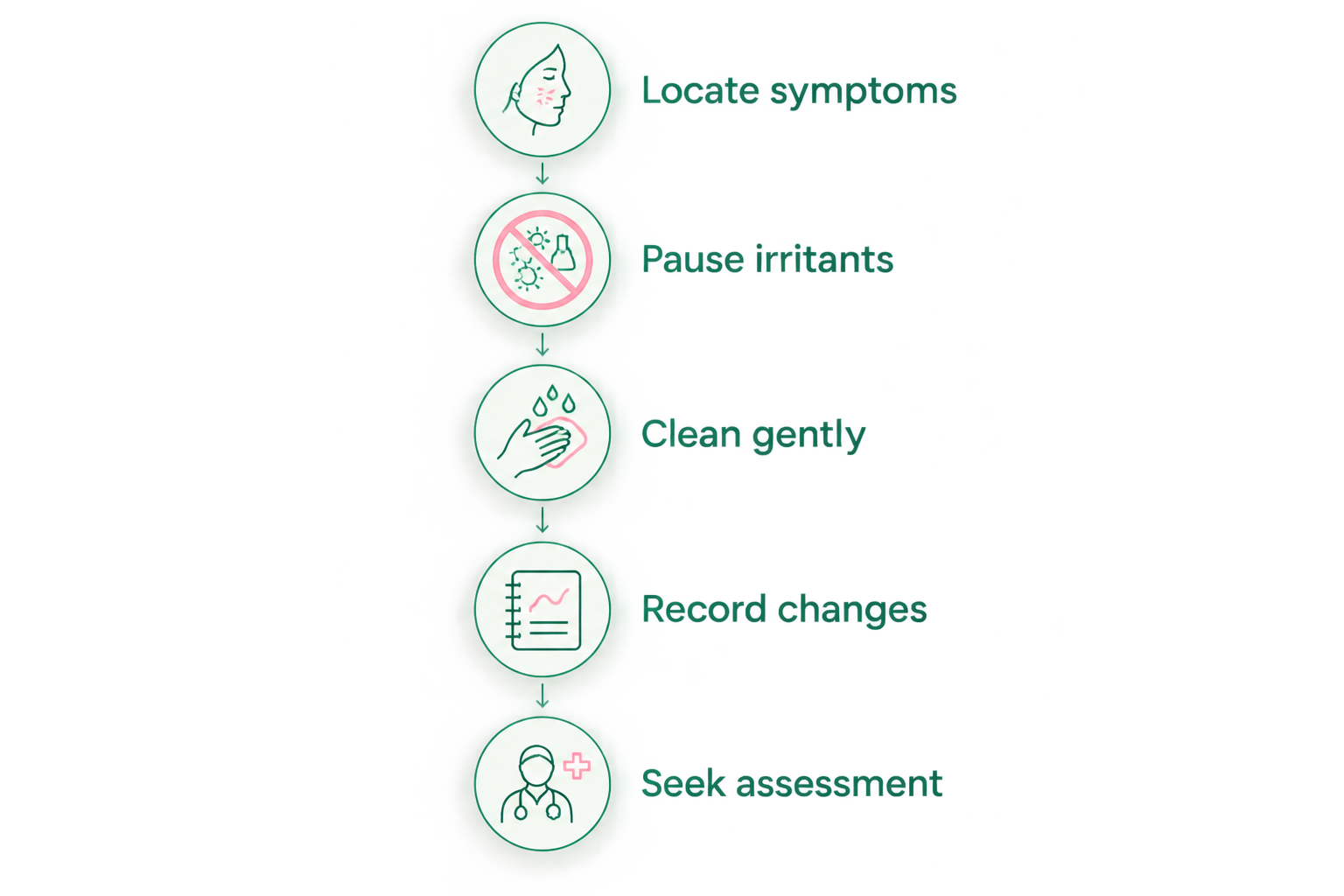
Avoid starting several treatments at once. If you already have a clinician-prescribed plan for a confirmed recurring condition, follow that plan and ask what changes should trigger another appointment.
Write down when itching starts relative to bleeding, where it occurs, and what touches the area. Include any treatments you used and whether they caused burning or changed the symptoms.
For your 2026 appointment, bring the actual product names or ingredient labels rather than describing everything as feminine care. A wash, external balm, antifungal medicine, and vaginal suppository have different purposes and routes of use.
Do not wait through additional cycles just to complete a log. A symptom record supports care; it is not a reason to delay care.
Itching before your period does not confirm a yeast infection. Yeast can cause marked itching, soreness, redness, and discharge, but these symptoms are not specific to yeast.
The CDC advises clinical evaluation and testing when symptoms persist after an over-the-counter yeast treatment or return within 2 months of treatment. Repeating the same medicine without confirmation can leave a different cause untreated.
The CDC generally defines recurrent vulvovaginal candidiasis as 3 or more symptomatic episodes in under 1 year. That threshold concerns confirmed symptomatic yeast episodes—not every occasion when you notice an itch.
If repeated yeast treatment has become part of your monthly routine in 2026, ask for a diagnostic review. Your clinician can decide whether examination, microscopy, culture, or other testing fits your history.
BV can cause irritation, but itching alone does not identify BV. Thin discharge and a fishy odor are commonly associated symptoms; some people with BV have no noticeable symptoms.
Tell your clinician if itching comes with a new odor or discharge change. BV, yeast, and other infections require different treatment decisions, and more than one condition can be present.
An external wash cannot treat BV inside the vagina. Likewise, a vaginal pH result alone cannot distinguish every possible cause of symptoms; clinical history and appropriate testing matter.
Do not use boric acid simply because itching appears before your period. Boric acid has a role in selected clinician-directed treatment plans, but it is not a general-purpose answer to unexplained itching.
The CDC discusses intravaginal boric acid in specific recurrent or difficult-to-treat infection settings. That clinical guidance does not establish that a particular retail formula will resolve your symptoms or prevent future episodes.
Boric acid must never be swallowed and should not be used during pregnancy. If you are pregnant, could be pregnant, or are planning pregnancy, speak with your clinician before considering it. Stop use and seek advice if a vaginal product causes significant irritation.
Kushae's external vulvar care is best for women seeking external skin care, not treatment for unexplained vaginal itching. Kushae offers an OB/GYN-developed vulvovaginal care line, but that development background does not replace a diagnosis or establish treatment results for a specific formula.
The Kushae Gentle 2-N-1 Foaming Feminine Wash belongs in a discussion about external cleansing—not treatment inside the vagina. If you choose an external wash, follow its label, keep it out of the vaginal canal, and stop if it causes stinging or increased itching.
During active irritation, simplifying your routine is more useful than adding products to cover every symptom. Kushae vulvar care should support an appropriate external-care routine, not postpone evaluation of recurring discomfort.
Arrange an appointment for a first or unfamiliar episode, symptoms that persist, repeated premenstrual itching, or symptoms that return after treatment. Also seek assessment for unusual discharge, a new strong odor, painful urination, pain with sex, or visible skin changes.
Seek prompt medical care for fever, pelvic or lower abdominal pain, significant swelling, genital sores, or feeling acutely unwell. Pregnancy with new vulvovaginal symptoms also calls for clinician guidance rather than self-treatment.
Mention any new sexual exposure without embarrassment. Testing for sexually transmitted infections is a medical decision based on symptoms and exposure history, not a judgment about you.
Ask whether the symptoms appear external, internal, or both. Then ask what supports the diagnosis and whether testing is needed before another treatment course.
Useful questions include: Could this be contact dermatitis? Was yeast confirmed? Does the discharge suggest BV or another infection? What should I do if symptoms return before my next period?
Is mild itching before my period normal if it goes away?
Brief itching can occur, but improvement alone does not establish the cause. If it repeatedly returns before your period, record the pattern and discuss it with a clinician.
Why do I itch before my period every month?
Monthly premenstrual itching can reflect cycle-associated symptoms, repeated irritant exposure, infection, or a vulvar skin condition. The timing helps your clinician assess the problem but does not diagnose it.
Can I have a yeast infection without thick discharge?
Yes, a yeast infection does not always cause thick discharge. Itching and redness also occur with other conditions, so symptoms alone cannot reliably confirm yeast.
Should I wash more often when my vulva itches?
No, extra washing and scrubbing can aggravate irritated vulvar skin. Clean gently externally, avoid douching, and stop products that sting or worsen symptoms.
Can pads or panty liners make me itch before my period?
Yes, pads or liners can contribute to external irritation through product contact, moisture, or friction. Note whether symptoms begin after using them and seek assessment if symptoms persist.
When should I get checked after using yeast medicine?
Get evaluated if symptoms persist after over-the-counter yeast treatment or return within 2 months. The CDC recommends clinical evaluation and testing rather than assuming another yeast infection.
Can I use boric acid if I might be pregnant?
Do not use boric acid vaginal suppositories if you are pregnant or might be pregnant. Ask your clinician about evaluation and pregnancy-appropriate treatment for the actual cause of itching.
Itching that stops when bleeding starts still deserves attention if it keeps returning. Symptom-free days do not establish that the original irritation or infection has been resolved.
Make your next step in 2026 a clearer diagnosis, not a larger collection of treatments. Bring your symptom pattern, product list, and treatment history to your appointment.
This article is for informational purposes only. It is not, nor is it intended to be, a substitute for professional medical advice, diagnosis, or treatment and should never be relied upon for specific medical advice.
Pairs well with what's in your cart
Complete daily care for intimate wellness.
$100.00 USD
Smooth skin care after shaving days.
$69.99 USD